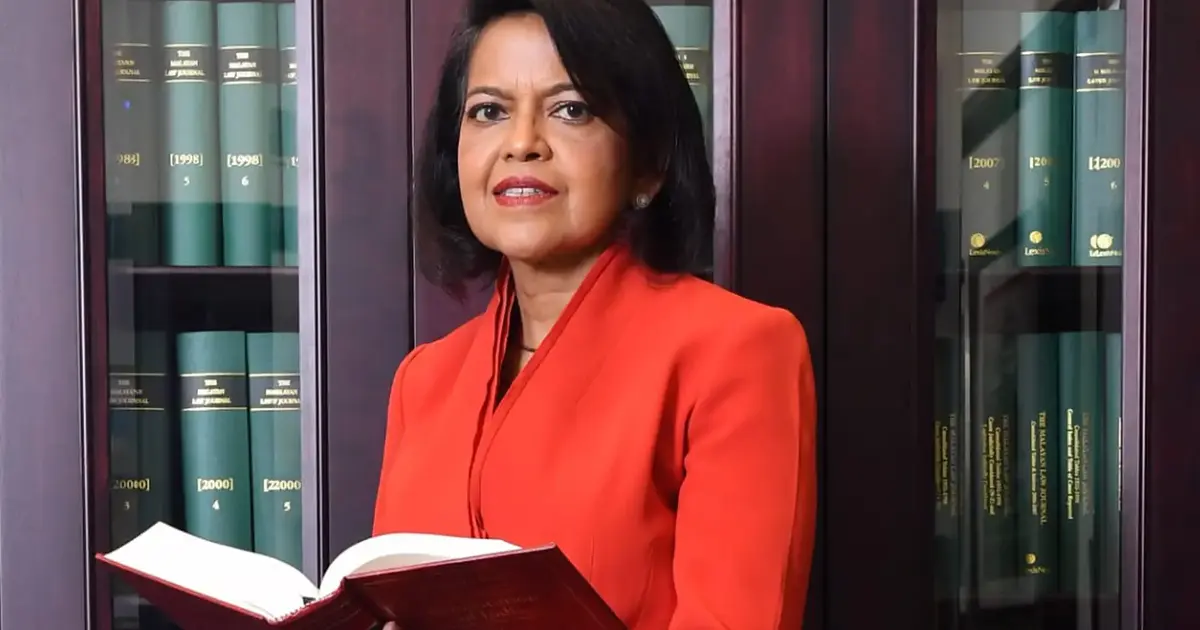
The Malaysian Media Council has named Nallini Pathmanathan, a retired judge of the Federal Court, to serve as its chairman, marking a significant institutional shift for an oversight body that has long wielded influence over the country's journalistic landscape. The appointment underscores the council's apparent determination to strengthen its governance credentials at a moment when Malaysia's media ecosystem faces mounting pressures from technological disruption, economic uncertainty, and evolving regulatory expectations.
Pathmanathan's elevation to the chairmanship reflects the council's strategy of recruiting figures with substantial judicial experience and institutional legitimacy. Her background on the bench suggests an appointment designed to signal impartiality and legal rigour in an organisation that frequently arbitrates disputes between media outlets, the government, and the public. The move signals confidence that judicial temperament and experience in interpreting complex regulatory frameworks could translate effectively to media governance.
The media industry in Malaysia has been navigating a period of considerable turbulence. Traditional print publications have haemorrhaged circulation and advertising revenue over the past decade as readers and advertisers migrate online. Digital-native outlets have proliferated, yet many lack the institutional resources, editorial infrastructure, and training standards that characterised established newsrooms. Simultaneously, the regulatory environment remains contested terrain, with ongoing debates about the balance between press freedom and government oversight, misinformation control, and journalistic accountability.
The Malaysian Media Council's role as arbiter has become increasingly consequential as these tensions mount. The body adjudicates complaints against publications, establishes ethical guidelines, and attempts to maintain professional standards across a fractured industry. However, the council itself has faced criticism from some press freedom advocates who contend that its composition and decisions sometimes reflect governmental preferences rather than independent journalistic principles. Pathmanathan's appointment may represent an attempt to address such perception gaps by installing a respected legal figure at the helm.
For Malaysian journalists and publishers, the implications of this leadership change warrant careful attention. A chairman with Federal Court experience may bring more sophisticated legal reasoning to contentious decisions about defamation, privacy, and public interest. However, whether judicial expertise translates into media-specific wisdom remains an open question. The council must navigate a landscape where rapid technological change, evolving audience expectations, and competing commercial pressures create scenarios that traditional legal frameworks may struggle to address adequately.
The broader Southeast Asian context adds further dimension to this appointment. Across the region, media councils, press councils, and journalistic self-regulatory bodies have become focal points in the struggle over editorial independence. Thailand, Indonesia, and the Philippines have all experienced significant tensions between press freedom advocates and government actors seeking greater media influence. Malaysia's evolution in this space—whether toward greater independent oversight or tighter state alignment—carries implications for regional media freedom discussions and international assessments of democratic health.
Pathmanathan's judicial background suggests she will likely emphasise procedural rigour and transparent reasoning in the council's determinations. This approach could strengthen public confidence in the body's impartiality, particularly if decisions are accompanied by detailed written judgments explaining the legal and ethical reasoning behind them. Many international media bodies have found that transparency around decision-making processes builds legitimacy and helps establish precedent that evolves with industry practice.
The timing of this appointment also reflects broader institutional reckoning with media's societal role. Disinformation, deepfakes, and coordinated inauthentic behaviour have emerged as systemic challenges requiring sustained, informed response. A council chaired by someone with deep legal expertise might be better positioned to develop frameworks that address these novel problems whilst respecting legitimate editorial discretion. The challenge, however, lies in developing solutions that don't inadvertently criminalise or chill legitimate journalism or public discourse.
For Malaysia's journalism sector specifically, the appointment opens a window for constructive engagement around professional standards. Many Malaysian newsrooms have experienced staff reductions, pay freezes, and reduced resources for investigative work. A refreshed council leadership could potentially focus on how self-regulation supports rather than merely constrains professional practice, and how industry-wide standards might strengthen rather than diminish competitive capacity. This positive-sum framing could reposition the council as a partner in industry sustainability rather than purely a compliance apparatus.
The council must also grapple with the reality that media plurality in Malaysia faces existential challenges independent of regulatory frameworks. Newspaper closures, consolidation among remaining outlets, and financial pressures facing digital ventures all constrain the diversity of voices available to Malaysian audiences. Whilst self-regulation cannot solve structural economic problems, council leadership could advocate for policies and practices that recognise these constraints and support sustainable quality journalism.
Pathmanathan's appointment ultimately signals that the Malaysian Media Council intends to strengthen its institutional standing and decision-making quality during a consequential period for the industry. Whether this translates into outcomes that genuinely advance both press freedom and professional accountability will depend on her leadership approach, the council's receptiveness to evolving industry challenges, and the degree to which Malaysian media stakeholders engage constructively with the oversight process. The next chapter in Malaysian media governance will largely be written through how this new chairmanship chooses to interpret its mandate.