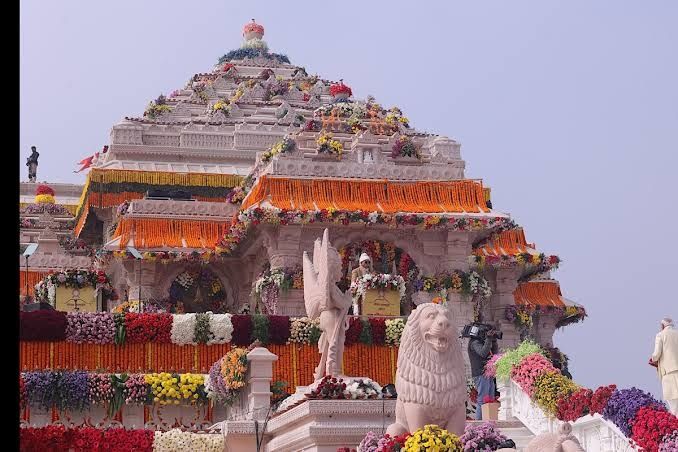
Police in the Indian state of Uttar Pradesh have detained eight individuals following accusations of theft and mishandling of donations at the Ram Mandir temple, a site of immense cultural and political significance. The arrests came after authorities registered a criminal case on June 25 following an investigation into irregularities discovered in the temple's financial operations. According to government statements released on Thursday evening, those taken into custody include several temple staff members whose job responsibilities centred on receiving, counting, and securing monetary contributions and precious items such as gold and silver donated by worshippers.
The Ram Mandir stands as a monument to Hindu nationalist politics in contemporary India. Constructed on a plot in the city of Ayodhya where a centuries-old mosque once stood before being demolished in 1992, the temple was inaugurated with considerable ceremonial grandeur in 2024 by Prime Minister Narendra Modi. The structure represents the culmination of a decades-long campaign by Hindu-majority movements to reclaim the site, which devotees revere as the birthplace of the deity Ram according to Hindu tradition, believed to have occurred over seven millennia ago. The temple's construction and opening have become symbolic anchors for Modi's Hindu-first political agenda, making the current scandal particularly sensitive for India's ruling Bharatiya Janata Party.
While the government has refrained from publicly quantifying the extent of the alleged embezzlement, Indian media reports and opposition politicians suggest that the total value of missing funds and valuables could surpass US$20 million. The discrepancy between the government's silence on figures and the estimates circulating through independent sources reflects tensions over how the scandal is publicly framed and discussed. The eight accused individuals now face serious criminal charges including breach of trust, theft, conspiracy, and corruption offences, all carrying potentially substantial prison sentences under Indian law.
The impact on the temple's donor community has been immediate and damaging. Viti Saxena, a 44-year-old homemaker who contributed to the temple's fundraising, articulated the emotional distress now gripping many devotees. Her concerns centre on whether her personal contributions and those of millions of other believers actually reached the temple's treasury or were diverted elsewhere. This uncertainty strikes at the heart of religious giving, where donors expect their offerings to be utilised for spiritual purposes and temple maintenance. The allegations have transformed what should have been a moment of communal pride into what Saxena described as "a matter of global shame."
The scale of the financial machinery operating at the temple underscores why embezzlement of such magnitude could theoretically occur. Construction of the Ram Mandir itself consumed an estimated US$240 million, sourced entirely through public donations gathered across India's Hindu population. Managing such vast sums of money flowing continuously from donors requires robust financial controls and transparency mechanisms. The apparent failure of such safeguards, if the allegations are substantiated, raises serious questions about administrative oversight at one of India's most prominent religious institutions.
Uttar Pradesh Chief Minister Yogi Adityanath, whose state government established the Special Investigation Team tasked with probing the scandal, has publicly committed to ensuring accountability. He stated that those found guilty will face full consequences of the law without exception or favour. This pronouncement carries political weight, as the state administration faces scrutiny over how such theft could occur at a temple directly associated with the ruling dispensation's political messaging. The chief minister's emphatic stance suggests an attempt to demonstrate governmental competence in handling the matter, though the damage to institutional credibility may already be substantial.
The broader implications for religious fundraising in India warrant consideration. The Ram Mandir scandal introduces fresh scepticism among potential donors regarding the secure handling of charitable contributions to Hindu temples and religious organisations. At a time when many temples across India solicit donations for construction, maintenance, and charitable activities, allegations of large-scale embezzlement threaten to undermine public confidence in such institutions more broadly. This erosion of trust extends beyond the immediate temple to affect the entire ecosystem of religious giving in the country.
Historically, the Ram Mandir campaign represents a transformative moment in Indian politics. When the Babri mosque was demolished in 1992, it catalysed a surge in Hindu nationalist political consciousness that eventually positioned Modi's BJP as the dominant force in Indian electoral politics. The party's sustained advocacy around the temple's reconstruction galvanised its base and contributed significantly to displacing the secularist Congress party, which had dominated governance since Indian independence. The current theft scandal therefore carries implications that extend well beyond temple administration into the realm of political narrative and public perception of the BJP's stewardship.
The investigation's trajectory will be closely monitored both domestically and internationally. For Malaysian readers and Southeast Asian observers, the scandal illustrates how even flagship projects of major political movements remain vulnerable to institutional failures and financial misconduct. It also underscores the universal challenge of maintaining transparent governance structures within religious organisations that operate on principles of faith and trust. The outcomes of the criminal proceedings against the eight accused will significantly shape how Indian authorities manage similar controversies in future and whether remedial measures can restore devotee confidence in major temples.

