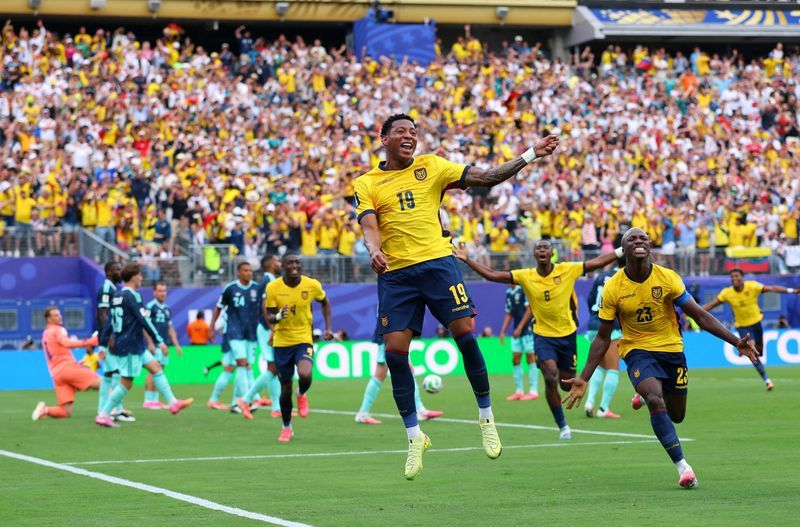
Ecuador delivered one of the tournament's most dramatic turnarounds on Thursday, emerging from the brink of elimination to defeat Germany 2-1 in their Group E finale at East Rutherford, New Jersey. The South American outfit, facing an all-or-nothing scenario after disastrous results in their opening matches, found the resilience and attacking precision that had eluded them throughout the group stage to secure a last-32 berth as one of the eight best third-placed teams.
The opening moments appeared to spell disaster for Ecuador's hopes. Germany, already assured of progressing as group winners, struck with clinical efficiency in only the second minute through Leroy Sane, who finished his opportunity from inside the penalty area after a swift interchange involving Florian Wirtz and a quick throw-in. The goal marked Sane's first major international tournament strike in his 15th competitive appearance, and briefly seemed to confirm Ecuador's exit from the competition.
Yet what made Ecuador's situation uniquely dire was their complete inability to find the back of the net through their opening two fixtures. They had managed 39 shots without scoring, a statistic that weighed heavily on their players as they chased the win desperately needed to stay alive. The psychological barrier crumbled with remarkable speed when Nilson Angulo equalized in the ninth minute, curling a precise effort from the edge of the box past Germany goalkeeper Manuel Neuer, who appeared caught out of position. The yellow-clad Ecuador supporters in the stadium erupted as their team's campaign was suddenly resurrected.
Contention marred the opening goal, with Ecuador's players protesting that Aleksandar Pavlovic had caught Pedro Vite with a raised foot during the build-up. Referee Tori Penso, however, ruled the challenge acceptable and allowed Sane's goal to stand, a decision that would have ended Ecuador's World Cup dream had it been overturned. The incident foreshadowed further controversy to come as both teams tested the referee's patience and interpretation of the laws.
The second half began with another moment of heated dispute. Felix Nmecha's pass released Kai Havertz into the Ecuador penalty area, where the German forward appeared to tumble over defender Joel Ordonez. Penso pointed immediately to the spot, seemingly handing Germany a second goal. The intervention of VAR proved decisive, however, as the review revealed a prior foul by Germany in building the attack, leading Penso to overturn his penalty decision and award possession back to Ecuador instead. The reprieve energized Ecuador's campaign considerably.
With clear-cut opportunities scarce in the latter stages, Ecuador struck decisively in the 78th minute through Gonzalo Plata, who reacted fastest after substitute Kevin Rodriguez flicked a corner kick on at the near post. Plata's finish was clinical and straightforward, yet its significance was immeasurable, sending the sold-out stadium into uproar and confirming Ecuador's passage through to the knockout round. The comeback was complete, and what had seemed impossible minutes earlier became reality.
Germany's performance underscored defensive frailties that had emerged throughout their group campaign. Although the four-time World Cup winners finished atop Group E with six points, they conceded in all three matches—a concerning trend for their knockout ambitions. Their stated ambition of recording a 12th consecutive victory and sweeping Group E undefeated crumbled against an Ecuador team with everything to lose and nothing but determination to offer.
Ivory Coast's 2-0 victory over Curacao secured second place in the group, with Germany's goal difference proving decisive in determining the runners-up position. Ecuador's qualification as a best third-placed team represented a remarkable escape for a squad that appeared destined for early elimination after their opening fixture defeat to Ivory Coast and subsequent draw against Curacao. The mental and tactical adjustments made between the second and third matches proved transformative.
For Malaysian and Southeast Asian audiences, Ecuador's revival carries instructive lessons about tournament football's unforgiving nature and the fine margins that separate progression from exit. The match demonstrated how group-stage momentum can shift dramatically in the final encounter, particularly when defensive discipline lapses and attacking execution improves. Germany's struggles, despite superior resources and experience, highlight that established powerhouses remain vulnerable to tactical adjustments and determined opponents operating without pressure. Ecuador's qualification also expands the tournament's narrative, moving beyond the expected trajectories of traditional powerhouses to showcase the unpredictability that makes World Cup football compelling for global audiences.

