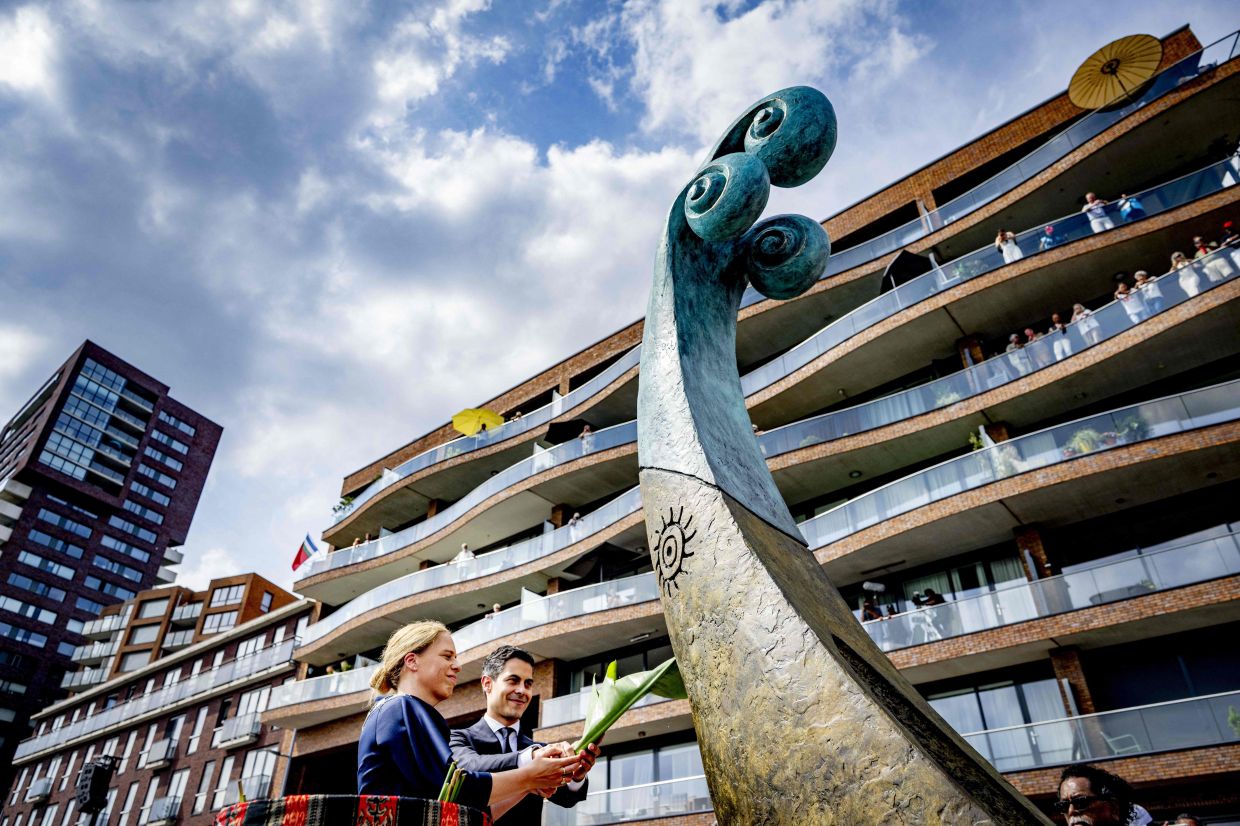
Dutch Prime Minister Rob Jetten delivered a formal state apology on Sunday to the Moluccan community, marking a significant moment of acknowledgment for one of the Netherlands' most contentious post-colonial chapters. The ceremony took place in Rotterdam, where Jetten unveiled a monument dedicated to the Moluccan experience, addressing hundreds of community members gathered to witness the government's long-overdue recognition of historical wrongs.
The Moluccans, indigenous to Indonesia's eastern spice islands, played a crucial role during the post-World War II independence struggle by serving in the Dutch colonial military forces. Their participation reflected the complex loyalties many islanders held during the transition from colonial rule to an independent Indonesian state. This service would ultimately place them in a precarious position when Indonesia finally achieved independence in 1949, as many Moluccans feared retaliation from those who viewed them as collaborators with the Dutch colonial administration.
To address these concerns, the Dutch government orchestrated a mass transfer programme that relocated approximately 12,500 Moluccans to the Netherlands. The arrangement was presented as temporary, with assurances that these individuals would eventually return to an independent Moluccan homeland once political negotiations between Dutch and Indonesian authorities concluded. This promise formed the basis of an explicit agreement made during post-independence negotiations, offering what appeared to be a humanitarian solution to the immediate security threats faced by the Moluccan population.
However, the Dutch government never fulfilled this commitment to repatriation. Instead, the Moluccans found themselves stranded in a foreign country with minimal support systems or integration pathways. Housing conditions were deplorable, with many families confined to substandard accommodation that failed to meet basic living standards. Employment opportunities remained scarce, as Dutch authorities made little genuine effort to help Moluccans secure meaningful work or establish themselves within Dutch society. The promised temporary stay stretched indefinitely, transforming into a permanent exile for a community that increasingly felt abandoned by both their adopted country and their homeland.
During the monument unveiling ceremony at Lloydkade in Rotterdam—the very port where ships first delivered Moluccan arrivals to the Netherlands—Jetten acknowledged the full scope of this betrayal. His remarks carried visible emotional weight as he addressed the assembled crowd, many of whom held photographs of deceased relatives who had endured the prolonged displacement. The Prime Minister expressed remorse for the inadequate reception, the appalling housing conditions, the systematic invisibility imposed upon the community, and the sustained longing for home that had defined generational trauma within Moluccan families.
The experiences of discharged Moluccan soldiers exemplified the callousness of Dutch treatment. Rather than integrating these former military personnel into civilian life or supporting their transition, authorities discharged them immediately and frequently housed them in former Nazi concentration camps that had been repurposed to contain this unwanted population. This particular indignity—placing people who had fought alongside Dutch forces in facilities designed to imprison and exterminate Jews—underscored the profound moral failure in how the Netherlands managed its post-colonial obligations.
The accumulation of grievances across decades ultimately erupted into visible resistance. During the 1970s, a frustrated second generation of Moluccans, born or raised in the Netherlands but lacking citizenship or belonging in either their ancestral homeland or their country of residence, engaged in several violent actions. These incidents represented not mindless criminality but rather expressions of profound betrayal by a state that had promised protection while delivering indefinite marginalization. The youth uprising reflected the psychological toll of statelessness and the simmering resentment that built across years of systematic neglect.
Jetten's apology carefully balanced acknowledgment with measured realism about the limits of state contrition. He recognised that words alone could not undo the historical injustices or restore lost decades, nor could formal statements suddenly erase the complex reality facing present-day Moluccans and their descendants. However, he positioned the apology as a necessary act of recognition—an official validation that the Dutch state had inflicted genuine harm through breach of promise and systematic mistreatment. This framing attempts to transition Moluccan-Dutch relations from historical denial toward shared acknowledgment of past wrongs.
For Malaysian and Southeast Asian observers, this moment carries particular significance given the region's own complex colonial histories and ongoing negotiations about historical responsibility. The Moluccan case demonstrates how post-independence governments can weaponise administrative structures to neutralise perceived threats, how temporary measures can calcify into permanent exclusions, and how communities caught between states become systematically invisible. The Dutch apology, coming nearly 75 years after the initial displacement, suggests that Southeast Asian nations may eventually confront their own post-colonial legacies and the communities harmed during transitions to independence.
The monument itself becomes more than commemoration—it represents official validation that Moluccan suffering constituted genuine historical injustice rather than regrettable but inevitable consequences of decolonisation. This symbolic recognition matters profoundly for displaced communities throughout Southeast Asia who continue seeking acknowledgment from former colonial powers and neighbouring nations for their experiences during independence struggles and their aftermath. The ceremony demonstrates that such recognition, however delayed, remains possible and carries weight within broader processes of historical reconciliation and nation-building.

