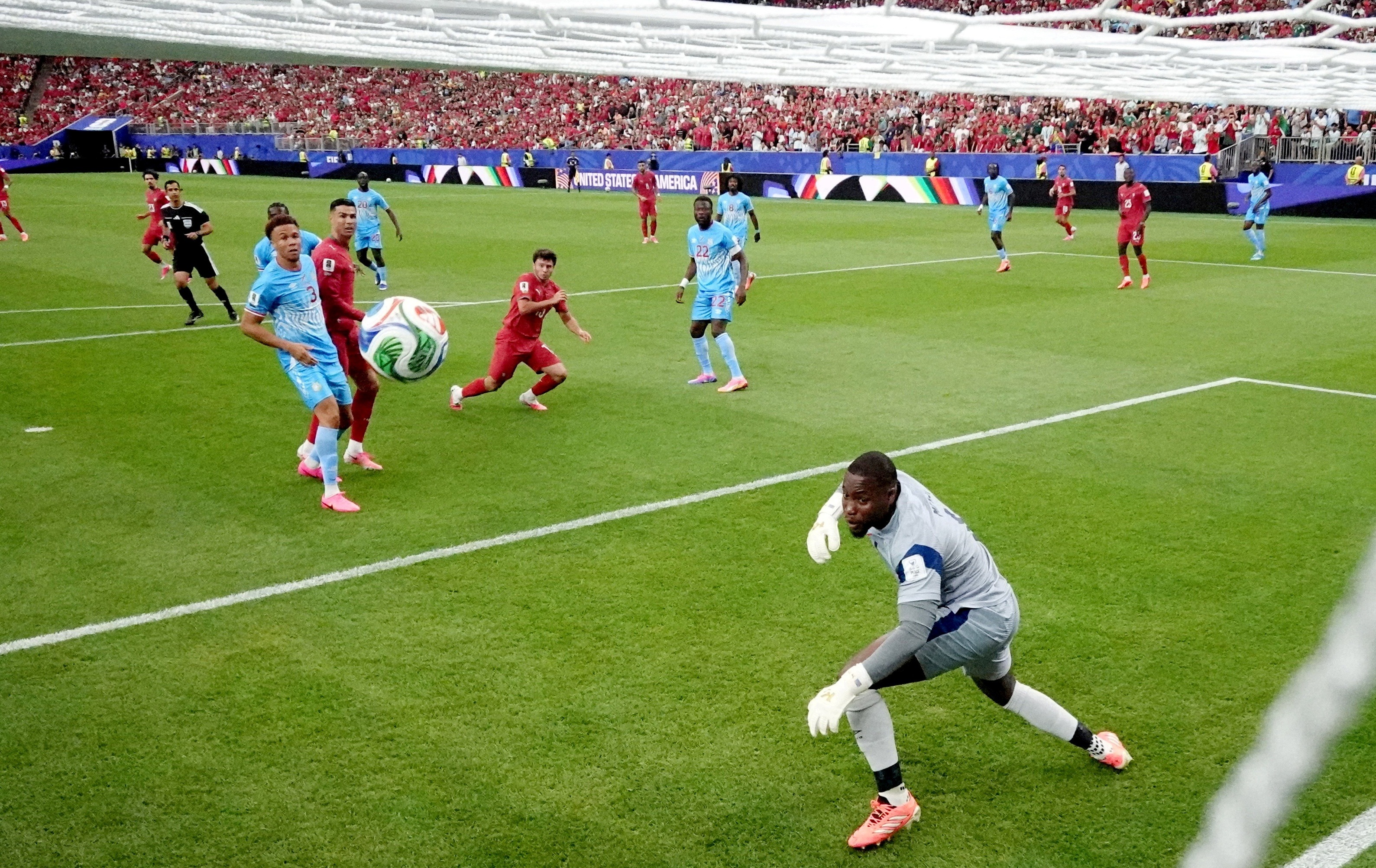
In a stunning reversal of fortunes at Houston Stadium, the Democratic Republic of the Congo defied expectations to claim a 1-1 draw against Portugal in Group K of the 2026 FIFA World Cup. The result represents far more than a single point for the African side—it marks a watershed moment for a nation that has endured five decades of World Cup disappointment since their inaugural tournament appearance as Zaire in 1974.
Portugal seized the initiative with an early strike through Joao Neves, who connected with a pinpoint cross from Pedro Neto along the left wing to head past goalkeeper Diogo Costa in the sixth minute. The Portuguese side appeared positioned to dominate proceedings, and for much of the opening period their superiority in possession and territorial control suggested they would extend their lead. However, the expected avalanche of goals never materialized, as DR Congo's resolute defensive organisation frustrated sustained Portuguese pressure without ceding additional chances of real substance.
The turning point arrived in dramatic fashion at the stroke of halftime, when Yoane Wissa rose above the Portuguese defence to plant a header past Costa in the 45th minute plus five seconds. The timing of the goal—arriving in injury time when Portuguese concentration had begun to wane—proved psychologically crucial, forcing both teams into the second-half interval level rather than allowing Portugal to build momentum from an advantage. For DR Congo, the significance extended far beyond tactical considerations; Wissa's finish represented the first goal their nation had scored in World Cup competition, a gap spanning every moment of competition since 1974 when they last graced the tournament stage.
With the teams level heading into the second half, the character of the match shifted perceptibly. Portugal retained superior technical quality and experience, with Cristiano Ronaldo spearheading their attacking ambitions, yet neither side managed to break through a increasingly compact defensive arrangement. The Portuguese enjoyed greater possession and created the more threatening opportunities, but lacked the clinical finishing required to convert pressure into goals. Ronaldo's presence alone could not unlock a DR Congo side that demonstrated growing confidence following their equalizer, suggesting that the psychological momentum from Wissa's dramatic goal had fundamentally altered the tenor of the encounter.
The final whistle signalled a watershed moment for African football at the highest level. DR Congo's supporters erupted in celebration, recognising that their team had not merely secured a respectable point but had broken through a psychological and competitive barrier that had haunted the nation's football consciousness for more than half a century. The draw represented concrete evidence that the West African nation belonged on the World Cup stage, capable of competing with established European powerhouses rather than serving as mere qualifying-round fodder.
From a Group K perspective, the result carries significant ramifications as the competition unfolds. DR Congo's unexpected rise to the top of the standings demonstrates how World Cup group stages can pivot on narrow margins and momentum shifts. Portugal's position in second place, while respectable after a single match, represents a departure from the dominance many anticipated. For the Portuguese, particularly given the presence of veteran talent like Ronaldo, the draw may serve as a cautionary reminder that modern international football contains fewer certainties and more surprising outcomes than previous eras.
The historical context cannot be overstated for understanding this result's magnitude. When Zaire—as the Democratic Republic of the Congo was then known—first participated in the 1974 World Cup, they had departed without scoring a single goal in their group stage appearances. That barren drought persisted through subsequent participations, creating a narrative of futility that had become embedded in the nation's football identity. Wissa's header therefore transcends conventional match statistics, representing instead a form of redemption and proof that perseverance and improved development infrastructure can eventually overcome historical disadvantage.
The performance also reflects the evolution of African football's competitive standards at international level. Whereas previous generations of African nations at the World Cup often found themselves overwhelmed by European and South American opposition, modern sides possess the tactical sophistication and technical foundation to compete meaningfully. DR Congo's defensive structure and counter-attacking awareness against Portugal demonstrated coaching competence and player discipline that contrasted sharply with the stereotype of African teams as disorganised underdogs.
For Southeast Asian football observers, the result carries broader implications regarding competitive balance at the World Cup. It reinforces the reality that established footballing nations cannot approach matches against lower-ranked opponents with complacency or assumption of superiority. Portugal's difficulty in converting dominance into victory suggests that qualification paths for smaller nations may become increasingly viable, provided they combine tactical organisation with occasional clinical execution—lessons potentially applicable across continental confederations.
As the 2026 World Cup progresses, the DR Congo versus Portugal encounter will likely become a defining reference point for discussions about the tournament's competitive unpredictability. For the Democratic Republic of the Congo, the draw represents not merely a single match result but validation of long-term football investment and a genuine foundation upon which future progress can be constructed.

