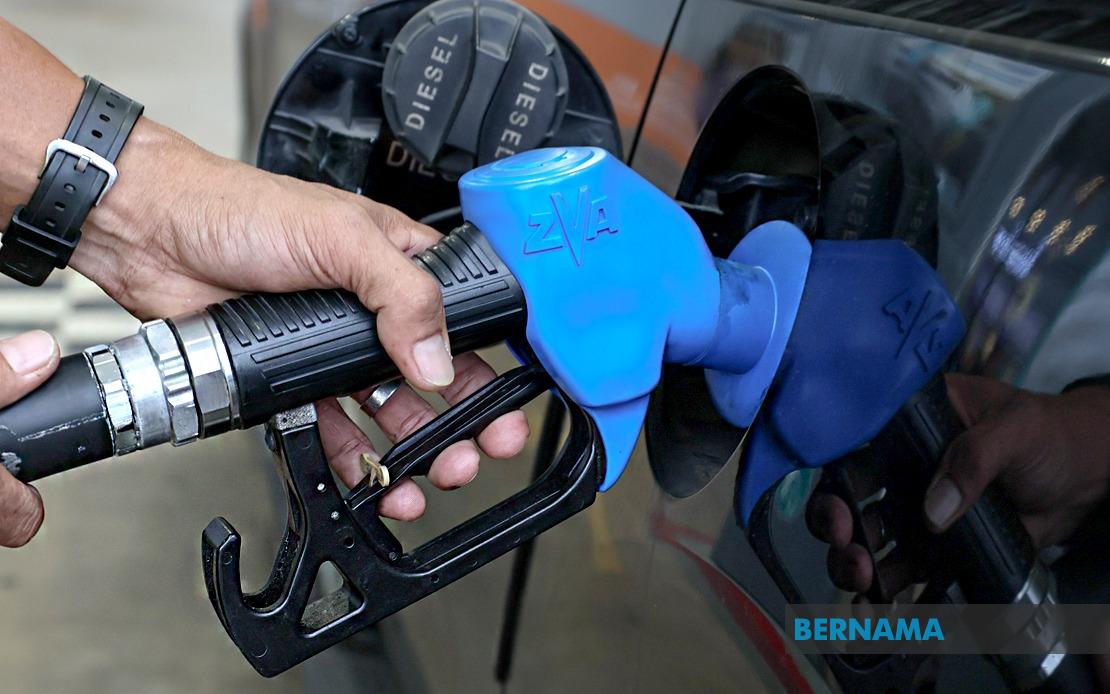
Malaysia's government has announced a reduction in subsidised diesel prices to RM2.10 per litre effective July, a move that economists believe will create a ripple effect throughout the nation's supply chains and ultimately benefit consumers facing elevated living costs. The initiative, rolled out through the BUDI95 programme and verified via MyKad, represents a significant shift in how the country distributes fuel subsidies. Previously, Peninsular Malaysia's unsubsidised diesel retail price stood at RM4.37 per litre, while Sabah and Sarawak enjoyed lower subsidised rates of RM2.15, creating regional disparities that had long frustrated businesses and communities in East Malaysia.
The economic case for this intervention rests on a straightforward principle: fuel costs permeate nearly every sector of the Malaysian economy. Dr Nanthakumar Loganathan, an economics professor at Universiti Teknologi Malaysia's Faculty of Management, emphasises that the basic food supply chain particularly depends on diesel-powered logistics. When trucking companies, farmers, and distributors face reduced fuel expenses, those savings typically translate into lower operating costs, which traders have repeatedly cited as justification for price increases. By contrast, this subsidy adjustment signals that transport operators should have genuine room to lower their margins on goods delivery, especially for perishables and fresh produce that depend on rapid, cost-effective movement across the country.
The practical implications extend well beyond petrol station pumps. Fresh vegetables transported by pickup trucks, staple goods moved through the distribution network, and countless consumer products dependent on diesel-powered logistics should theoretically cost less at market. The key question, however, revolves around whether traders' associations and businesses will respond in good faith by passing savings to consumers rather than absorbing the benefits as profit margin enhancements. Dr Loganathan acknowledges this uncertainty but expresses cautious optimism that the sector's heightened public scrutiny following the price announcement may encourage transparent pricing adjustments.
A critical vulnerability in this policy framework concerns global oil price volatility and Malaysia's ability to sustain the RM2.10 price point. Dr Loganathan notes that if international crude prices surge significantly, maintaining the subsidy would require the government to allocate additional resources from its budget. This is not merely an abstract economic concern: Malaysia's fiscal position has constrained policy flexibility, and competing priorities for government spending—education, healthcare, infrastructure—create genuine tensions. The economist suggests potential solutions including securing supply guarantees from alternative sources such as Russia or countries outside the traditional Arab oil-producing region, a forward-thinking observation given geopolitical shifts in global energy markets.
The nationwide coordination of diesel pricing, bringing Sabah and Sarawak into alignment with Peninsular Malaysia, reflects a deliberate policy choice toward subsidy standardisation. Dr Novel Lyndon, a political sociology professor at Universiti Kebangsaan Malaysia's Centre for Development, Social and Environmental Studies, interprets this move as addressing historical grievances and reducing subsidy leakages that plagued the previous fragmented system. The regional price differences—rooted in legitimate geographical factors, transportation logistics, and Sarawak and Sabah's dependence on land and river transport—had created consumer dissatisfaction and inflated operating expenses that businesses passed along downstream. Standardising the subsidy signals a shift toward principle-based distribution reflecting actual need rather than administrative convenience.
Yet Dr Lyndon raises important cautions about implementation realities that merit serious consideration. Sabah and Sarawak maintain fundamentally different economic structures than Peninsular Malaysia, with agricultural communities, fisheries operations, and small rural enterprises still heavily reliant on diesel for transport and daily operations. If the government fails to implement targeted assistance mechanisms alongside the price change, these communities could face significant operational pressures. Rural populations dependent on diesel for agricultural production, fishing activities, goods distribution, and basic mobility could see cost-of-living pressures intensify if subsidies are rationalised without corresponding safety nets. This risk is not theoretical: rural economies operating on narrow margins require carefully calibrated policy adjustments.
Beyond economic mechanics, Dr Lyndon emphasises the governance dimension of this initiative. Malaysians will evaluate the policy not solely on diesel prices but on whether government savings translate into visible, tangible benefits. Public expectations have been shaped by years of austerity discussions and subsidy rationalisation debates. Citizens will scrutinise whether budgetary relief from subsidy restructuring appears in improved infrastructure, enhanced basic services, educational investment, healthcare improvements, and broader cost-of-living support. The narrative surrounding this policy matters enormously: the government must communicate transparently about how resources released through subsidy targeting will benefit the population. This transparency is foundational to maintaining public trust, particularly given Malaysia's complex political landscape where perceptions of government benevolence toward ordinary citizens carry significant weight.
The MyKad verification mechanism represents a technological dimension of this subsidy architecture that addresses endemic challenges in fuel subsidy administration. Dr Mohd Afzanizam Abdul Rashid, chief economist at Bank Muamalat Malaysia, characterises the MyKad-based approach as a crucial advancement in targeting subsidy benefits accurately. Experience with the existing RON95 subsidy programme demonstrates that MyKad verification functions effectively and can be expanded to diesel distribution. This system creates multiple simultaneous benefits: targeted assistance reaches genuine Malaysian citizens rather than being diverted to unintended recipients, comprehensive fuel usage data becomes available for policy analysis and refinement, and criminal activities including fuel smuggling become substantially more difficult to execute. The technology essentially closes loopholes that have historically plagued Malaysia's subsidy systems.
The fuel smuggling concern deserves particular attention, as it represents a genuine drain on government resources and policy effectiveness. Neighbouring jurisdictions with higher fuel prices create arbitrage opportunities that criminal networks have exploited for decades. MyKad-based verification significantly complicates cross-border fuel smuggling operations, as subsidised diesel becomes traceable to specific Malaysian citizens rather than available for indiscriminate purchase and re-export. This component of the policy addresses a structural problem that has undermined the effectiveness of previous subsidy initiatives. By combining price reduction with authentication mechanisms, the government pursues a more sophisticated subsidy policy than simple across-the-board price cuts.
Looking forward, the success of this initiative depends on execution fidelity across multiple dimensions. Economic benefits will only materialise if supply chains genuinely pass fuel savings to consumers rather than capturing them internally. Social cohesion depends on transparent communication and visible reinvestment of fiscal savings in public services and living standards. Regional equity requires ensuring that Sabah and Sarawak communities do not suffer disproportionate hardship through poorly sequenced implementation. The MyKad verification system must function flawlessly without creating undue burden for legitimate users. For Malaysian consumers and businesses, this diesel subsidy adjustment represents a tangible policy intervention addressing persistent cost pressures, yet realising its full potential requires government attention to implementation details, business sector cooperation, and clear public communication about broader benefits.

