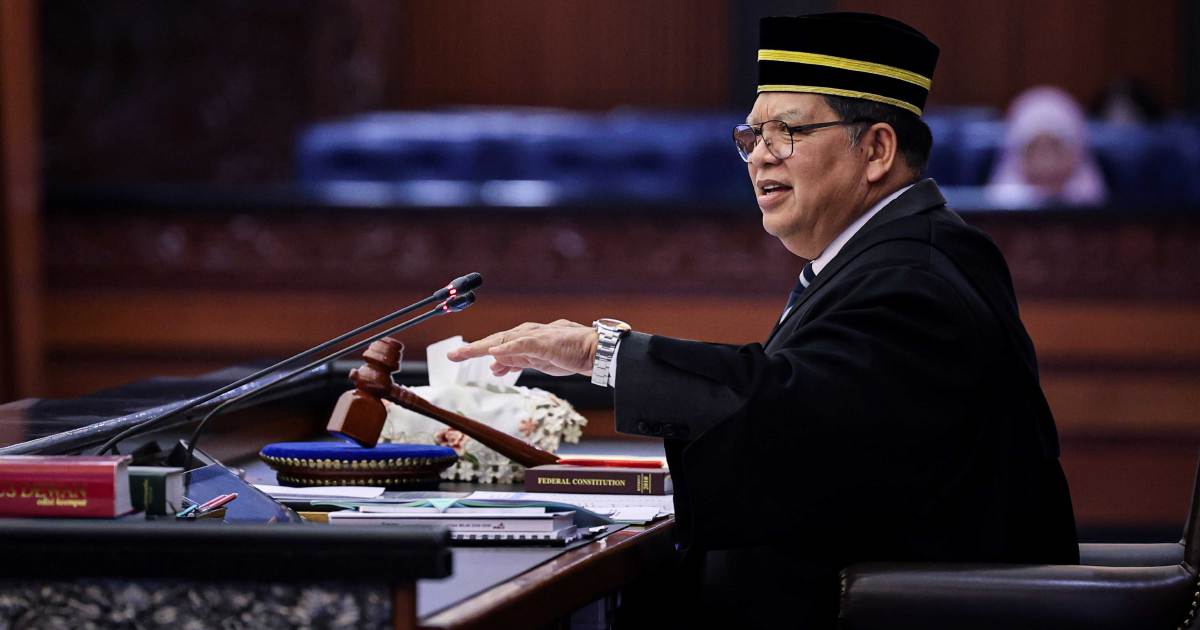
The presiding officer of the Dewan Rakyat has moved to tighten parliamentary discipline by issuing a formal reminder to the full membership regarding attendance obligations. Tan Sri Johari Abdul, who oversees the conduct of proceedings in the lower house, has underscored the expectation that all elected representatives must be present at scheduled sittings unless they have a defensible reason for their non-appearance. This intervention reflects longstanding concerns within Malaysian parliamentary institutions about consistency and commitment to legislative duties.
Parliamentary attendance has periodically emerged as a contentious issue in Malaysia's democratic discourse, touching on fundamental questions about the work ethic of elected officials and their accountability to voters. When lawmakers fail to show up for sittings, whether due to illness, pressing constituency matters, or other circumstances, it affects the quorum, slows legislative business, and sends mixed messages about the seriousness with which lawmakers approach their constitutional responsibilities. The Speaker's public reiteration of these standards serves as both a reminder and an implicit warning that casual or repeated absences may invite corrective action.
The distinction between valid and invalid grounds for missing parliamentary sessions carries practical weight. Most parliaments recognise certain justifications as legitimate, including serious health issues, family emergencies, or official government duties that cannot be postponed. However, the Speaker's statement suggests that mere inconvenience, scheduling conflicts with other political activities, or lack of interest in particular bills do not constitute acceptable reasons. This clarity is essential for maintaining the integrity of legislative proceedings and ensuring that the public's representatives fulfil their core institutional duty.
Disciplinary frameworks exist within parliamentary standing orders to address persistent or flagrant absenteeism. These mechanisms range from formal censure, loss of sitting allowances, to more severe measures depending on the severity and frequency of violations. By positioning himself as an enforcer of these standards, the Speaker is establishing himself as a custodian not merely of orderly debate but of institutional respect and member accountability. His public pronouncement carries weight beyond its immediate addressees, signalling to the electorate that parliament takes its internal standards seriously.
The timing of such reminders often coincides with observable patterns of member absences during particular sessions, whether due to festival periods, concurrent regional travel, or bills of limited controversy that attract lower attendance. In the Malaysian context, where competing demands on legislators—from constituent services to party political activities to business interests—can be substantial, the Speaker's intervention acknowledges the genuine pressures lawmakers face while drawing a firm line at what constitutes acceptable excuse-making. This balance between understanding practical constraints and upholding institutional standards defines effective parliamentary leadership.
From a broader governance perspective, legislative productivity depends partly on member engagement and presence. Debates lack vigour when chambers are sparsely populated, legislative committees struggle to function with insufficient representation, and the quality of scrutiny on executive actions diminishes when key members are systematically absent. Moreover, voters who observe extended empty seats during parliamentary broadcasts or news coverage understandably question whether their elected representatives deserve their positions and salaries. Such transparency cuts both ways, creating public pressure for attendance.
The Speaker's role as custodian of parliamentary standards places him in a delicate position between authority and collegiality. He must enforce rules firmly enough to maintain institutional credibility while avoiding the appearance of partisan selectivity in enforcing discipline. His public reminder, rather than targeting specific individuals or parties, attempts to maintain this balance by addressing the parliament as a whole. This inclusive framing helps avoid accusations of unfair targeting whilst making clear that the standard applies universally.
For Malaysian legislators, particularly those representing constituencies far from Kuala Lumpur or managing multiple institutional roles, the Speaker's directive raises practical questions about how to handle conflicting demands. The expectation is that members will plan their other commitments around the parliamentary calendar, which is published well in advance, rather than treating parliamentary duties as a residual claim on their time. This principle reinforces the notion that the primary responsibility of elected members is their legislative function.
The enforcement of attendance standards also relates to broader questions about parliamentary effectiveness and public trust. Legislatures worldwide have experimented with various mechanisms to encourage participation, from public attendance records to financial penalties for absences to mandatory explanations before the chamber. Malaysia's approach through Speaker-level reminders relies significantly on peer pressure and institutional norms. Whether this approach proves sufficiently robust depends on the Speaker's willingness to follow through with consequences when necessary.
Beyond the immediate parliamentary context, the Speaker's statement reflects international trends toward greater accountability and transparency in legislative bodies. Citizens increasingly expect their representatives to take their duties seriously and to account for their time. In countries where public cynicism about politicians has grown, parliament must demonstrate that its members treat their responsibilities with appropriate gravity. The Dewan Rakyat, as Malaysia's central legislative forum, sets the tone for democratic institutions throughout the country.

