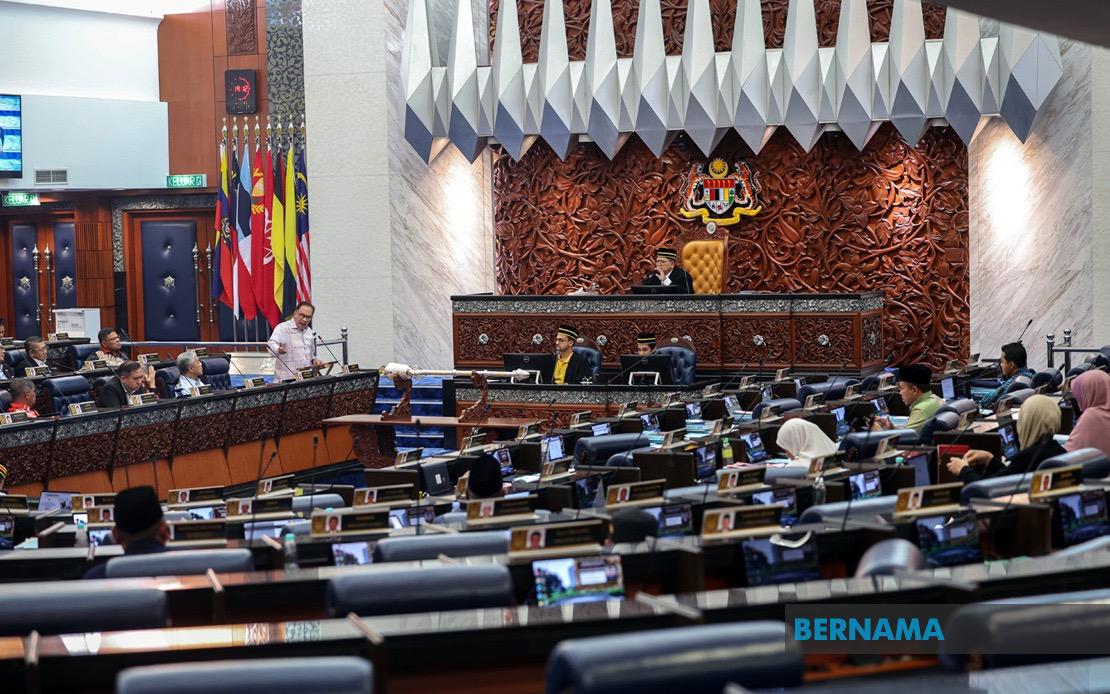
Malaysia's parliament has given the green light to channel RM14.5 billion from Malaysian Government Investment Issues into the Development Fund, marking a significant step in managing the government's fiscal requirements for 2026. The motion secured approval through a majority voice vote in the Dewan Rakyat on July 15, following parliamentary debate that highlighted the government's balanced approach to development financing amid economic challenges.
The underlying borrowing programme is considerably larger in scope. Deputy Finance Minister Liew Chin Tong revealed that the total MGII issuance for the year is estimated at RM95 billion, representing the government's comprehensive strategy to address multiple financial obligations. Of this substantial figure, RM55 billion has been earmarked specifically for refinancing existing MGII instruments that are approaching maturity—a routine but essential practice to manage the government's debt portfolio. A further RM2 billion is directed towards partially redeeming Malaysian Islamic Treasury Bills, the government's shariah-compliant short-term securities that appeal to Islamic finance institutions and investors.
The remaining RM38 billion serves a critical macroeconomic function by partially financing the projected fiscal deficit for 2026, the difference between government spending and revenue collection. Between January and May 2026, the gross issuance of MGII reached RM40 billion. After accounting for RM25.5 billion used to refinance maturing instruments, the net proceeds available for transfer to the Development Fund stood at RM14.5 billion, the amount now formally approved by parliament.
The Development Fund itself operates through a distinct financing mechanism that separates development expenditure from operating expenditure, a constitutional framework designed to maintain fiscal discipline. Liew explained that the Development Fund draws resources from multiple sources: transfers from the Consolidated Revenue Account, allocations from the Consolidated Loan Account, loan repayment collections, and various receipts directly attributable to development activities. This diversified funding approach reflects Malaysia's sophisticated approach to budgeting and capital allocation.
Government securities and MGII issuances form the backbone of how Malaysia accesses the Consolidated Loan Account's resources. These instruments—Malaysian Government Securities, MGII, Treasury Bills, and external borrowings—collectively provide the mechanisms through which the government channels borrowed funds into development projects. The government operates under a legal framework that restricts borrowing strictly to development expenditure, while operating costs must be financed exclusively through tax revenue and government income. This constitutional constraint has shaped Malaysian fiscal policy for decades and continues to guide budget planning.
Concerns about the crowding out effect in Malaysia's domestic financial market were directly addressed during parliamentary debate. Crowding out occurs when large government borrowing absorbs a disproportionate share of available capital, potentially limiting funding available to private sector investment. Datuk Zulkafperi Hanapi raised this concern, questioning whether the scale of MGII issuance might constrain investment opportunities for domestic institutions including the Employees Provident Fund and the Retirement Fund Incorporated. These major institutional investors hold substantial portions of Malaysia's domestic financial assets and play crucial roles in retirement security and financial stability.
Liew's response to crowding out concerns provides reassurance grounded in observable policy trends. He highlighted that the government has systematically reduced its annual borrowing requirements over several years, suggesting a trajectory toward fiscal consolidation. Moreover, he argued that government securities and MGII issuances actually enhance rather than diminish investment opportunities for the EPF, KWAP, and other financial institutions. These instruments provide stable, relatively risk-free investment vehicles that enable these institutions to generate consistent returns for their members and beneficiaries while keeping capital flows within Malaysia's economy.
The importance of maintaining domestic investment opportunities extends beyond simple returns. Liew noted that without attractive domestic investment options, Malaysian financial institutions might redirect capital toward foreign investments, potentially weakening demand for the Malaysian ringgit in foreign exchange markets. Currency depreciation would increase the cost of imported goods, fuel inflation, and reduce the purchasing power of Malaysian households and businesses. By providing secure domestic investment channels through government debt instruments, the government effectively supports currency stability and broader economic health.
Parliamentary procedure indicates that the current motion addresses MGII proceeds only through May 2026. Liew informed lawmakers that the government intends to seek parliamentary approval during the next sitting to transfer the remaining MGII issuances spanning June through December 2026, suggesting that additional capital transfers of undisclosed magnitude will require future parliamentary sanction. This staged approach allows parliament to maintain oversight of major capital movements and ensures continued legislative scrutiny of the government's borrowing and spending programmes.
The approval reflects ongoing negotiations between development priorities and fiscal prudence. Malaysia faces competing demands: infrastructure modernisation, defence capabilities, social services expansion, and debt sustainability. The MGII framework allows the government to access capital markets for long-term development projects while maintaining the structural distinction between borrowing for capital investment versus financing operational costs. This separation is viewed internationally as sound fiscal governance, distinguishing Malaysia from economies that blur these categories and accumulate structural operating deficits.
For Malaysian investors and financial institutions, the approval signals continued government reliance on domestic capital markets for development financing. Interest rates on government securities remain attractive relative to many global alternatives, and the scale of issuance suggests ample opportunities for portfolio allocation. For ordinary Malaysians with EPF or insurance investments, these securities ultimately underpin the returns generated in their retirement accounts and investment portfolios, creating a direct link between government fiscal policy and household financial security.
The broader implication extends to Southeast Asia's regional financial architecture. Malaysia's approach to domestic borrowing and capital mobilisation serves as a model for other regional economies, and approval of large MGII programmes signals continued confidence in Malaysian debt instruments among both domestic and international investors. As other Southeast Asian nations pursue development agendas, Malaysia's experience managing substantial government borrowing while maintaining currency stability and investor confidence offers instructive lessons in balancing growth ambitions with financial prudence.

