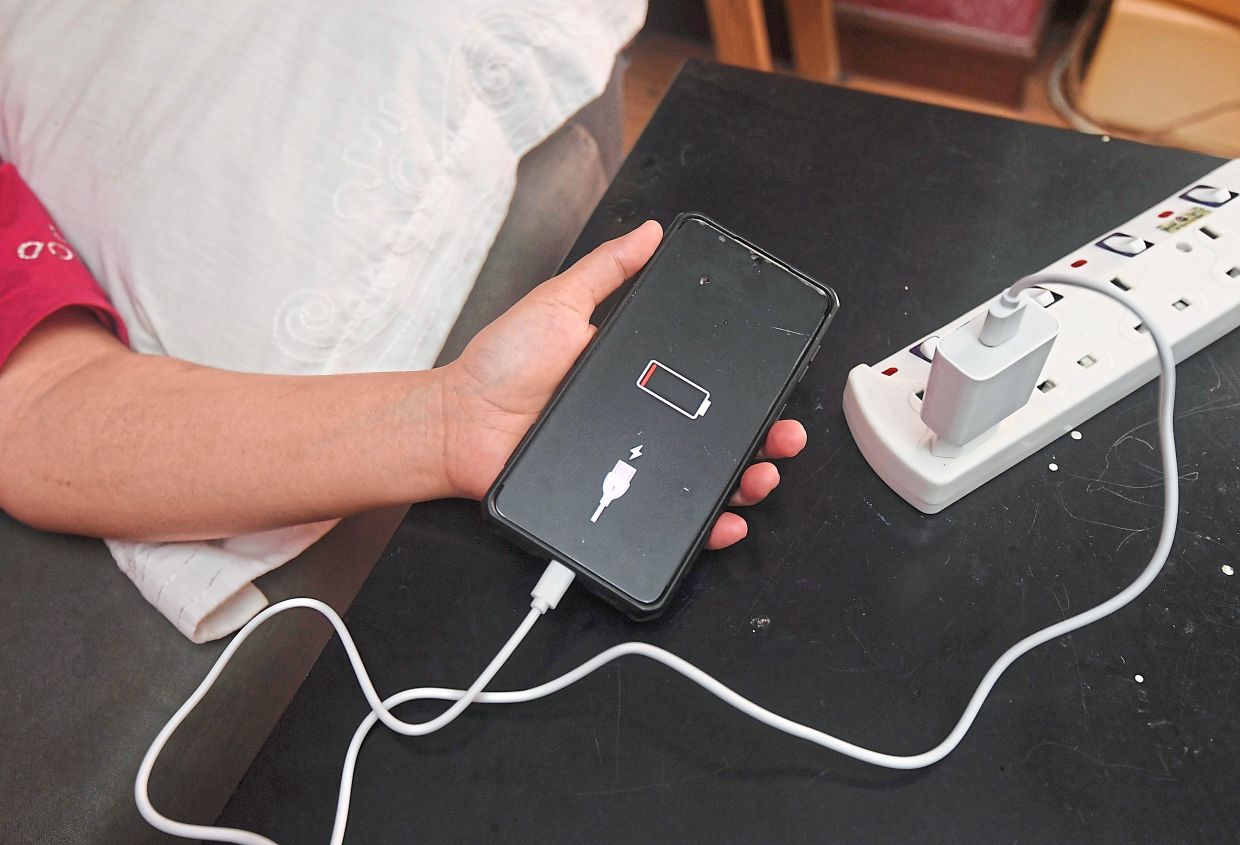
The Malaysian fire department has sounded an urgent warning about the hidden dangers lurking in everyday household charging habits, revealing that unsafe device charging practices triggered 59 fires across the country over the past three years, inflicting RM14.2 million in combined property damage. The sobering figures underscore how easily a momentary lapse in safety awareness—from overnight charging without supervision to grabbing a cheap unbranded charger—can spiral into catastrophic loss. The department's findings paint a portrait of a nation still grappling with widespread misconceptions about electrical safety in an age where mobile devices, laptops and portable batteries have become ubiquitous household staples.
Sarawak emerged as the national hotspot for device-charging fires, accounting for nearly 69 per cent of all documented losses despite representing just 11 of the 59 recorded incidents. The state absorbed approximately RM9.7 million in fire damage, a figure that reflects both the severity of individual blazes and the cumulative impact of unchecked hazardous practices. Kelantan followed as the second-most affected state with 17 incidents generating RM1.14 million in losses, while Sabah recorded three fires that destroyed roughly RM806,800 worth of property. The concentration of major losses in these regions suggests that fire investigation capacity, public awareness campaigns and enforcement of electrical safety standards may not be uniformly distributed across Malaysia's diverse geography.
The remaining seven states where incidents occurred—Selangor, Penang, Johor, Putrajaya, Melaka, Terengganu and Perak—together accounted for a further RM2.5 million in damages from 28 separate fires. Selangor, despite its dense urban population and higher household density, recorded five incidents worth RM661,040, while Penang's nine cases resulted in RM537,125 in losses. Johor, Putrajaya, Melaka, Terengganu and Perak registered between one and five incidents each, their cumulative toll revealing that device-charging hazards transcend state and regional boundaries. Notably, no fires of this category were documented in Kedah, Negri Sembilan, Pahang, Perlis, Kuala Lumpur or Labuan during the three-year window, though fire safety experts caution against interpreting this as evidence of superior safety practices rather than possible gaps in reporting or investigation classification.
Crucially, the fire department emphasised that no casualties were recorded across all 59 incidents, a statistic that may offer limited reassurance given that devastating fires can occur with minimal warning. The absence of documented deaths should not obscure the very real human cost embedded in evacuation trauma, displacement, loss of irreplaceable possessions and long-term psychological impacts on affected families. Each incident, the department stressed, presents distinct technical and investigative challenges that cannot be reduced to simple metrics of financial loss or flame size, demanding instead meticulous forensic analysis tailored to the specific circumstances of the blaze.
The department's investigation revealed a constellation of dangerous charging behaviours entrenched in everyday household routines. Leaving devices to charge overnight without any supervision tops the list of unsafe practices, a seemingly innocuous habit that eliminates human oversight at the precise moment when thermal runaway or electrical faults might ignite. The use of uncertified chargers and cables—often chosen for their bargain-basement prices rather than genuine safety credentials—represents another critical vulnerability, as substandard equipment frequently lacks proper voltage regulation and thermal protection mechanisms. Equally hazardous is the practice of charging devices on or near combustible materials such as mattresses, pillows, sofas and blankets, which can ignite from sustained heat exposure and rapidly accelerate fire spread through the home.
Additional high-risk behaviours identified in the department's casework include overloading power strips with multiple simultaneous charging demands, a practice that amplifies electrical load beyond safe limits and generates excessive heat within power distribution systems. Using devices exhibiting visible damage—swollen batteries, persistent overheating, burning odours emanating from the device, or frayed and compromised cables—dramatically increases fire probability, as these signs indicate fundamental failures in the battery management or charging circuitry. The department's warnings deliberately target the most vulnerable consumers: those prioritising cost savings over quality, purchasing counterfeit or heavily discounted electrical accessories, and those unaware that substandard equipment poses genuine fire hazards rather than merely offering inferior performance.
The gap between public knowledge and actual practice remains disturbingly wide, with the fire department indicating that awareness campaigns and safety messaging have failed to shift behaviour meaningfully among substantial population segments. Many Malaysians continue operating under outdated assumptions about electrical safety or lack understanding of why premium-priced, certified products genuinely offer superior protection. This knowledge deficit extends to recognition of critical warning signs—a device that runs unusually hot, a charger that emits unusual smells, or a battery that has visibly swollen—that should immediately trigger disconnection and professional inspection. The department's assessment suggests that public education initiatives to date have neither achieved sufficient penetration nor convinced consumers that safety investments represent genuine value protection rather than unnecessary expenditure.
Addressing this prevention challenge requires multi-layered intervention spanning regulatory enforcement, consumer education and industry cooperation. The fire department has explicitly recommended that all Malaysians transition exclusively to charging equipment bearing SIRIM certification and other internationally recognised safety approvals, a straightforward but consequential standard that consumers should demand before purchase. Beyond certification requirements, the department advocates avoiding soft surfaces for device charging—a simple spatial adjustment that dramatically reduces fire spread potential should thermal runaway occur—and proactively replacing damaged sockets, cables and power adapters before they deteriorate further. These recommendations represent achievable modifications to household routines that require minimal investment yet deliver substantial risk reduction.
The fire department has committed to sustained public engagement through integrated fire safety education programming, preventive outreach initiatives and strategic partnerships with relevant government and private sector agencies. This collaborative approach reflects recognition that combating device-charging hazards cannot fall solely on fire investigation and response capacity but requires coordinated effort across electrical standards bodies, consumer protection agencies, retailers, manufacturers and community organisations. As Malaysia continues its rapid digital transformation and device proliferation accelerates, embedding safe charging practices into household culture becomes increasingly urgent. The RM14.2 million in documented losses and 59 preventable incidents over three years represent only the quantifiable fraction of a broader safety crisis—one that claims no official casualties yet delivers immeasurable disruption to the families whose homes burn and whose possessions vanish in moments of negligent charging.