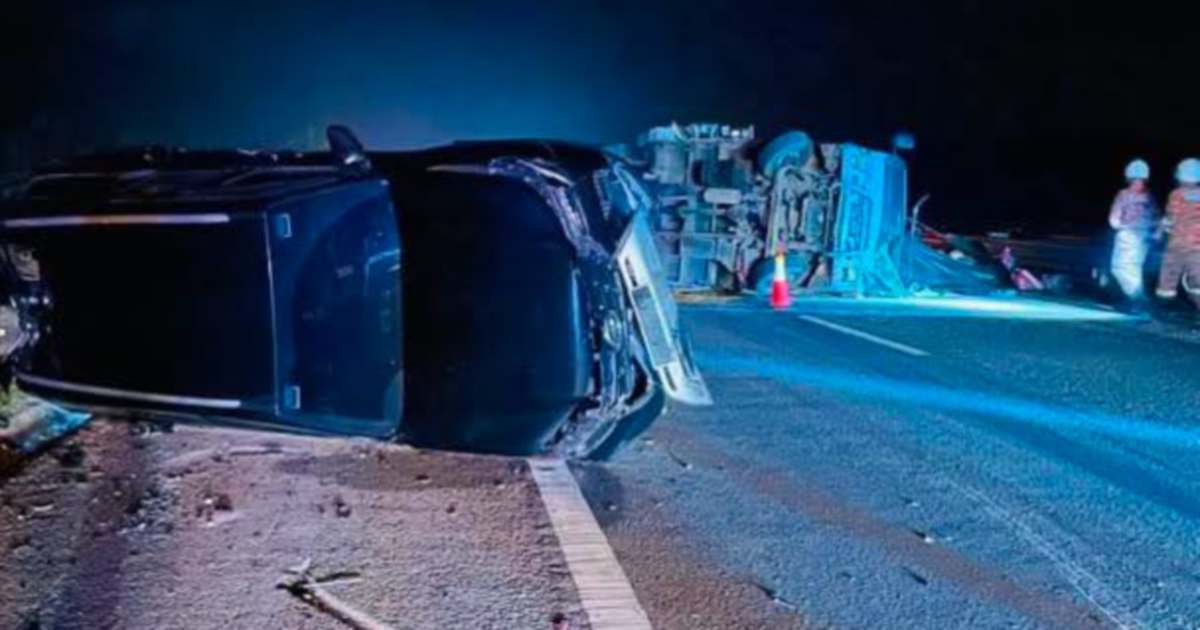
A three-vehicle collision on the East Coast Expressway has left seven people injured, including three media officers attached to Deputy Prime Minister Datuk Seri Dr Ahmad Zahid Hamidi. The accident occurred at kilometre 144 of the expressway near Maran in the early hours of the morning, disrupting traffic along one of Malaysia's busiest north-south corridors.
The incident highlights ongoing road safety concerns on the East Coast Expressway, a critical transport artery connecting Klang Valley to the east coast states. The expressway experiences substantial traffic volume daily, particularly during peak travel periods when vehicles traverse the route at high speeds. Multiple-vehicle collisions, though sometimes unavoidable, underscore the importance of maintaining heightened awareness and adhering to safety protocols during highway travel.
Among those injured were the three media personnel operating within Deputy Prime Minister Zahid's official media unit. These officers typically handle communications, documentation, and press relations for the high-ranking government official. While the nature and severity of individual injuries remain under assessment, authorities indicated that none of those involved sustained life-threatening wounds, a fortunate outcome given the potential consequences of expressway accidents involving multiple vehicles at speed.
The involvement of government officials' staff in such incidents occasionally draws heightened public attention, though the broader context remains the significant road safety challenge Malaysia faces annually. Expressways, despite their safety advantages over conventional highways through separated carriageways and controlled access points, still experience tragic accidents when drivers misjudge speed, distance, or road conditions. The early morning timing of this particular accident may have contributed to visibility or fatigue-related factors.
Emergency response teams mobilised quickly to the accident scene, attending to the injured and clearing the roadway to restore traffic flow. The coordination between highway patrol units, ambulance services, and traffic management teams demonstrates the established protocols for managing expressway emergencies. Such rapid responses remain crucial in minimising secondary accidents and ensuring injured parties receive timely medical attention.
For Malaysian commuters and travellers, incidents of this nature serve as reminders of the unpredictable nature of highway travel. The East Coast Expressway, stretching across several states, carries hundreds of thousands of vehicles monthly. While modern expressway infrastructure generally performs well in preventing accidents through design features like grade separation and median barriers, human factors—fatigue, inattention, excessive speed, and vehicle mechanical issues—continue driving collision statistics.
Government transport officials periodically review safety measures on major expressways, implementing initiatives ranging from improved signage and road markings to enhanced enforcement of speed limits. The Malaysian Highway Authority and police traffic divisions maintain ongoing campaigns encouraging responsible driving habits, particularly during challenging weather or low-visibility conditions typical of early morning travel periods.
The incident also reflects the practical reality facing high-ranking government personnel and their support teams. Media officers and communications staff working with senior ministers typically maintain demanding schedules involving frequent travel between locations. Extended hours and intensive work commitments can occasionally heighten exposure to road risks, making their safety during transit an understandable concern for government administrations.
As investigations into the specific cause of the collision progress, the focus for highway authorities will centre on determining the sequence of events leading to impact. Factors such as vehicle spacing, speed differential between vehicles, road surface conditions, and weather patterns typically feature in accident reconstruction analysis. Such investigations inform ongoing safety improvements and training recommendations for highway users and enforcement personnel.
The fortunate outcome in this instance—injuries sustained but no fatalities—contrasts sharply with more serious expressway accidents that periodically claim lives. Malaysian road fatality statistics remain comparatively high relative to regional peers, with expressway incidents accounting for a notable proportion of these losses. Collective commitment to defensive driving practices, vehicle maintenance, and adherence to speed regulations represents the most effective strategy for reducing such incidents.
Moving forward, this accident serves to reinforce the critical importance of maintaining focus, avoiding excessive speed, and exercising heightened caution during early morning travel when visibility may be reduced and driver fatigue potentially elevated. For government media teams and other officials regularly utilising expressways, ensuring vehicles receive proper maintenance and drivers observe mandatory rest protocols remains essential to workplace safety protocols.

