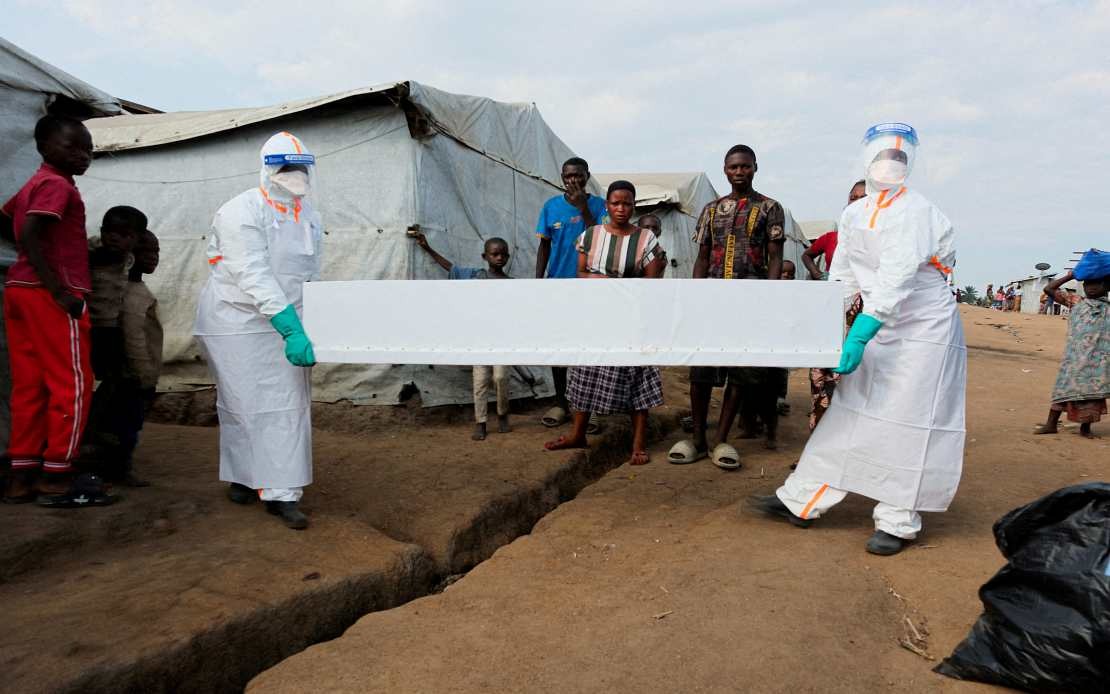
The Ebola outbreak spreading across the Democratic Republic of Congo has reached a grim milestone with confirmed cases now surpassing 1,000, health authorities reported on Sunday. The sharp escalation underscores the severity of a crisis that has claimed 254 lives in just over a month since the outbreak was officially declared on May 15. With a mortality rate standing at 25.3 per cent, the situation demands urgent attention from both national and international health systems.
The outbreak's trajectory is particularly alarming when considered against the scale of previous African epidemics. The Africa Centres for Disease Control and Prevention warned last week that without rapid transmission control, this outbreak carries the potential to surpass the devastation wrought by the 2014-2016 West African epidemic, which killed more than 11,000 people across Guinea, Liberia, and Sierra Leone. That comparison alone should focus minds across the region on the gravity of what is unfolding in central Africa.
Geographical spread remains a critical concern, with response teams concentrating efforts in three provinces: Ituri, North Kivu, and South Kivu. Health Minister Roger Kamba confirmed that while some positive developments have emerged, including an encouraging number of recoveries now exceeding 100 patients, worrying gaps persist in the response architecture. The contact follow-up rate has declined notably, a troubling metric that suggests surveillance systems may be struggling to track individuals who have been exposed to the virus.
Current hospitalisation figures paint a picture of a healthcare system under strain. Approximately 365 patients are either isolated or receiving hospital care, representing the active caseload requiring intensive medical management. The Congo's Health Ministry has emphasised that despite the challenging numbers, response teams continue systematic investigations, epidemiological surveillance, and prevention campaigns in affected communities. However, the gap between ambition and capacity remains a persistent obstacle.
A significant scientific development has emerged from collaborative research conducted by Uganda's Department of National Health Laboratory and Diagnostic Services working alongside Congo's Institute of National Biomedical Research. Scientists identified the current strain as Ebola Bundibugyo, originating from what they term a new wildlife spillover event. This finding carries important implications: it rules out the possibility that this outbreak represents a resurgence of a previously contained strain that persisted undetected or continued circulating in isolated populations. Instead, it confirms that the virus has recently jumped from animal populations to humans, a phenomenon that increasingly characterises emerging infectious disease threats in Africa.
The identification of Ebola Bundibugyo as distinct from other Ebola variants adds a layer of complexity to containment strategies. While all Ebola strains present severe health threats, understanding the specific viral variant helps epidemiologists refine their response protocols and anticipate transmission patterns. The wildlife spillover origin highlights the interconnection between environmental degradation, human encroachment into wildlife habitats, and pandemic risk—a concern that extends far beyond the Democratic Republic of Congo.
McKamba's public statements regarding intensified community communication efforts and enhanced diagnostic capacity represent the standard playbook for outbreak response. Experience from previous Ebola outbreaks demonstrates that rapid diagnosis, swift case isolation, and transparent communication with affected communities significantly improve outcomes. Yet translating these principles into consistent practice across remote regions experiencing active conflict remains extraordinarily difficult in the eastern Congo, where insecurity frequently disrupts health operations.
For Southeast Asian policymakers and health officials monitoring this crisis, the lessons are sobering. The Democratic Republic of Congo's outbreak demonstrates that even when the international community mobilises resources and expertise, containing a rapidly spreading haemorrhagic fever in challenging environments remains extraordinarily difficult. Regional health systems across Southeast Asia must consider whether their surveillance infrastructure, laboratory capacity, and cross-border disease monitoring mechanisms are sufficiently robust to detect and respond to similar threats before they metastasise into major epidemics.
The recovery rate, while modest at over 100 patients, provides a sliver of hope that early intervention and supportive care can improve survival prospects. However, the overall trajectory—with cases more than doubling within weeks—suggests the outbreak remains in an accelerating phase rather than approaching containment. Sustained international support for the Congo's health infrastructure, security for field teams, and community engagement will determine whether this outbreak follows the catastrophic path of West Africa or whether aggressive intervention manages to arrest its momentum.

