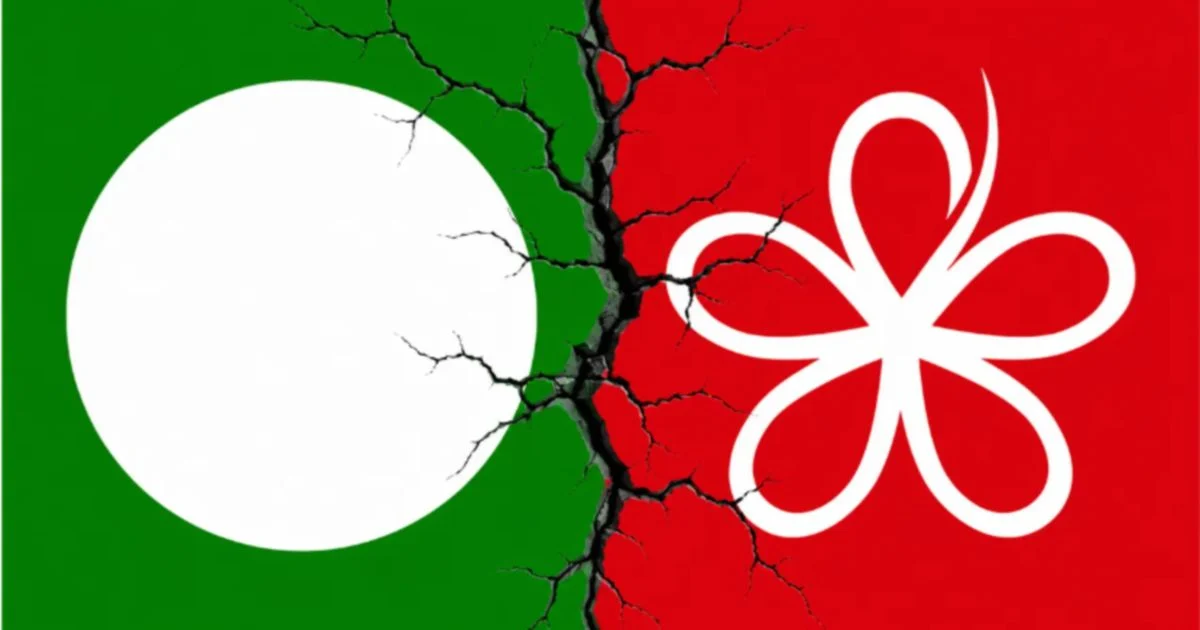
The coalition partnership between PAS and Bersatu, two key pillars of the Perikatan Nasional opposition bloc, faces mounting strain that threatens to sabotage their collective chances when Malaysians go to the polls for the 16th General Election. Political observers warn that the widening fissure between the Islamic party and the Malay-based Bersatu faction could inflict substantial damage on both organisations and fundamentally undermine the opposition coalition's ability to present a united front to voters.
The deterioration in relations between the two parties extends beyond routine policy disagreements typical of coalition politics. Instead, the friction appears rooted in deeper structural conflicts over power-sharing arrangements, ideological direction, and competing visions for the coalition's future. These fundamental disputes have begun manifesting in public statements and media reports, signalling to ordinary Malaysians that internal cohesion within Perikatan Nasional is far from assured. Such visible discord inevitably raises questions among voters about whether the coalition possesses the necessary unity and stability to govern effectively should it achieve electoral victory.
For PAS, which has established itself as a dominant force in several East Coast states and maintains considerable grassroots appeal among conservative Muslim voters, the rupture with Bersatu complicates efforts to expand its national footprint. The party has traditionally positioned itself as the authoritative voice on Islamic governance and religious matters within Malaysian politics, but coalition tension threatens to distract from substantive messaging. When coalition partners publicly distance themselves from one another, it invariably shifts media focus away from policy platforms and toward inter-party conflict, reducing the oxygen available for constructive political debate that might resonate with undecided voters.
Bersatu, meanwhile, confronts equally significant challenges stemming from the breakdown in relations. The party emerged from the Pribumi Bersatu Malaysia faction and has cultivated a narrative centred on reformist Malay nationalism and anti-corruption credentials. However, these positioning advantages lose potency when the party appears entangled in acrimonious disputes with coalition allies rather than focusing on forward-looking governance blueprints. Coalition fracturing forces Bersatu into a defensive posture, compelled to explain and justify its positions to both internal stakeholders and external audiences rather than proactively advancing its electoral agenda.
The electoral mathematics of the 16th General Election make coalition stability particularly consequential. Malaysia's first-past-the-post electoral system, combined with the geographic distribution of voter preferences across diverse constituencies, typically rewards parties and coalitions capable of fielding coordinated campaigns with minimal duplication of effort. When coalition partners harbour mutual suspicions and disagreements about strategy, seat-sharing arrangements become contentious, and campaign resources may be squandered through redundancy or deliberately withheld as leverage in inter-party negotiations. The resulting inefficiency directly translates into lost votes and surrendered seats to opposition candidates.
Voter behaviour research consistently demonstrates that citizens exhibit heightened scepticism toward political alliances displaying visible internal contradictions. Malaysians have witnessed numerous coalition formations and dissolutions over the past decade, from the Barisan Nasional's dominance through the Pakatan Harapan experiment and the subsequent emergence of Perikatan Nasional. This history of coalition volatility has cultivated voter wariness about the durability of such arrangements. When PAS and Bersatu publicly bicker, they reinforce perceptions that their partnership remains transactional rather than principled, further eroding the confidence of swing voters who might otherwise consider supporting them.
The implications extend beyond the immediate electoral contest. A fractured Perikatan Nasional entering the 16th General Election risks not only losing seats but also damaging the credibility of both constituent parties for subsequent political iterations. Should the coalition perform poorly, both PAS and Bersatu will face internal recriminations, with supporters of each party blaming the other for coalition dysfunction. This blame-shifting dynamic could permanently poison the relationship, making future collaboration more difficult even if political circumstances appear to favour renewed alliance-building.
For the broader Malaysian political landscape, persistent tensions within Perikatan Nasional create uncertainty about the likely post-election configuration. If the coalition underperforms, Malaysia could witness realignment involving defections, breakups, or entirely new groupings. This instability itself becomes problematic, as investors, both domestic and international, prefer political systems with predictable governance structures. When major opposition coalitions appear fragile, it transmits signals of systemic political fragmentation that can dampen economic confidence and complicate long-term policy planning.
Regional observers also monitor these developments carefully, as Malaysia's political stability influences Southeast Asian geopolitics and economic cooperation frameworks. When Malaysia appears internally divided or facing electoral uncertainty, its capacity to maintain consistent foreign policy positions and fulfill regional commitments becomes questionable. The Association of Southeast Asian Nations (ASEAN) and bilateral partners value predictability and continuity in Malaysian leadership, characteristics undermined when major political coalitions appear dysfunctional heading into consequential electoral contests.
The 16th General Election represents a critical inflection point for Perikatan Nasional's political trajectory. How PAS and Bersatu manage their current tensions will substantially influence not only their collective electoral fortunes but also their individual long-term viability as major political actors. Political analysts expect that without demonstrable reconciliation and renewed commitment to coalition principles, both parties will face significant voter erosion, particularly among the moderate, swing constituencies essential to winning in competitive parliamentary divisions. The window for rehabilitation remains open, but the clock is running toward the electoral date.