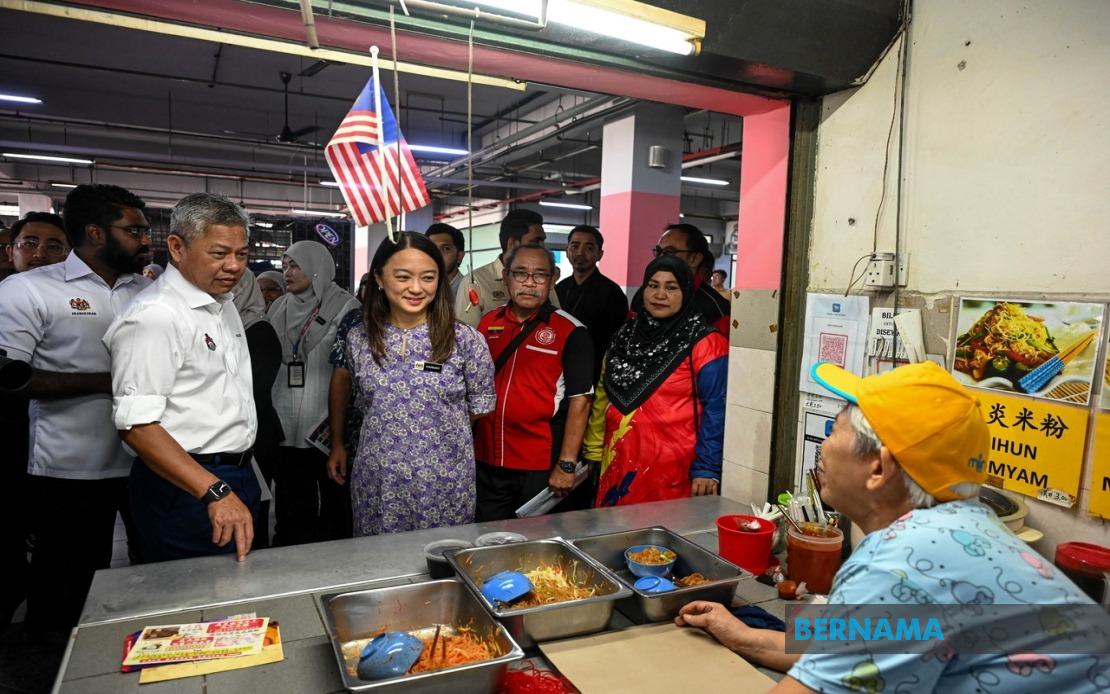
Kuala Lumpur City Hall has committed RM200 million towards a comprehensive modernisation programme affecting 287 hawker locations across the city, marking a significant investment in the informal food and retail trading sector. The initiative, known as Lestari Niaga @ Kuala Lumpur 2026, represents one of the most ambitious efforts to formally integrate street traders and small business operators into the city's urban ecosystem while providing them with upgraded infrastructure and improved operating conditions.
Minister in the Prime Minister's Department (Federal Territories) Hannah Yeoh outlined the programme's scope following a site inspection at UTC Sentul, emphasising that the modernisation effort would directly impact more than 11,000 individual traders and small business owners. The scale of this undertaking positions it as a critical initiative for addressing the livelihood concerns of Malaysia's substantial informal economy, which continues to employ hundreds of thousands of workers across the region. The project reflects a deliberate policy shift towards formalising and professionalising the hawker trade rather than continuing traditional approaches of suppression or marginalisation.
The UTC Sentul project exemplifies the hands-on approach being adopted. With a dedicated budget of RM1.6 million, the redevelopment work commenced on June 15 and will replace existing informal structures with 20 modern modular kiosks designed to meet contemporary health, safety, and sanitation standards. The three-month timeline targets completion before October, demonstrating DBKL's commitment to minimising disruption to traders' livelihoods during the transition period. This particular site has garnered public attention, partly through social media discussion, prompting DBKL officials to emphasise that the objective is sustainability and improvement, not displacement or exclusion of existing traders.
Addressing concerns about the financial impact on traders during construction periods, Kuala Lumpur Mayor Datuk Seri Fadlun Mak Ujud introduced a novel approach: direct monthly financial assistance of RM1,500 for the 20 active traders affected at UTC Sentul. This represents a departure from conventional relocation practices, which typically involve creating temporary trading sites. Fadlun's analysis revealed that temporary sites often incur substantial costs and suffer from poor location choices, ultimately discouraging customer patronage and reducing trader income. The direct assistance model acknowledges the reality that trader viability depends on maintaining customer flows during transitions.
The expansion of this special incentive programme signals DBKL's intention to roll out similar projects across multiple locations simultaneously. Planned sites include Jalan Dato Senu, Pudu Ulu, and Bandar Tun Razak, each receiving comparable financial support mechanisms. This geographic diversification ensures that the benefits of modernisation are distributed across various communities and prevents the concentration of upgrading efforts in any single area. For traders in these locations, the prospect of improved facilities combined with temporary financial support addresses one of their primary concerns during infrastructure transitions.
Hannah Yeoh emphasised that DBKL's approach to the programme incorporates stakeholder engagement across multiple perspectives. The process involves consultation with residents seeking improved traffic management and urban order, traders requiring viable business conditions, and building tenants managing competing commercial interests. This multi-stakeholder framework recognises that hawker operations exist within complex urban ecosystems where diverse interests frequently overlap. By hosting structured engagement sessions and incorporating feedback into redevelopment planning, DBKL aims to build consensus rather than impose solutions.
The Lestari Niaga programme encompasses three distinct trader categories, each requiring tailored approaches. Street hawkers, numbering over 4,000, represent the most mobile and least formalised segment. Approximately 5,000 traders operate from sites under municipal ownership, offering somewhat greater stability but requiring standardised facilities. A remaining 1,000 traders fall into a reapplication category, suggesting previous formal registration or licensing arrangements. This categorisation reflects DBKL's nuanced understanding that traders operate under fundamentally different circumstances and cannot be addressed through uniform policy.
The immediate phase targets 224 locations from the total 287 sites, representing a phased approach designed to manage implementation challenges and gather lessons that can be applied to subsequent stages. This measured escalation reflects prudent project management in dealing with thousands of individual businesses and thousands more potential customers and neighbouring residents. By rolling out changes progressively, DBKL can refine its support mechanisms, address unforeseen complications, and adjust procedures based on real-world feedback before full-scale expansion.
For Malaysian and Southeast Asian observers, this initiative carries broader implications for how regional cities approach informal economy integration. The RM200 million commitment acknowledges that street traders and hawkers represent permanent features of urban economies deserving investment, not temporary problems requiring suppression. The direct financial support mechanism for traders during transitions offers a model potentially applicable to other Southeast Asian cities grappling with similar modernisation challenges. The emphasis on stakeholder consultation and fair process suggests recognition that sustainable urban change requires legitimacy among affected communities.
The timing of Lestari Niaga, targeting completion by 2026, aligns with broader urban renewal objectives for Kuala Lumpur. The hawker sector generates substantial economic activity and employs workers across multiple income levels, from proprietors to casual employees to suppliers. Modernising these operations therefore carries economic significance beyond the immediate trader benefit, supporting broader urban productivity and competitiveness. Properly functioning hawker zones also contribute to city livability and tourism appeal, benefiting the wider economy.
Implementation success will likely depend on sustained commitment beyond initial project phases and continued refinement of support mechanisms. Early indicators from UTC Sentul and subsequent sites will provide crucial data about trader satisfaction, customer retention, and financial outcomes. The special monthly assistance amount of RM1,500 requires validation as genuinely adequate compensation for lost earnings during construction. Transparent tracking of outcomes across all 287 sites will determine whether this model achieves its stated objectives of creating safer, more organised, and more sustainable trading environments.
As DBKL proceeds with this substantial investment, the municipal government effectively signals that informal traders merit formal recognition and support within city planning frameworks. This represents a significant policy development in Malaysian urban governance, one that other city administrations throughout the region may observe closely. The success or challenges encountered during Lestari Niaga implementation will likely influence how other Malaysian municipalities approach similar modernisation challenges in their own hawker and street trading sectors.

