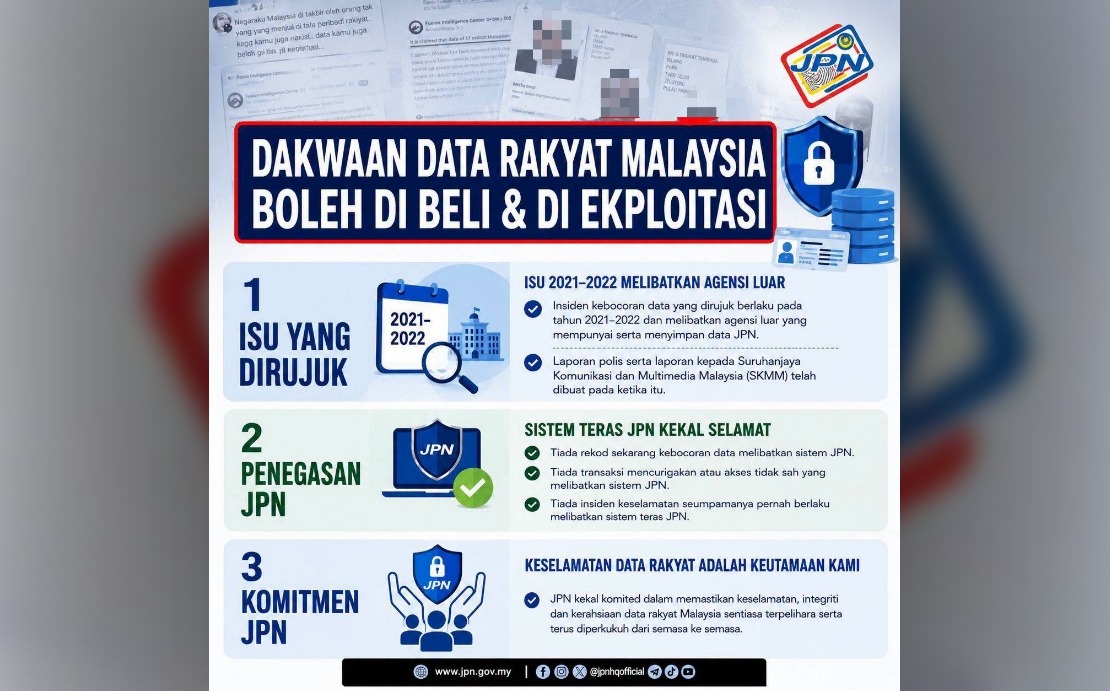
Malaysia's National Security Council (MKN) has moved to quell concerns over viral claims of a major personal data leak, stating that the information in question originates from cybersecurity incidents predating 2022 and bears no connection to any presently operating platforms. The clarification, issued through the National Cyber Security Agency (NACSA), addresses a surge in social media speculation regarding the scope and nature of the breach.
According to the council, the compromised information is believed to have been extracted through unlawful cyber intrusions targeting various systems years ago. Rather than representing a fresh breach of contemporary services, the data is now being redistributed without authorisation across online channels, compounding the original violation. This distinction is significant for Malaysian citizens concerned about the security of their current digital interactions with government and commercial entities.
The NACSA has emphasised that the unlawful provision, distribution, or sharing of illegally obtained information constitutes a criminal offence under Malaysian legislation, regardless of whether the services facilitating such activity are hosted offshore. This legal position underscores the government's determination to prosecute not merely the original perpetrators of the data theft but also those actively participating in its further circulation. The statement serves as a warning to individuals and platforms considering involvement in such activities that domestic law will be applied with full force.
In response to the incident, authorities have mobilised a comprehensive action plan. NACSA, in collaboration with MyNIC and the Personal Data Protection Department, has engaged international service providers to identify, remove, and block access to the websites hosting the leaked information. Simultaneously, the Royal Malaysia Police has launched digital forensic investigations aimed at tracing those responsible for the original intrusions and the subsequent redistribution of the data. These parallel efforts reflect the multi-agency approach required to combat sophisticated cybercriminal activity.
The council has issued clear guidance to Malaysian residents, advising against patronising services that offer access to unlawfully obtained information. Using such services not only violates Malaysian law but also feeds the broader cybercrime ecosystem, creating financial incentives for data theft and distribution networks. This public messaging is designed to reduce demand for illicit data sales and discourage casual participation in criminal activity by ordinary citizens who may not fully appreciate the legal consequences.
The incident has reinvigorated official focus on the pending Cyber Crime Bill, which parliament is expected to consider. The proposed legislation introduces more robust provisions and elevated penalties across multiple categories of cybercriminal conduct, particularly system intrusions and data theft. Among its key measures are provisions criminalising unauthorised access to or damage of computer systems and programmes undertaken without legitimate authority or lawful purpose. Additionally, the bill defines identity theft involving the misuse of another individual's identity to perpetrate crimes as a distinct and prosecutable offence, addressing a category of fraud that has multiplied with the expansion of digital transactions.
The government has also highlighted the Cyber Security Act 2024, which entered force in August of that year. This legislation mandates that entities operating National Critical Information Infrastructure (NCII) establish and maintain comprehensive protective measures, encompassing adherence to codes of practice, execution of thorough risk assessments, and implementation of periodic security audits. These requirements represent a structural attempt to elevate baseline cybersecurity standards across essential services, enhancing the nation's overall digital resilience and reducing vulnerabilities to intrusion.
In addressing speculation that the breach might involve MyDigital ID, the council has clarified the platform's architecture and function. With more than 16 million active registrations, MyDigital ID operates not as a repository of personal data but as a verification mechanism that authenticates users by communicating directly with the National Registration Department. This design protects user information by preventing the centralised accumulation of sensitive personal details on a single platform, instead using the system to confirm identity authenticity during digital transactions. The council emphasised that the architecture of MyDigital ID makes it resistant to the type of mass data harvesting that characterised the pre-2022 breaches now being recycled online.
The broad integration of MyDigital ID across government ministries, telecommunications companies, and banking institutions represents a strategic pivot toward digital transaction security. As adoption expands, the platform's role in mitigating identity fraud becomes more pronounced, creating a protective network effect across multiple sectors. This coordinated adoption reduces opportunities for fraudsters to exploit inconsistent identity verification practices and strengthens the overall authentication ecosystem.
Beyond the immediate incident response, the council has reaffirmed the government's overarching commitment to ensuring that digital transformation benefits all Malaysians while maintaining robust cybersecurity protections. This requires sustained investment in both legislative frameworks and technical infrastructure, coupled with public education about digital risks and individual responsibility. The NACSA and MKN have signalled their readiness to identify and neutralise emerging cybersecurity threats, positioning themselves as active custodians of national digital security rather than reactive respondents to incidents.
For Malaysian residents and businesses, the statement carries several implications. Firstly, individuals should exercise caution regarding offers to access leaked data or breached accounts, as participation carries genuine legal jeopardy. Secondly, the focus on pre-2022 incidents may provide some reassurance regarding current platforms, though vigilance remains warranted given the persistently evolving threat landscape. Finally, the legislative and regulatory measures under development suggest that the government is moving toward a more stringent cybersecurity regime, which will impose new compliance obligations on organisations handling personal information while providing stronger legal recourse for victims of data theft and identity fraud.

