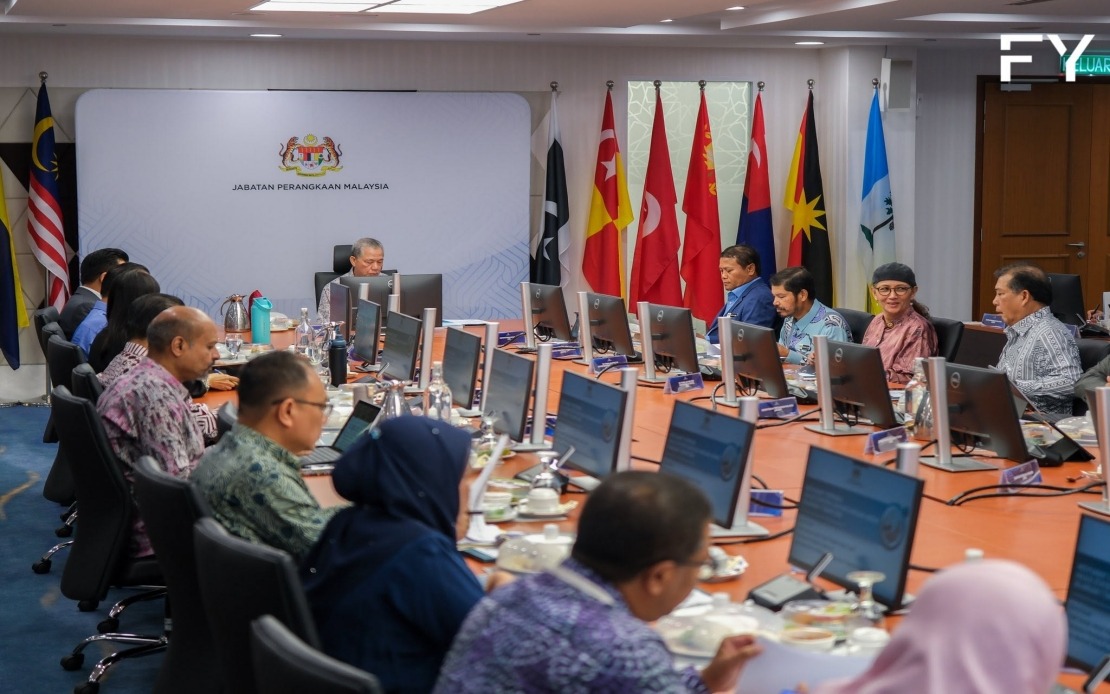
Malaysia's pathway to implementing the 13th Malaysia Plan (13MP) 2026-2030 hinges on a fundamental shift towards data-centric governance and strategic deployment of artificial intelligence, according to Deputy Prime Minister Datuk Seri Fadillah Yusof. Speaking after chairing a high-level meeting of the National Statistics and Data Council (MSDN) in Kuala Lumpur on June 18, Fadillah articulated how the government intends to position information systems and analytics capabilities as cornerstones of national policy formulation and execution.
The contemporary operating environment presents Malaysia with a convergence of challenges that demand evidence-based responses. Global economic volatility, shifting geopolitical alignments, accelerating digital transformation, environmental pressures from climate change and the transformative potential of technological innovation all require government agencies to move beyond traditional, intuition-driven policymaking. Fadillah acknowledged that data and artificial intelligence have transcended their role as mere administrative tools, becoming instead strategic national resources that underpin the nation's competitive advantage and capacity to respond to external shocks.
Within this context, the National Statistical System (NSS) emerges as a vital institutional framework requiring continuous enhancement and modernisation. The government's commitment to strengthening the NSS reflects recognition that robust, timely and integrity-assured statistical information forms the bedrock upon which effective public administration is constructed. Without reliable data infrastructure, even well-intentioned policies risk misalignment with actual population needs or economic realities, potentially wasting resources and undermining public confidence in government initiatives.
Recent economic indicators validate the effectiveness of data-informed governance approaches. Malaysia's gross domestic product expanded by 5.4 per cent during the first quarter of 2026, a performance trajectory that Fadillah attributed directly to development strategies architected on solid informational foundations. This tangible economic success demonstrates that the conceptual case for data-driven policymaking translates into measurable outcomes affecting employment, income levels and overall prosperity across Malaysian society.
The meeting brought together a cross-ministerial constellation of government leaders responsible for critical portfolios including public works, health, communications, digital affairs and economic management. This institutional configuration reflects an understanding that effective data governance cannot remain siloed within statistical agencies but must permeate across the entire administrative apparatus. Deputy Chief Statistician Datuk Seri Dr Mohd Uzir Mahidin participated alongside ministers, signifying the elevated status accorded to statistical leadership within governmental hierarchies.
Fadillah, who simultaneously holds the Energy Transition and Water Transformation portfolio, identified several strategic domains demanding intensified data support. Energy transformation initiatives, climate change mitigation, water sector modernisation and pursuit of sustainable development objectives all require granular, comprehensive information systems to guide investment allocation and policy calibration. These sectors represent not merely bureaucratic concerns but fundamental pillars affecting environmental sustainability, resource security and quality of life for Malaysia's population.
The digital era has fundamentally altered what constitutes effective data governance. Contemporary challenges necessitate the capacity to synthesise information from disparate sources—government agencies, private sector operations, academic research, sensor networks and citizen-generated data—while maintaining rigorous standards of security, ethical compliance and analytical integrity. Fadillah emphasised that orchestrating this data integration represents a prerequisite for government to develop sufficiently comprehensive understanding of evolving challenges and compress decision-making timelines.
Among the substantive initiatives reviewed during the council meeting was standardisation of the country's official statistical methodologies and frameworks. This normalisation process ensures consistency across government agencies and facilitates meaningful comparison of metrics across time periods and geographic jurisdictions. Complementing this standardisation agenda, the meeting addressed data governance strengthening, reflecting growing concerns about ensuring data custodianship, privacy protections and appropriate access controls within an increasingly complex information ecosystem.
Additional strategic priorities encompassed administrative data integration, recognising that government agencies collectively hold vast repositories of information—from tax records to health statistics to employment data—that could yield powerful insights through coordinated analysis. The council also committed to developing specialised talent databases focused on science, technology and innovation sectors, acknowledging that competitive advantage increasingly depends on human capital concentration in knowledge-intensive fields. Youth development data initiatives and national infrastructure asset management systems similarly featured in the council's agenda, reflecting comprehensive approaches to national information architecture.
The construction of what Fadillah termed a "more integrated, high-integrity and development-oriented national data ecosystem" represents an ambitious institutional undertaking spanning multiple government levels and non-state stakeholders. Successful implementation requires sustained collaboration among federal ministries, state governments, private corporations, universities and research institutions. This multi-stakeholder approach acknowledges that information necessary for effective governance often resides beyond government boundaries and that public-private-academic partnerships generate synergies unavailable through unilateral governmental action.
For Malaysian observers and policymakers across Southeast Asia, Fadillah's articulation of data-driven governance carries implications extending beyond technical statistical considerations. Nations competing for foreign investment, talent and technological advancement increasingly differentiate themselves through governance quality and policy effectiveness. By explicitly tethering the 13MP to robust data infrastructure and artificial intelligence capabilities, Malaysia signals commitment to modernised administration and evidence-based decision-making, potentially enhancing investor confidence and international standing as a destination for high-value economic activity.
The emphasis on artificial intelligence integration particularly merits attention within regional context. AI applications spanning predictive analytics, resource optimisation and service delivery personalisation offer transformative potential for developing economies seeking to amplify public sector productivity without proportional budget expansion. Malaysia's deliberate positioning of AI within 13MP implementation frameworks suggests recognition that technological sophistication in governance represents not luxury but necessity for nations aspiring to upper-income status.
Implementation success ultimately depends on sustained institutional commitment, adequate resource allocation and cultivation of technical expertise throughout government agencies. The MSDN meeting represented an important declaratory moment, but translating strategic intent into operational reality requires follow-through mechanisms, performance accountability and continued stakeholder coordination. As Malaysia advances through the 13MP period, the degree to which government agencies successfully embed data-centric cultures and leverage AI capabilities will substantially shape both plan outcomes and Malaysia's broader economic and social trajectory.

