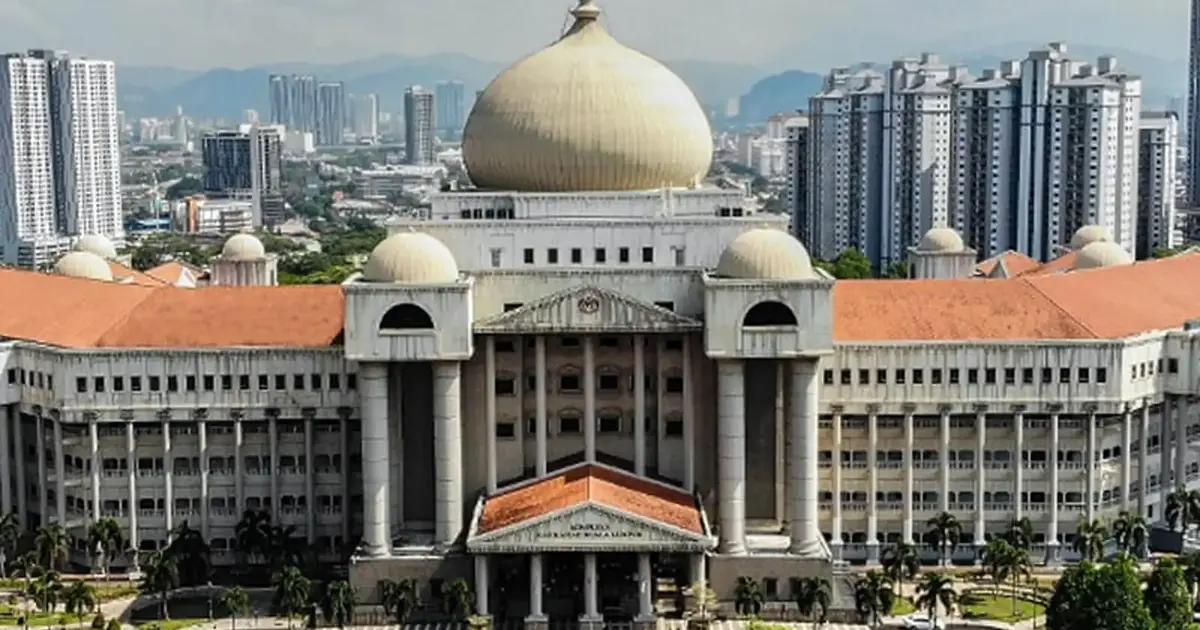
A high court has ordered the forfeiture of an extensive collection of luxury Rolex watches and jewellery to the Malaysian government, concluding proceedings initiated after the Malaysian Anti-Corruption Commission confiscated the items from Nor Shahira Atirah Anuar @ Kamaruddin in January. The decision marks the conclusion of legal action surrounding assets that authorities suspected were obtained through unlawful means or represented unexplained wealth.
Nor Shahira Atirah Anuar holds a notable family connection as the sister-in-law of a former chief of the armed forces, a relationship that likely drew heightened scrutiny from investigators examining the provenance of her substantial asset portfolio. The concentration of high-end timepieces—predominantly Rolex watches, synonymous with wealth and status—suggested a pattern of luxury acquisition that warranted official examination regarding its underlying sources.
The Malaysian Anti-Corruption Commission's January operation represented part of a broader investigative framework focused on unexplained wealth and illicit enrichment. Such operations have become increasingly common as MACC intensifies efforts to trace assets potentially connected to corruption, abuse of power, or money laundering. The timing and scope of the seizure indicate that investigators had developed sufficient grounds to move forward with asset recovery proceedings.
Forfeiture proceedings in Malaysia operate under specific legal mechanisms designed to permanently transfer ownership of seized property to the state when authorities establish reasonable suspicion of unlawful origin. Unlike criminal prosecution, which requires proof beyond reasonable doubt, civil forfeiture operates on a lower evidentiary threshold, focusing on the balance of probabilities. This distinction enables the government to recover assets even when criminal charges remain unproven or unfiled.
The Rolex collection itself warrants attention as a case study in asset accumulation patterns. Rolex watches command premium prices globally, ranging from tens of thousands to hundreds of thousands of ringgit depending on model, age, and rarity. A portfolio of 23 such timepieces represents substantial capital investment and raises fundamental questions about acquisition funding—questions that investigating authorities evidently deemed significant enough to pursue legal action.
The inclusion of jewellery alongside watches suggests a diversified luxury asset strategy. Such holdings typically indicate sophisticated wealth management, whether through legitimate inheritance, business success, or other lawful sources. However, the pattern also reflects acquisition methods flagged internationally as potential red flags in financial investigations: the concentration of high-value portable assets that are readily convertible to cash and difficult to trace.
This case unfolds against Malaysia's evolving anti-corruption landscape, where asset recovery has gained prominence following high-profile seizures and forfeitures. Authorities have demonstrated increasing willingness to pursue civil remedies against individuals suspected of illicit enrichment, particularly those with connections to political or military figures. Such actions send strategic messages about government commitment to investigating wealth concentration among the country's elites.
The forfeiture decision carries implications beyond the immediate case. It reinforces the legal principle that unexplained wealth can be recovered by the state through civil mechanisms, deterring would-be accumulators of assets whose origins cannot withstand official scrutiny. For Malaysia's ongoing efforts to strengthen governance frameworks, such court decisions provide tangible demonstrations of institutional capacity to act against suspected ill-gotten gains.
The proceeds from forfeited luxury items typically flow into government coffers, though specific allocation mechanisms vary. In recent years, Malaysia has explored directing recovered assets toward development programmes, educational initiatives, or broader anti-corruption efforts. The valuation and eventual disposition of 23 Rolex watches and an unspecified quantity of jewellery could represent meaningful revenue recovery depending on collection quality and market conditions.
From a Southeast Asian perspective, Malaysia's forfeiture proceedings reflect regional trends toward strengthened asset recovery mechanisms. Neighbouring jurisdictions including Singapore and Thailand have similarly expanded civil forfeiture frameworks, creating pressure on corruption networks that depend on cross-border asset placement. Coordinated regional efforts increasingly make it difficult for individuals to shelter suspicious wealth across traditional havens within ASEAN.
The connection to a former military figure, while notable, should not overshadow the broader institutional significance of the case. Military-connected individuals have featured prominently in regional corruption narratives, making their assets particularly subject to investigation when wealth patterns appear incongruent with known income sources. However, authorities presumably examined the case on evidentiary merits rather than solely on family connections.
Moving forward, the case demonstrates that Malaysia's anti-corruption infrastructure, despite past criticisms and institutional challenges, retains functional capacity to pursue asset recovery through civil channels. The court's willingness to grant forfeiture reflects judicial acknowledgment that unexplained luxury asset accumulation warrants official intervention, setting precedent for future investigations targeting similar wealth concentration patterns among connected individuals.

