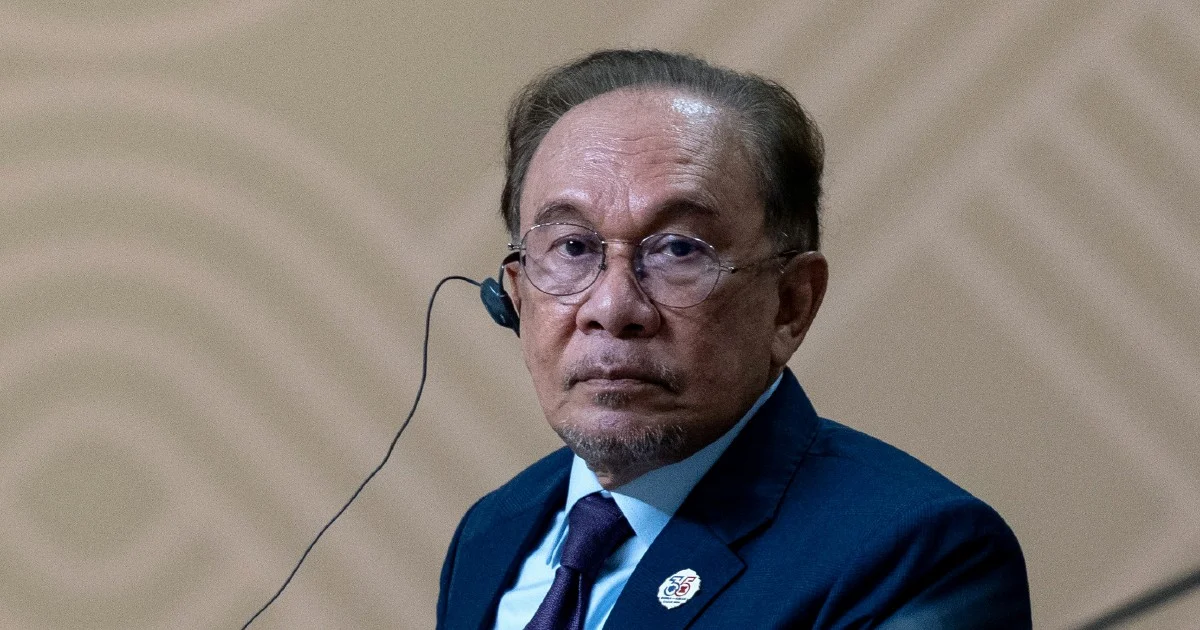
Malaysia's High Court has taken the step of invalidating a subpoena that would have compelled Prime Minister Datuk Seri Anwar Ibrahim to serve as a witness in a RM30 million civil dispute centring on businessman Datuk Vinod Balachandra Sekhar and his wife. The judicial decision reflects growing tensions between the demands of private litigation and the constitutional obligations borne by the nation's chief executive, a balancing act that courts must navigate with considerable care and deliberation.
The case against Datuk Vinod Balachandra Sekhar represents a significant financial claim, with the plaintiff seeking damages totalling RM30 million. The involvement of the Prime Minister in these proceedings raised immediate questions about whether the country's top political leader could reasonably be expected to devote time and attention to private civil matters whilst simultaneously managing the extensive responsibilities of his office. This consideration proved pivotal in the court's reasoning.
The High Court's decision to set aside the subpoena underscores a principle deeply embedded in Malaysian jurisprudence: the executive head of government possesses certain protections and exemptions when it comes to participation in civil litigation. These immunities exist not to shield individual officeholders from accountability, but rather to ensure that the machinery of state continues to function effectively without unnecessary impediment. Courts must therefore weigh the interests of private parties seeking justice against the broader public interest in maintaining governmental continuity.
For Malaysian legal practitioners and observers, this ruling reinforces established precedent regarding the status of sitting prime ministers in civil proceedings. International practice, including decisions in comparable Commonwealth jurisdictions, provides some guidance on how courts approach such matters. The principle that sitting heads of government cannot be easily entangled in protracted private litigation has found expression across multiple legal systems, though the precise boundaries remain subject to ongoing judicial interpretation.
The implications of this decision extend beyond the immediate parties involved in the dispute. Businesses and individuals contemplating civil action must now grapple with the practical reality that compelling testimony from the Prime Minister presents substantial legal obstacles. This inevitably shapes litigation strategy and may encourage plaintiffs to pursue alternative approaches to establishing their claims, relying instead on documentary evidence or testimony from other witnesses more readily available to the court.
For Prime Minister Anwar Ibrahim specifically, the decision provides some relief from the obligation to appear in court proceedings, allowing him to maintain focus on ministerial duties and matters of national governance. However, the ruling should not be interpreted as providing blanket immunity from judicial processes. The court's approach appears calibrated to distinguish between situations where a sitting PM's testimony might be genuinely essential versus those where alternative evidence could adequately establish the facts at issue.
The legal framework governing such disputes in Malaysia draws from both constitutional law and the procedural rules governing civil litigation. The notion that chief executives occupy a special status vis-à-vis civil courts finds grounding in principles of separation of powers and the constitutional allocation of governmental responsibilities. Yet this protection is not absolute, and courts retain discretion to compel testimony when the interests of justice clearly demand it.
Businessman Datuk Vinod Balachandra Sekhar's case now proceeds along alternative evidentiary pathways. His legal team must establish the RM30 million claim through other admissible evidence and witnesses, a reality that may complicate the overall litigation strategy. The plaintiff's counsel will need to demonstrate that their case remains sufficiently robust without direct testimony from the Prime Minister, or potentially pursue different legal remedies altogether.
The decision carries broader significance for Malaysia's judicial system during a period of evolving governance relationships. As courts increasingly confront questions about the balance between individual rights, governmental prerogatives, and the rule of law, rulings like this one establish important precedents for future disputes. The High Court's reasoning will likely influence how lower courts approach similar questions involving other senior government officials and statutory authorities.
For the business community and civil litigants more broadly, this outcome signals that Malaysian courts will exercise careful judgment in deciding whether participation by high-level government officials can be mandated. Parties must therefore develop litigation strategies that account for the practical reality that testimony from the nation's political leadership cannot always be compelled, irrespective of its potential relevance to the matters at hand. Strategic reliance on documentary evidence, expert testimony, and submissions from other witnesses becomes proportionally more important.
The ruling also reflects the Malaysian judiciary's sensitivity to institutional pressures on the executive branch. With numerous policy initiatives, budget management, parliamentary obligations, and administrative decisions demanding the Prime Minister's attention daily, courts recognise that diverting this focus to protracted civil litigation could impose genuine costs on public administration. This institutional awareness, whilst perhaps not always explicitly articulated, informs judicial decision-making in such cases.
Moving forward, the High Court's decision will likely prompt continued refinement of the principles governing compulsory testimony from sitting heads of government. Legal scholars and practitioners will scrutinise the precise reasoning to understand what circumstances might justify overriding the general immunity from subpoena that the court has now reaffirmed. The borderline between permissible litigation involving senior officials and impermissible entanglement of the executive in private disputes remains an area of active judicial development in Malaysian law.

