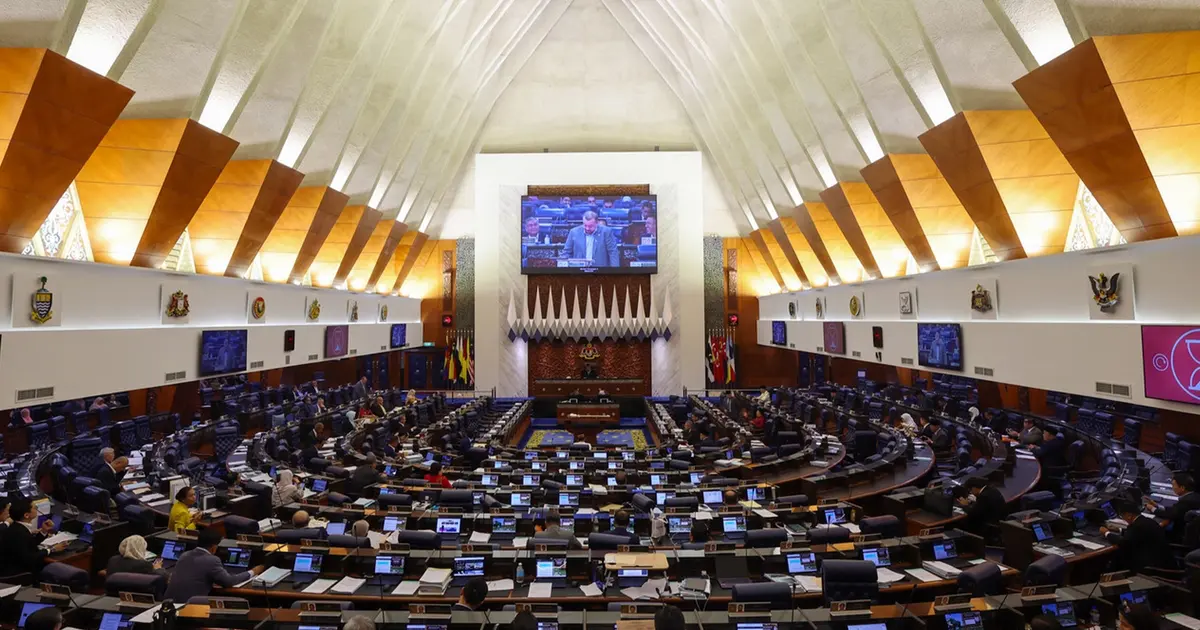
The government is making another attempt to pass constitutional legislation that would impose a 10-year ceiling on prime ministerial tenure, as Parliament reconvenes with an ambitious agenda encompassing four major bills. The term-limit proposal will feature prominently among the measures coming before lawmakers during the upcoming Dewan Rakyat sitting beginning Monday, marking a fresh push on an initiative that encountered resistance during the previous parliamentary session.
The bill restricting prime ministerial terms represents part of a broader constitutional reform effort that has gained traction in recent political discourse. Setting such limits has become increasingly relevant in Malaysian politics, where discussions about governance structures and executive accountability have intensified. The 10-year threshold would align Malaysia's approach with practices observed in various Commonwealth democracies and emerging governance trends across Southeast Asia, though it would require constitutional amendment under Article 159 of the Federal Constitution—hence the need for supermajority backing.
During the previous parliamentary sitting, this legislation failed to achieve the two-thirds majority necessary for constitutional changes to pass the lower house. This setback underscored the contentious nature of the proposal, as some lawmakers questioned whether imposing tenure restrictions might constrain executive effectiveness or create unintended consequences for political stability. Nevertheless, proponents argue that term limits enhance democratic accountability by preventing excessive concentration of power and encouraging fresh leadership perspectives.
The reintroduction of the bill reflects government determination to advance institutional reforms despite initial parliamentary resistance. Political analysts suggest the renewed push may indicate either increased government confidence in garnering sufficient support or strategic parliamentary management ahead of the sitting. The outcome will signal whether opposition to the measure has softened or whether the government has secured additional backing from coalition partners and independent members.
Beyond the prime ministerial term-limit legislation, three other substantive bills will occupy parliamentary attention during the sitting. While details of these companion measures remain less publicised, their concurrent tabling alongside the constitutional amendment suggests a coordinated legislative agenda addressing governance structures and institutional frameworks. This bundled approach may reflect calculations about which bills might benefit from grouped debate or strategic parliamentary timing.
For Malaysian observers and regional governance scholars, the term-limit debate carries implications extending beyond the immediate constitutional question. Neighbouring democracies including Indonesia and the Philippines have implemented term restrictions for their chief executives, with mixed results regarding institutional stability and leadership quality. The Malaysian Parliament's approach to similar restrictions will contribute to ongoing regional conversations about optimal governance designs and executive accountability mechanisms suited to diverse political contexts.
The political calculation surrounding the two-thirds requirement itself merits examination. Constitutional amendments in the Malaysian system deliberately demand supermajority consensus, reflecting framers' intentions to protect fundamental legal architecture from shifting partisan majorities. However, this high threshold also means contentious constitutional changes often require genuine cross-partisan agreement, occasionally creating gridlock on issues where ideological divisions run deep.
Prime ministerial term limits carry particular resonance in contemporary Malaysian politics, where succession planning and executive transitions have generated occasional friction within governing coalitions. Term limits might theoretically reduce internal jockeying for position and provide greater certainty about leadership transitions, yet opponents worry such restrictions might weaken an incumbent's ability to implement long-term policy initiatives or could artificially propel politicians toward lame-duck status during final years in office.
The upcoming parliamentary sitting occurs within Malaysia's broader political context of coalition management and institutional consolidation. Since the 2018 political transition and subsequent shifts in government composition, various stakeholders have proposed constitutional and legislative reforms addressing accountability, transparency, and democratic strengthening. The term-limit bill should be understood as part of this wider reform impulse, even though its specific merits remain subject to legitimate parliamentary debate.
Success or failure of the measure during the coming sitting will likely depend on the government's ability to maintain coalition discipline and secure backing from sufficient independent members to clear the two-thirds threshold. Previous parliamentary defeats on similar constitutional matters suggest that such supermajority requirements can indeed prove formidable obstacles, particularly when opposition parties maintain cohesive resistance or when coalition partners harbour reservations about specific provisions.
The parliamentary session thus represents a crucial test both for this particular constitutional initiative and for the government's capacity to advance its institutional reform agenda. Beyond the immediate legislative outcomes, the debates themselves will illuminate prevailing parliamentary sentiment regarding executive power constraints and governance modernisation in Malaysia, offering valuable indicators for observers tracking the country's democratic development and constitutional evolution in the years ahead.

