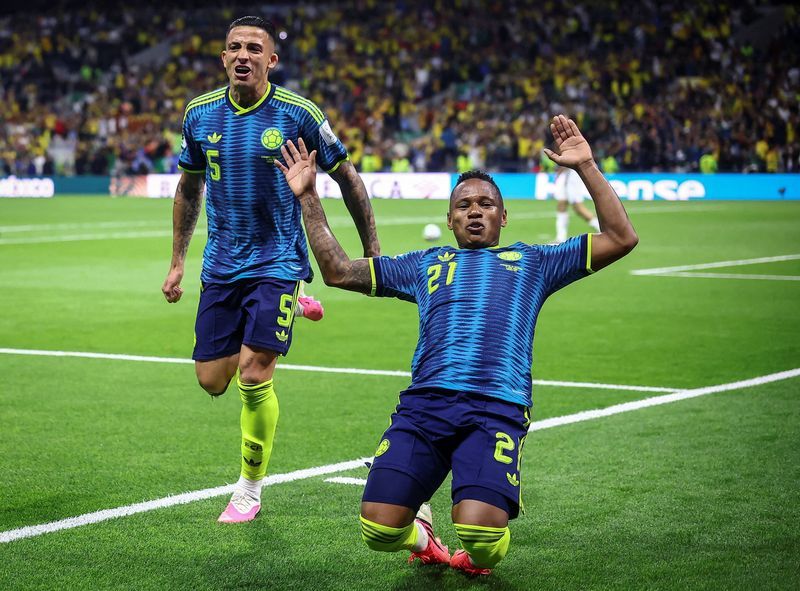
Colombia will attempt to extend their World Cup campaign momentum on Tuesday when they confront DR Congo in Group K, but coach Nestor Lorenzo acknowledges that his South American outfit faces a stern examination against an opponent who has already demonstrated the capacity to frustrate tournament heavyweights. The Africans salvaged a respectable 1-1 draw against Portugal in their opening fixture, marking their return to the World Cup stage after a 48-year absence and providing unmistakable evidence that they possess the tactical discipline and counter-attacking prowess to threaten more celebrated opponents.
Colombia's 3-1 triumph over Uzbekistan on their opening day initially appeared emphatic, yet beneath the scoreline lay uncomfortable truths that Lorenzo will have dissected extensively. The Colombian defence showed concerning permeability in the second half, with the Asian outsiders repeatedly exposing gaps in the backline and threatening to narrow what became a commanding winning margin. These defensive shortcomings represent precisely the vulnerabilities that DR Congo, guided by coach Sebastien Desabre, will study intently as they prepare their tactical blueprint for Tuesday's encounter.
While victory against the Uzbeks guarantees Colombia progression to the knockout rounds, the mathematics of Group K provide additional incentive. Should Portugal stumble against Uzbekistan simultaneously, a win over DR Congo would likely secure top position in the group and offer a potentially more favourable path through the tournament's latter stages. The implications of group placement in a World Cup competition cannot be overstated, influencing both the strength of subsequent opponents and the geographical logistics of travel, making every group-stage victory strategically significant beyond the three points themselves.
The onus for Colombia's attacking potency rests substantially upon Bayern Munich's Luis Diaz, whose electric pace and direct running style proved instrumental in dismantling the Uzbek defence. The Colombian winger furnished both a goal and an assist in the opener and earned player-of-the-match honours, establishing himself as the primary creative force around which Lorenzo's attacking structure revolves. However, the dependence upon a single player presents tactical vulnerabilities that sophisticated opponents can exploit through deliberate tactical adjustments and heightened defensive vigilance.
Captain James Rodriguez, conversely, remained peripheral to Colombia's attacking narrative during the Uzbekistan victory, operating in a subdued role that reflected either tactical instruction or reduced involvement in the match's rhythm. Lorenzo will undoubtedly seek greater influence and creative contribution from his experienced midfielder, recognising that spreading attacking responsibility across multiple players provides both tactical flexibility and reduces the predictability of Colombia's offensive approach. The captain's resurgence would substantially strengthen Colombia's football and provide alternative avenues for breaking down organised defences.
DR Congo's achievement in drawing against Portugal demands careful analysis, particularly given Portugal's status as among the tournament's strongest squads. The Congolese outfit demonstrated exceptional defensive compactness, particularly through the first half, while simultaneously maintaining sufficient attacking organisation to trouble the Portuguese consistently through rapid transition football. Yoane Wissa's opening goal represented not merely a statistical achievement but a symbolic moment for a nation returning to the World Cup, energising both players and supporters with the knowledge that their team belonged at football's premier competition.
Lorenzo has publicly cautioned that DR Congo's direct, transition-oriented football style presents a qualitatively distinct tactical challenge from the possession-dominated approach that Uzbekistan employed. The Argentine manager recognised after the opening victory that his team's excessive possession occasionally became counterproductive, with Colombia's midfield repeatedly recycling the ball sideways and backwards without penetration into final attacking positions. This observation suggests that tactical refinement rather than personnel changes may prove decisive, requiring Colombia to combine their established dominance of possession with greater clinical efficiency and directness in the attacking third.
The Congolese are almost certain to replicate the defensive structure that frustrated Portugal, adopting a compact formation designed to compress spaces in the middle and force Colombia to utilise the flanks. This tactical approach inherently invites Colombia's attacking play wide, where Diaz naturally operates most effectively, yet simultaneously requires Colombian defenders to remain constantly vigilant against the lightning-quick breaks that define DR Congo's counter-attacking methodology. The resulting tactical chess match between Lorenzo's strategic adjustments and Desabre's organisational framework will substantially determine the match's outcome.
Colombian travelling supporters have already demonstrated their presence in Mexican territory, transforming portions of Mexico City's Estadio Azteca into a provisional home stadium during the Uzbekistan fixture. With Guadalajara serving as Colombia's official tournament base, another substantial contingent of Colombian fans is expected to attend Tuesday's encounter, providing emotional and psychological reinforcement that frequently translates into measurable performance improvements. The atmosphere generated by passionate supporter bases has historically proved valuable in knockout competition contexts, yet group-stage matches equally benefit from the confidence and energy that home-like environments provide.
Desabre's squad will draw confidence from their Portuguese performance but cannot afford complacency against an opponent possessing substantially greater technical quality and experience at the World Cup level. The balance between tactical pragmatism and sufficient attacking ambition represents the Congolese coaching challenge; too defensive an approach risks surrendering the initiative entirely, while excessive adventure could expose the vulnerabilities that Colombia's superior player quality is designed to exploit. Tuesday's encounter will ultimately prove significant for both teams' progression prospects, though for Colombia, anything less than victory risks creating unnecessary Group K complications when their squad quality nominally renders them among the competition's favourites.

