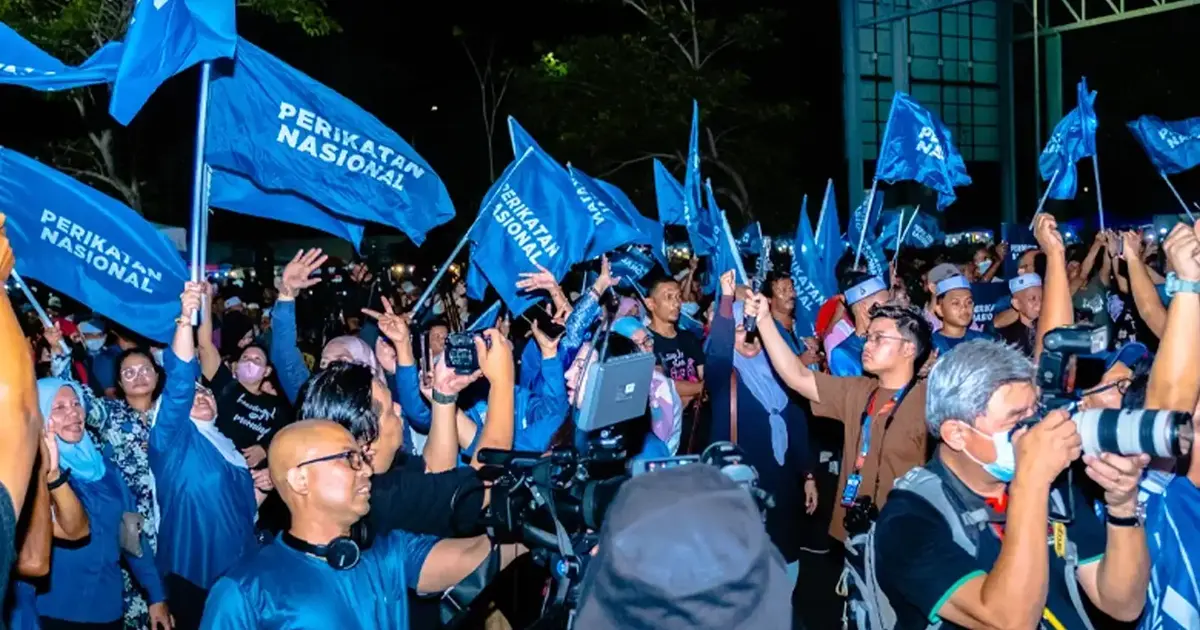
The expansion of Perikatan Nasional through the inclusion of Wawasan and Pejuang has triggered concerns among political observers that the coalition faces mounting internal friction over constituency contests and voter mobilisation, particularly in contests where Malay-Muslim majority constituencies remain the primary prize. Analysts suggest the coalition's growing membership, rather than broadening its appeal, may instead concentrate competitive pressure on a narrowing set of constituencies where multiple PN-aligned parties now compete for the same electorate.
The dynamics within Malaysia's opposition coalition have shifted substantially with the arrival of these two new political entities. Bersatu, which has positioned itself as a major force within Perikatan Nasional since the coalition's formation, now confronts a fundamentally altered internal equation. The party's ability to claim exclusive access to certain voter segments and geographic strongholds appears increasingly contested as new allies demand their own space within the PN structure. This development marks a critical juncture for how the coalition manages the distribution of nomination slots and campaign resources before the next general election.
Wawasan and Pejuang bring their own organisational networks, supporter bases, and leadership aspirations into the PN framework. Rather than expanding the coalition's overall reach into previously untapped voter populations, these parties largely overlap with existing PN support bases—predominantly Malay-Muslim communities that have historically voted for opposition and reform-minded parties. This overlap creates the preconditions for what observers term a form of internal contest that could prove destructive to coalition cohesion if not carefully managed through negotiation and seat-sharing arrangements.
The electoral mathematics in Malaysian constituencies mean that where multiple candidates from the same coalition compete, vote-splitting becomes inevitable. In first-past-the-post systems, this fragmentation directly benefits competing coalitions and independent candidates. Any PN-affiliated party that loses its monopoly on certain constituencies to new coalition members effectively hands those seats to potential opponents, provided the opposition vote remains unified. The consequences extend beyond individual constituency contests to affect the coalition's overall parliamentary strength and its capacity to mount credible challenges to federal and state governments.
Bersatu's unique position within Perikatan Nasional has rested partly on its control of specific geographic strongholds and its ability to deliver votes in constituencies where Malay-Muslim voters form decisive majorities. The party emerged from the 2018 political realignment as a significant player, and by the 2023 elections, it had consolidated its position as a major coalition component. However, the influx of Wawasan and Pejuang introduces competing leadership narratives and demands for representation that challenge Bersatu's assumed primacy. Both new entrants can point to their own grassroots support networks and claim legitimate stakes in constituency nominations.
The tensions emerging from this situation reflect broader challenges inherent in multi-party coalition politics in Malaysia. Unlike larger coalitions with internal hierarchies and clearly defined power-sharing formulas, Perikatan Nasional has operated with relatively looser structural arrangements. The addition of new members without corresponding adjustments to coordination mechanisms and nomination procedures threatens to transform what were previously contained disputes into more serious fractures. Political observers note that without proactive governance reform within the coalition, the pattern of internal competition could escalate into open conflict that undermines PN's electoral prospects.
For Malaysian voters and democratic observers, the implications warrant close attention. Coalition stability directly affects election predictability and governance quality. A coalition racked by internal contradictions struggles to articulate coherent policy platforms and often becomes consumed by internal resource allocation disputes that overshadow substantive political debate. The PN experience mirrors patterns seen in other Asian opposition coalitions, where rapid expansion without institutional capacity-building creates friction that eventually becomes destabilising.
Seat-sharing negotiations between PN components will prove critical in determining whether internal competition remains manageable or becomes corrosive. Previous coalition governments in Malaysia, including the Pakatan Harapan administration from 2018 to 2020, grappled with similar dynamics. The PH experience demonstrates that detailed, transparent agreements on constituency allocation and leader roles can help contain tensions, though such arrangements remain fragile and subject to periodic renegotiation as electoral circumstances shift.
Regional analysts also observe that the PN expansion reflects the continuing fragmentation of Malaysia's political landscape. The emergence of multiple parties competing within the same ideological space, particularly among Malay-nationalist and Islamist constituencies, has become a defining feature of contemporary Malaysian politics. Rather than consolidation around fewer, stronger entities, the trend moves toward proliferation of medium-sized parties that vie for influence within broader coalitions. This structural shift creates new vulnerabilities, as coalition cohesion becomes harder to maintain and defections become more tempting when parties compete internally for prominence.
Looking ahead, the Perikatan Nasional will need to develop mechanisms to regulate internal competition, allocate resources equitably, and prevent electoral contests from becoming destructive zero-sum games between coalition partners. The stakes are substantial: a PN fractured by internal rivalry risks losing parliamentary seats to competing coalitions, particularly if opposition forces remain unified. Conversely, if PN successfully navigates these tensions through inclusive governance structures and transparent seat allocation, it could strengthen its position as a credible alternative power bloc capable of contesting federal power.

