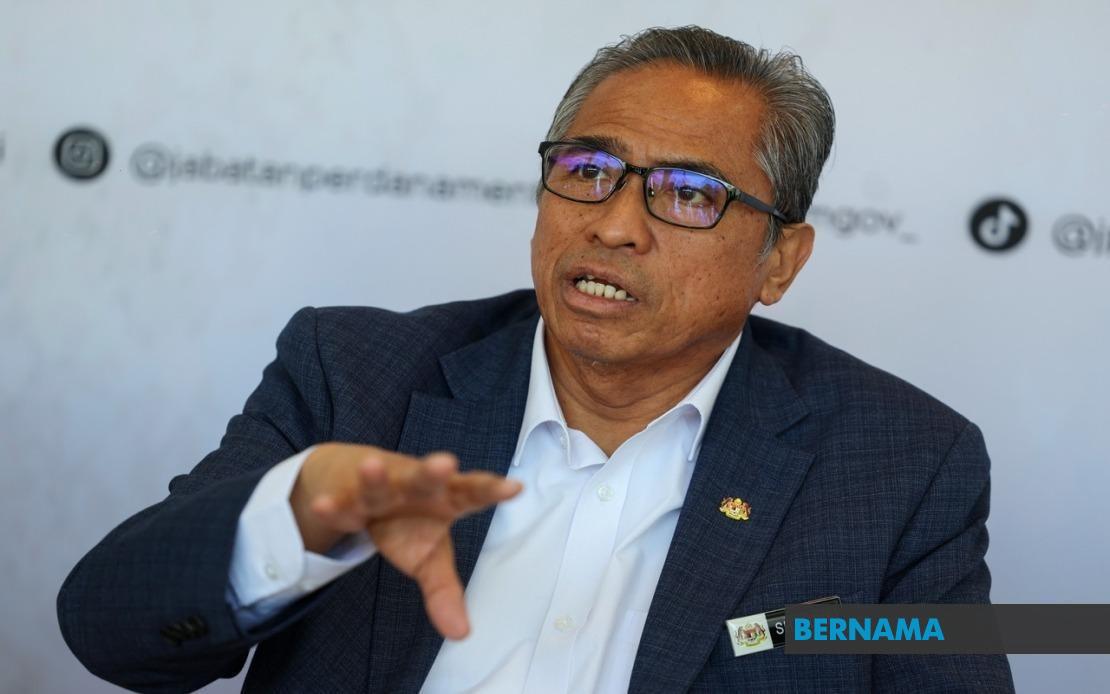
The machinery of government must move in concert with Malaysia's diplomatic efforts to secure the country's position in an increasingly competitive global landscape, according to Tan Sri Shamsul Azri Abu Bakar, the Chief Secretary to the Government. Speaking in Kuala Lumpur, Shamsul Azri underscored that the recent working visits by Prime Minister Datuk Seri Anwar Ibrahim to Russia and Turkmenistan represent more than symbolic foreign policy achievements—they constitute a springboard for concrete economic advancement that requires rapid execution at the domestic level.
The Chief Secretary highlighted how the diplomatic strategy pursued by the Prime Minister has strategically positioned Malaysia to pursue untapped markets whilst deepening ties with established commercial partners. However, he stressed that diplomatic overtures alone cannot succeed without corresponding institutional capacity and readiness within the government machinery. This represents a critical challenge for Malaysia's bureaucracy, which must operate with greater speed and flexibility than traditional administrative frameworks typically allow. The civil service, he emphasized, bears responsibility as the nation's structural backbone to convert these high-level diplomatic agreements into implementable policies and tangible benefits flowing to Malaysian citizens.
Shamsul Azri called particular attention to the role of ministries overseeing economic and trade portfolios, which he described as requiring heightened preparedness and operational agility. Government officials in these sectors must develop a substantially stronger understanding of contemporary shifts in global economic architecture, moving beyond conventional procurement and regulatory approaches to anticipate and capitalize on emerging opportunities. The requirement extends beyond technical competence to encompassing what he termed a global mindset—the ability to operate as strategic partners on the international stage rather than merely executing domestic directives. This philosophical reorientation demands that senior bureaucrats and departmental heads fundamentally reassess how their institutions engage with external stakeholders.
The Chief Secretary invoked the framework of MADANI Diplomacy and the Whole-of-Government approach as organizational principles that personnel across all levels should internalize and apply to their operational responsibilities. MADANI Diplomacy, which reflects Malaysia's commitment to multidimensional engagement emphasizing mutual benefit and principled partnerships, should guide how government agencies interact not only with foreign counterparts but also with domestic stakeholders and the business community. The Whole-of-Government approach similarly demands that agencies operate in integrated fashion rather than in silos, recognizing that economic competitiveness requires coordination across trade, investment, infrastructure, education, and regulatory functions.
Among the immediate priorities flagged by Shamsul Azri is the acceleration of the Ease of Doing Business initiatives, which directly impacts Malaysia's attractiveness to foreign investors. Government must simultaneously function as an effective facilitator and guarantor that international investment commitments materialize without unnecessary delays or bureaucratic friction. This dual responsibility—removing barriers whilst ensuring compliance—requires civil servants to develop more sophisticated understanding of investor requirements and timelines. For Southeast Asian context, where competition from Thailand, Vietnam, and Indonesia for foreign direct investment remains intense, Malaysia's ability to execute on commitments becomes a decisive competitive factor.
The creation of high-income employment opportunities domestically emerges as a central metric for success from Shamsul Azri's perspective. Diplomatic agreements that fail to generate meaningful job creation, particularly positions offering advancement and skill development for Malaysians, do not fulfill their ultimate purpose. This consideration reflects broader recognition within government that international engagement must ultimately serve the domestic constituency. The Chief Secretary also flagged supply chain security and commodity access as considerations intertwined with economic diplomacy, particularly relevant for a nation dependent on imported energy and raw materials where strategic relationships with Russia and Central Asian suppliers carry tangible implications for household costs and industrial competitiveness.
Maintaining Malaysia's competitive positioning as an investment destination emerged as another critical theme in Shamsul Azri's remarks. This requires the civil service to not merely implement existing policies but to continuously monitor and adapt institutional frameworks in response to global competitive pressures. The Chief Secretary referenced the Public Service Reform Agenda (ARPA), specifically its internationalisation enabler, as the institutional framework designed to build bureaucratic capacity aligned with these objectives. ARPA represents the government's systematic effort to transform the civil service from a domestic-focused administrative apparatus into one capable of supporting complex international economic engagement.
The challenge before Malaysia's bureaucracy, as articulated by the Chief Secretary, is fundamentally one of institutional velocity. Traditional civil service operations often prioritize procedural adherence and risk minimization over speed and entrepreneurial orientation. However, in contemporary global economic competition, the window for capitalizing on diplomatic openings can be narrow. Countries that move slowly risk seeing opportunities migrate to competitors with more nimble institutional structures. Shamsul Azri's exhortation represents an implicit acknowledgment that Malaysia's diplomatic corps has succeeded in creating opportunities, but the follow-through—the institutional conversion of these opportunities into economic reality—remains uncertain and contingent on civil service performance.
For Malaysian readers and policymakers, the implications are multifaceted. Domestically, success in executing on diplomatic agreements affects job creation, wage levels, and cost of living for ordinary Malaysians. Regionally, Malaysia's ability to operationalize its diplomatic initiatives influences how other Southeast Asian nations assess the credibility of Malaysian government commitments and the attractiveness of Malaysian partnerships. Internationally, the gap between diplomatic rhetoric and institutional execution constitutes a persistent vulnerability in Malaysia's global engagement, particularly when competing against larger economies with more extensive resources and established institutional networks.
The Chief Secretary's public articulation of these imperatives also serves as an internal communication to the civil service about changing expectations and performance metrics. Rather than traditional measures focused on rule compliance and budgetary control, evaluation of civil service effectiveness should increasingly incorporate the extent to which officials facilitate rapid translation of policy intent into measurable economic outcomes. This reframing represents a significant cultural shift for a bureaucracy historically oriented toward caution and procedure. Success in executing this transformation will substantially determine whether Malaysia's diplomatic initiatives, particularly those with Russia and Turkmenistan, generate the sustained economic benefits that justify the political capital invested in these relationships.

