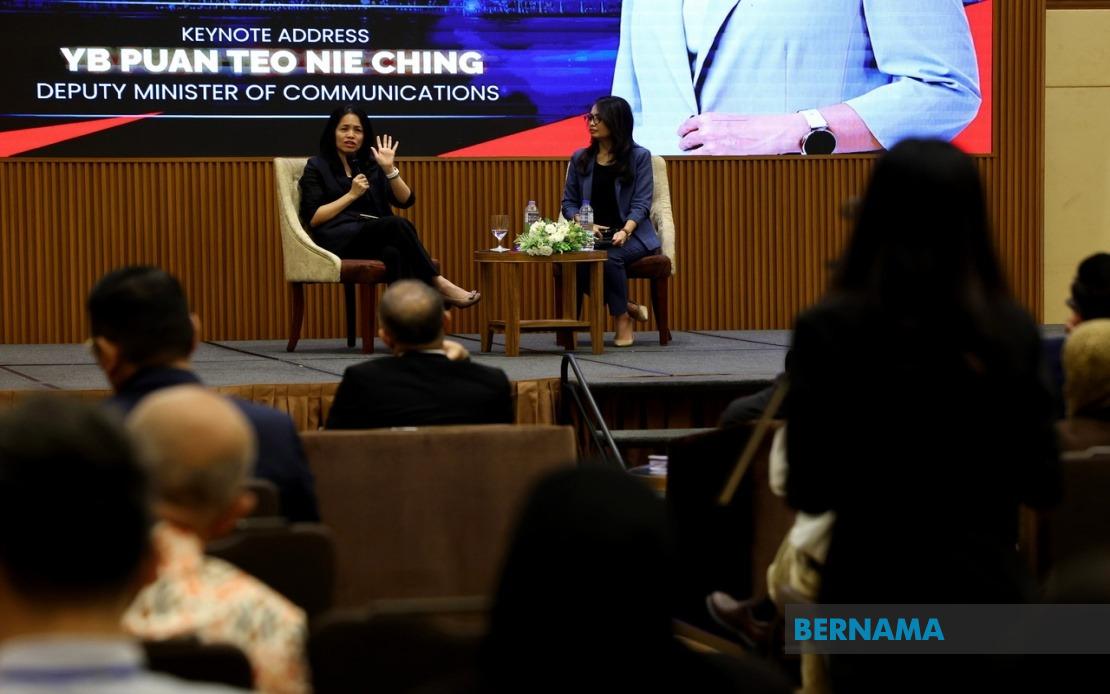
Deputy Communications Minister Teo Nie Ching has issued a broad appeal to public sector workers to maintain professional standards in their communications, urging them to steer clear of language that could inflame tensions or breach Malaysia's traditionally sensitive political boundaries. Speaking in Putrajaya on June 15, Teo emphasised that restraint in public discourse should be a year-round commitment rather than confined to election periods, signalling growing concern about the tone of government messaging.
The minister's remarks were prompted by scrutiny of the recently appointed director-general of the Department of Community Communications (J-KOM), Mohd Hisyamuddin Ghazali, who has faced criticism over his use of provocative phrasing since taking office on June 9. Teo's intervention suggests that leadership within Malaysia's communications apparatus faces mounting pressure to demonstrate decorum befitting their roles as custodians of government narratives.
Central to Teo's advisory was a specific warning about the so-called 3R boundaries—matters touching on race, religion and royalty—which remain constitutionally and culturally significant red lines in Malaysian political discourse. Her emphasis on avoiding these topics reflects the enduring consensus among Malaysian policymakers that public statements on such matters risk undermining social cohesion and triggering constitutional controversy. By framing this guidance as applicable to all civil servants, not merely communications specialists, Teo signalled that every government representative bears responsibility for upholding these unwritten rules.
The timing of Teo's statement carries particular significance given Malaysia's evolving media environment and the acceleration of information dissemination through digital channels. As civil servants increasingly engage directly with the public through social media and instant communication platforms, the potential for intemperate remarks to spread rapidly and cause diplomatic or communal friction has multiplied. Teo's emphasis on exercising restraint "not only during election campaigns but at all times" acknowledges this reality and suggests official anxiety about the government's communication discipline extending beyond formal periods of political contestation.
Mohd Hisyamuddin's appointment marked a leadership transition at J-KOM, where he succeeded Datuk Ismail Yusop. As head of the department responsible for government communications strategy, the director-general's public conduct carries outsized weight; statements from this position carry implicit official sanction and shape perceptions of the government's broader values and priorities. The criticism directed at Mohd Hisyamuddin therefore resonates beyond mere individual misconduct, raising questions about the vetting and guidance processes for senior appointees in communications roles.
Teo's observation that she had not yet personally conveyed her advice to Mohd Hisyamuddin suggests a hierarchy of communication within the government structure, where such guidance typically flows through established channels rather than direct intervention. However, her public articulation of these expectations serves a dual purpose: it signals to the wider civil service the standards expected while simultaneously creating accountability mechanisms for future conduct. This approach reflects the Malaysia government's preference for calibrated messaging and managed discourse rather than explicit disciplinary processes.
The broader context here involves Malaysia's ongoing efforts to professionalise its public communications infrastructure while maintaining political control over narrative frameworks. The Department of Community Communications plays a crucial role in this balancing act, tasked with projecting the government's agenda while navigating the constraints of Malaysia's political settlement. Civil servants in such positions operate within boundaries that are partly legal, partly constitutional, and partly cultural—making the role inherently challenging and prone to missteps.
For Malaysian civil servants more broadly, Teo's guidance reinforces expectations that public statements should reflect not merely individual views but institutional positions. The warning against inappropriate language extends beyond vulgar or crude expression to encompass any communication likely to inflame existing sensitivities or challenge established conventions around protected topics. This reflects a governance model in which civil servants function as extensions of state authority and must therefore maintain corresponding standards of propriety.
The implications for Malaysia's communications sector are substantial. As digital platforms democratise access to public discourse and reduce gatekeeping capacity, government institutions face mounting challenges in controlling messaging. Teo's intervention attempts to reassert these traditional boundaries even as technological change renders such barriers increasingly porous. The success of such guidance depends on consistent enforcement and cultural acceptance within the civil service itself—a commitment that senior officials like Teo must model and reinforce.
Regionally, Malaysia's emphasis on these communication standards distinguishes its governance approach from some neighbouring democracies. While other Southeast Asian nations have grappled with populist leaders testing similar boundaries, Malaysia's institutional consensus around avoiding provocative discourse on identity and sovereignty matters has proven relatively resilient. Teo's statement reaffirms this commitment even as broader political forces strain traditional conventions.
Moving forward, the effectiveness of Teo's message will depend on whether it translates into concrete behavioural change among communications officials and whether leadership at J-KOM demonstrates the restraint being advocated. Her acknowledgement of not yet meeting Mohd Hisyamuddin privately suggests that more formal guidance may follow, establishing a clearer framework for acceptable public communication within government ranks. For Malaysia's civil service, such guidance serves as a reminder that public sector roles carry distinctive responsibilities that extend beyond technical competence to encompass broader institutional and social obligations.
The debate over civil service communication standards ultimately reflects Malaysia's ongoing negotiation between modernisation and tradition, between direct digital engagement and institutional decorum. As technology enables increasingly unmediated public communication, the stakes of maintaining these boundaries become simultaneously more important and more difficult to enforce. Teo's intervention positions the government as committed to reinvigorating these standards despite the headwinds of digital transformation, signalling that Malaysia's traditional communication frameworks remain central to how the state understands its responsibilities toward social stability and national cohesion.