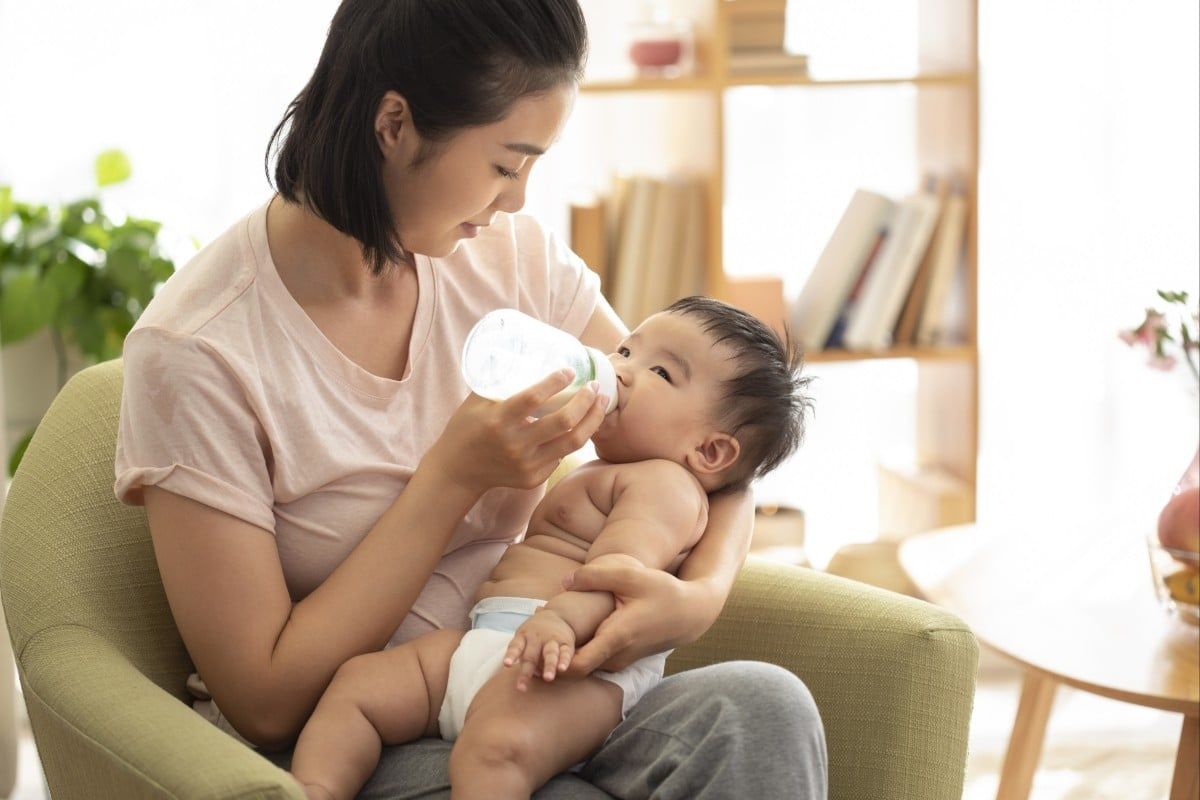
A three-month-old baby in China's Guangdong province required emergency intensive care treatment after his parents inadvertently poisoned him by preparing infant formula with vegetable juice instead of water. The child arrived at Zhongshan Women and Children's Hospital displaying alarming physical symptoms including a purple-hued body, bluish discolouration around the mouth and lips, and severe respiratory distress that warranted immediate medical intervention. The condition emerged rapidly following the infant's consumption of the specially prepared milk, prompting his parents to seek urgent hospital care.
The parents' decision to substitute vegetable juice for water stemmed from a well-intentioned but dangerously misguided belief that such produce-based liquids would provide superior nutritional value compared to plain water. This assumption, whilst understandable, reflects a broader trend of parents applying adult nutritional principles to infant feeding without understanding the critical physiological differences between developing and mature digestive systems. The hospitalised baby was subsequently diagnosed with nitrite poisoning after medical staff conducted thorough examinations and toxicological assessments.
Physicians at the hospital explained that the danger arose from the chemical composition of the vegetable juice used in formula preparation. When vegetables undergo prolonged boiling during juice extraction, the cooking process converts naturally occurring nitrates within the plant material into nitrites, toxic compounds that accumulate to dangerous concentrations. The resulting juice contained levels of nitrites far exceeding safe thresholds for human consumption, particularly for vulnerable populations such as infants whose metabolic and physiological systems remain underdeveloped.
The vulnerability of three-month-old infants to nitrite toxicity stems from fundamental biological immaturity. At this developmental stage, both the digestive tract and renal systems lack the sophistication necessary to process and eliminate potentially harmful substances effectively. The kidneys, in particular, cannot adequately filter nitrites from the bloodstream, allowing these toxic compounds to accumulate and cause systemic damage. Additionally, the enzymes and protective mechanisms present in older children and adults have not yet fully matured in infants, leaving them defenceless against chemical poisoning.
Once nitrites enter the bloodstream, they interfere with haemoglobin's fundamental oxygen-carrying capacity. The toxic compounds chemically modify haemoglobin molecules, preventing them from binding and transporting oxygen effectively throughout the body. This disruption of oxygen delivery creates the characteristic purple and bluish discolouration observed in the affected infant. The darkening of the mouth, lips, skin and fingernails reflects the profound oxygen deprivation at the cellular level, a visible manifestation of the underlying chemical damage occurring within the circulatory system.
Following two days of medical treatment and supportive care in the intensive care unit, the infant was successfully discharged from hospital in mid-June. The case highlighted the critical importance of prompt recognition and immediate medical intervention in cases of suspected infant poisoning. Even minor delays in reaching hospital can result in fatal outcomes when young children suffer from toxicity-related oxygen deprivation affecting vital organs such as the brain and heart.
Doctors at the hospital issued explicit guidance to parents regarding safe formula preparation practices. Medical professionals emphasised that infant formula should be mixed exclusively with warm water, free from additives or substitutions. The guidance explicitly warned against using vegetable juice, rice water, fruit juice or any form of soup as replacement liquids for water in formula preparation. These seemingly innocent substitutes carry hidden chemical risks that parents often overlook when attempting to enhance the nutritional profile of infant milk.
Cao Qi, a paediatrician at Nanning No 1 People's Hospital in Guangxi Zhuang autonomous region, used his social media platform to educate parents about nitrite poisoning symptoms and the critical importance of recognising warning signs. He stressed that even marginal delays in seeking medical treatment could prove fatal for affected infants, with minutes making the difference between recovery and death. His warning reflected the severity and speed with which infant toxicity can progress to life-threatening complications when the brain and cardiovascular system become deprived of adequate oxygen.
The paediatrician further cautioned parents against making feeding decisions based on trending practices or personal subjective beliefs rather than established medical evidence. He emphasised that natural foods, whilst generally beneficial for adults and older children, frequently prove unsuitable and potentially dangerous for very young infants whose developing systems cannot tolerate complex substances. This distinction between age-appropriate nutrition and inappropriate feeding practices represents a fundamental principle that many well-meaning parents fail to understand.
The incident reflects a troubling pattern evident in Chinese social media, where stories of infants suffering serious medical consequences from unconventional feeding methods appear with concerning regularity. The previous year witnessed another alarming case in Henan province involving a 52-day-old infant admitted to hospital with botulism resulting from clostridium botulinum infection. In that incident, the child's grandmother had added honey to the infant's water, unaware that honey can contain bacterial spores that develop into toxins lethal to babies whose intestinal flora lack sufficient beneficial bacteria to prevent toxin production.
These recurring cases demonstrate that parental knowledge gaps surrounding infant feeding safety persist despite widespread access to medical information. The transition from exclusive breast or formula feeding to introduction of other foods and liquids represents a critical period requiring careful adherence to evidence-based guidelines. Parents and caregivers must prioritise medical consensus over intuition, traditional practices or trending health fads that may circulate through social networks without scientific foundation.

