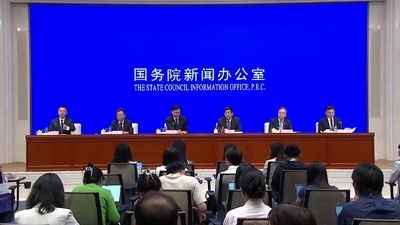
Beijing has dismissed accusations of coercive labour practices in the Xinjiang Uygur autonomous region, with Chen Ruifeng, the nation's Minister of the National Ethnic Affairs Commission, addressing the contentious claims on Wednesday. The minister characterised allegations made by Western organisations and media outlets as fundamentally without merit, insisting that the region has no instances of what critics term "forced migration" or "forced labour."
China's constitutional and legal framework explicitly prohibits all forms of compulsory labour, Chen stressed during his remarks. The government has moved to strengthen these protections through legislative channels, with the recently enacted Law on Promoting Ethnic Unity and Progress receiving parliamentary approval on March 12 and set to take effect on July 1. This legislation introduces reinforced provisions governing workers' rights, legal assistance mechanisms, and safeguards specifically tailored for individuals moving across provincial boundaries in search of employment.
The minister emphasised that individuals from Xinjiang who seek work beyond their region's borders make such decisions independently, driven by personal ambitions to improve household economic circumstances and expand professional capabilities. He rejected external characterisations of these employment flows as anything other than self-directed choices, describing such accusations as "extremely absurd and ridiculous." According to Beijing's official position, labour mobility programmes operating within Xinjiang function solely to broaden employment pathways and raise living standards for the region's residents.
The employment picture in Xinjiang over the preceding half-decade presents a narrative of substantial economic expansion, according to government figures. The region has generated more than 2.39 million additional urban employment positions through initiatives aimed at job creation, reflecting what officials view as successful workforce development. Beyond urban centres, the agricultural sector has witnessed substantial labour mobility, with farm workers undertaking approximately 16.1 million journeys for employment purposes outside their permanent residential areas during the same period.
Income growth across Xinjiang's population has accelerated, with official statistics indicating that per capita disposable income in urban areas has expanded at an average annual rate of 5.3 per cent. Rural residents have experienced even stronger income progression, recording average annual gains of 8.1 per cent, suggesting that economic benefits from expanded employment opportunities have reached both urban and rural communities. These figures underscore the government's argument that employment transitions are economically beneficial for participating individuals and families.
The Chinese government has constructed what it describes as a comprehensive employment rights architecture designed to protect workers across all ethnic groups within Xinjiang. This system combines fair employment policy frameworks with dedicated labour rights protection mechanisms intended to guarantee that individuals seeking work can access opportunities while maintaining legal protections. Officials argue that this structure ensures dignity in employment relationships and voluntariness in job transitions.
The allegations emanating from international quarters, particularly regarding Xinjiang's employment practices, have created significant diplomatic friction between Beijing and Western governments and human rights organisations. These external critics have pointed to investigations and testimonies suggesting systematic coercion in labour assignments, though China categorically rejects such characterisations. The divergence between international assessments and Beijing's official narrative reflects deeper geopolitical tensions and differing perspectives on governance and worker protection standards.
For Malaysian observers and policymakers, this dispute carries relevance given Southeast Asia's own experiences with labour migration and cross-border employment issues. Malaysia's substantial reliance on migrant workers and its own labour governance frameworks make questions about worker protections and voluntary employment pertinent to regional discussions. The contrasting viewpoints on what constitutes adequate labour safeguards and voluntary participation illustrate how nations apply different standards to employment relationships and worker rights.
Beijing's emphasis on legislative reform, particularly the Law on Promoting Ethnic Unity and Progress, signals an intention to address international criticism through formal legal mechanisms. By embedding worker protections directly into legislation and establishing dedicated mechanisms for rights enforcement, the government seeks to demonstrate institutional commitment to preventing exploitative labour practices. Whether such measures will satisfy international critics or reshape the diplomatic conversation remains uncertain, as assessments of their adequacy depend significantly on implementation transparency and independent verification mechanisms.

