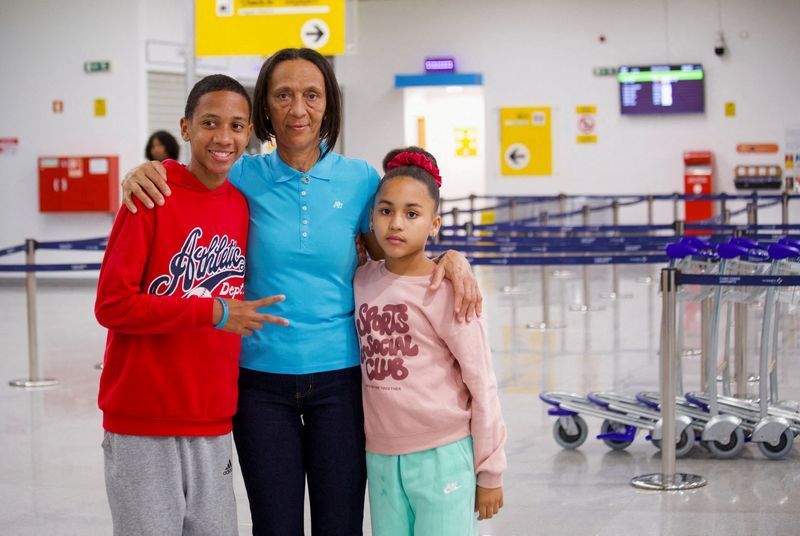
The mother of Cape Verde's goalkeeper Vozinha has finally secured permission to travel to the United States and watch her son compete in the World Cup, marking a turnaround from her inability to witness his breakthrough performance in the tournament's opening matches. Ana Candida Evora will now be present for Cape Verde's upcoming fixture against Uruguay in Miami on Sunday, bringing closure to a story that captured international attention when the 40-year-old custodian emotionally revealed that his mother had been unable to attend his team's opening contest.
Vozinha delivered a commanding display in Cape Verde's tournament opener against Spain, the reigning European champions, at the Atlanta venue. His exceptional goalkeeping—highlighted by seven crucial stops—proved instrumental in securing an unexpected 0-0 draw, a result that exceeded most expectations for a nation making relatively early progress in international football competition. The goalkeeper earned man-of-the-match honours for his performance, establishing himself as a key player in his team's campaign. However, what should have been an occasion for family celebration became tinged with disappointment when Vozinha disclosed to journalists that his mother could not be present to witness his finest moment on the world stage.
The emotional disclosure regarding Evora's absence resonated widely, particularly as it illustrated the bureaucratic obstacles facing families from smaller nations attempting to participate in major international events. The narrative gained traction across media platforms, drawing attention to the intersection of visa accessibility, economic hardship, and personal circumstances that prevented a mother from supporting her son at such a significant juncture in his career. What began as a personal frustration quickly transcended sports journalism to become a commentary on immigration procedures and accessibility.
The United States State Department moved swiftly following the public attention surrounding Vozinha's situation. Officials confirmed that their consular team based in Praia, Cape Verde's capital, had been actively engaged with Evora to facilitate her travel arrangements. The department prioritised processing her application and ultimately granted the necessary approval, with a State Department spokesperson indicating that the decision aligned fully with established policies and protocols. The intervention demonstrated how diplomatic pressure and media scrutiny can sometimes accelerate administrative processes that might otherwise face delays.
Vozinha's initial predicament was rooted in broader immigration restrictions that had been implemented under previous American leadership. Cape Verde had been among numerous countries whose citizens faced stringent entry requirements, including the obligation to post bonds as high as $15,000 merely to gain admission to American territory. These financial barriers were designed to discourage certain forms of travel, but they created considerable hardship for ordinary families without substantial resources. Evora faced an insurmountable hurdle: even if she could overcome visa obstacles, the monetary bond requirement made the journey financially unviable.
The landscape shifted when American authorities recognised that such requirements could undermine the World Cup's inclusive spirit and international goodwill. Officials subsequently exempted World Cup ticket holders from the bond provisions, acknowledging that legitimate sports fans deserved reasonable access to the tournament. Nevertheless, for Evora, this policy change came too late to enable her attendance at her son's opening match, though the adjustment cleared a pathway for her participation in subsequent fixtures.
Cape Verde's participation in the World Cup itself represented a significant milestone for African football, particularly for a smaller island nation with limited resources compared to traditional powerhouses on the continent. The team's ability to secure a draw against Spain demonstrated competitive capability that defied conventional predictions. Vozinha's performances have been central to any success the squad achieves, making family support and personal motivation important components of his continued excellence throughout the tournament.
For Malaysian and Southeast Asian readers, Vozinha's story carries resonance regarding the challenges faced by athletes from smaller nations and emerging markets. Just as Cape Verde navigates international competition with limited infrastructure compared to established footballing nations, many Southeast Asian teams encounter similar systemic obstacles. The visa and travel restrictions that nearly prevented Evora's attendance mirror challenges that supporters and families from the region frequently encounter when attempting to follow their teams internationally.
The resolution of this situation, while individual in scope, signals broader accessibility considerations that sporting authorities worldwide must confront. Major international tournaments generate opportunities not only for athletes but for entire communities and families to participate in global celebration. When bureaucratic processes inadvertently exclude those with genuine reasons for attending—such as immediate family members of competing athletes—they diminish the human dimension that renders sport meaningful beyond mere competition. Evora's eventual approval to travel underscores the importance of flexibility and compassion in administrative systems, particularly when implementation might otherwise contradict the spirit of international sporting cooperation.

