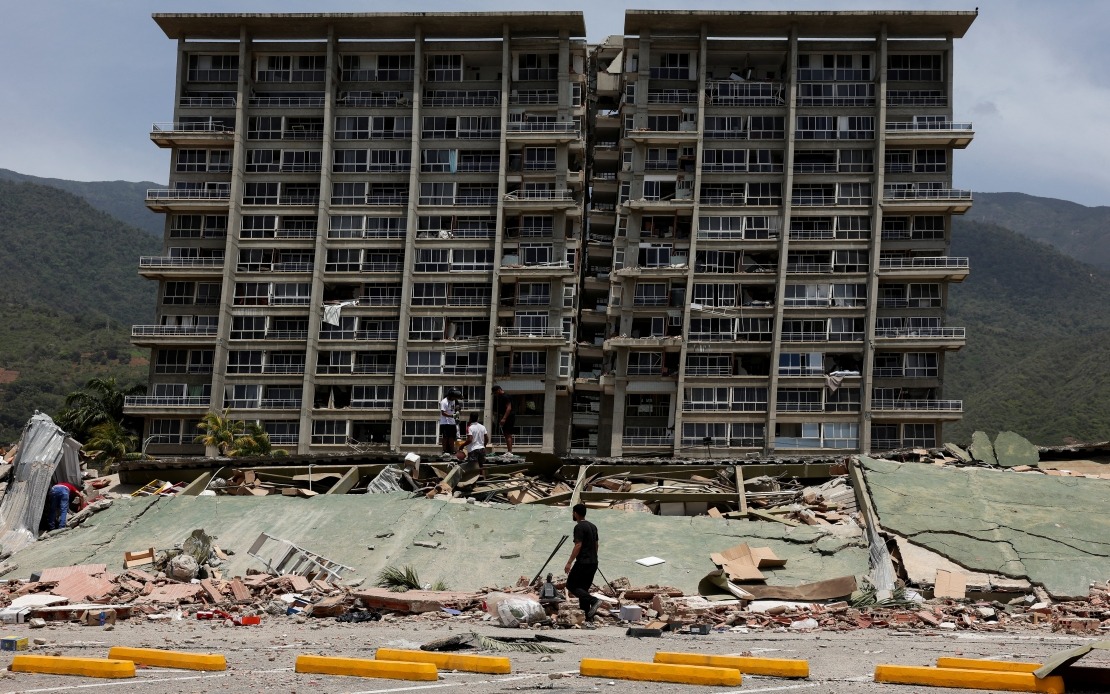
Canada has committed US$5 million in emergency humanitarian funding to address the catastrophic aftermath of earthquakes that have struck Venezuela, according to an announcement from the Canadian Foreign Ministry on Thursday. The allocation represents a critical international response to what authorities describe as widespread devastation affecting hundreds of thousands of civilians across the South American nation.
The scale of the disaster remains partially unknown, with initial assessments indicating immense loss of life and extensive infrastructure damage across multiple municipalities. Canadian officials warn that the full humanitarian toll continues to emerge as rescue operations progress and damage assessments expand into remote and previously inaccessible areas. This uncertainty underscores the urgency of rapid humanitarian mobilisation, particularly given Venezuela's existing fragility and pre-existing humanitarian challenges that have strained national capacity to respond independently.
Foreign Minister Anita Anand characterised the devastation as heartbreaking, emphasising that entire communities have been fractured by the seismic activity and that families across Venezuela are confronting immeasurable loss. The minister's statement reflects Canada's commitment to standing alongside affected Venezuelan citizens during this crisis period, signalling that the bilateral relationship extends beyond diplomatic engagement to include practical humanitarian solidarity during emergencies.
The newly announced US$5 million builds substantially on Canada's earlier commitment this year. Ottawa had already allocated approximately US$4.5 million in humanitarian funding to address ongoing Venezuelan needs earlier in 2024, indicating a sustained Canadian focus on Venezuelan humanitarian challenges. Combined, these allocations demonstrate a comprehensive approach to supporting vulnerable populations amid the country's multifaceted crises, which encompass not only natural disasters but also pre-existing humanitarian emergencies.
Canadian funds will be channelled through experienced humanitarian organisations already operating within Venezuela, ensuring efficient delivery and coordination with existing on-ground infrastructure. This strategy emphasises working through established partners rather than creating parallel delivery systems, maximising the impact of each dollar contributed while reducing administrative overhead and duplication. The partnerships enable rapid response given that these organisations possess local knowledge, existing supply chains, and established relationships with Venezuelan authorities and communities.
The humanitarian assistance will address immediate survival needs across multiple dimensions. Emergency food distribution forms a cornerstone of the response, targeting populations displaced by earthquakes or facing sudden scarcity due to damaged supply infrastructure. Water and sanitation services represent another critical priority, as damaged utilities and contaminated water sources create secondary health risks that can amplify the initial disaster's impact. Healthcare provision, including trauma care and disease prevention, addresses both immediate injuries from the earthquakes and predictable health emergencies arising in post-disaster environments.
Beyond immediate survival support, Canadian funding will support protection mechanisms for vulnerable populations, particularly children separated from families, women at heightened risk, and elderly persons requiring specialised care. Logistics coordination funded through this assistance represents another essential component, enabling humanitarian organisations to navigate damaged infrastructure, coordinate supply movements, and maintain operational effectiveness across affected regions despite compromised roads, ports, and communication systems.
Canadian officials maintain active engagement with regional partners and international humanitarian organisations, recognising that earthquakes in Venezuela demand a coordinated multilateral response. This collaborative approach reflects acknowledgment that no single nation possesses sufficient resources to address the complete scope of devastation, and that regional stability and humanitarian outcomes depend upon coordinated rather than fragmented assistance strategies. Canada's positioning within these networks reinforces both its humanitarian credibility and its diplomatic influence within the Americas region.
The Canadian Foreign Ministry indicated that further details regarding the allocation and deployment of these funds will be released in the coming days, suggesting an ongoing assessment of emerging needs and evolving circumstances on the ground. This phased information release approach acknowledges that humanitarian situations remain fluid in the immediate aftermath of major disasters, with needs assessments, security conditions, and organisational capacities shifting as response operations progress.
For Malaysia and Southeast Asian observers, Canada's rapid response and substantial commitment illustrate international humanitarian mobilisation patterns relevant to regional contexts. The earthquakes' impact on Venezuela carries implications for global commodity markets, geopolitical dynamics, and displacement patterns that intersect with broader international stability. Canada's approach—emphasising partnership with experienced organisations, maintaining diplomatic coordination, and sustaining engagement over multiple funding cycles—offers relevant models for how developed nations and regional actors can structure effective humanitarian responses to major disasters within geopolitically complex environments.

