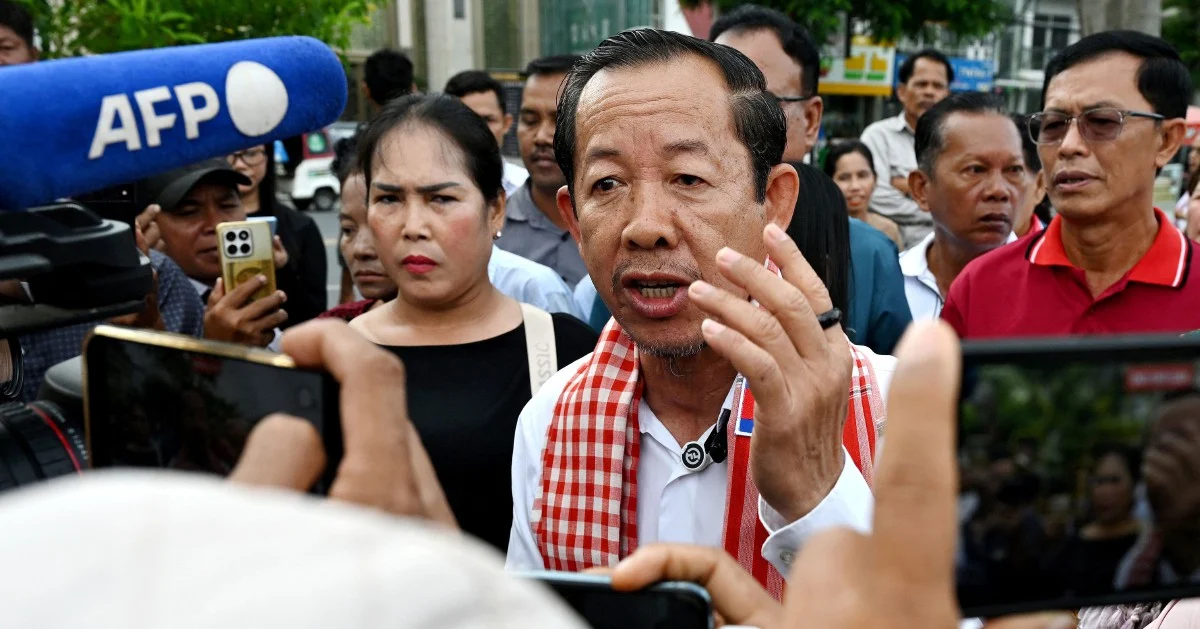
Cambodia's top court has delivered a mixed ruling on opposition figure Rong Chhun, suspending an imposed prison sentence while leaving intact restrictions that prohibit him from participating in electoral contests. The decision, handed down by the nation's highest judicial body on Friday, was confirmed by his legal team and represents a complex outcome in a case that has drawn scrutiny from democracy advocates monitoring Cambodia's political trajectory.
The suspension of Rong Chhun's prison term represents a modest concession from the court system, though legal experts caution against reading too much optimism into the judgment. The upholding of the election ban, however, reinforces restrictions that effectively sideline opposition voices from formal democratic participation. For Malaysian observers tracking Southeast Asian political developments, the case illustrates the varying mechanisms by which countries in the region manage opposition activity, ranging from direct detention to administrative disqualification.
Rong Chhun's situation reflects broader patterns affecting Cambodia's opposition landscape in recent years. The combination of criminal convictions paired with electoral disqualification has become a recurring feature in Cambodian politics, effectively removing opposing voices from the ballot while maintaining the appearance of legal process. This layered approach to constraining political competition differs from more straightforward bans but achieves comparable results by making it impossible for banned figures to contest elections regardless of other legal outcomes.
The ruling carries implications for Cambodia's Democratic Party and other opposition formations seeking to contest future electoral cycles. With key figures unable to run, opposition coalitions must restructure their leadership and campaign strategies, potentially weakening their capacity to mount competitive challenges against the ruling Cambodia People's Party. For Southeast Asian democracy observers, the decision underscores how judicial systems can be deployed to reshape political competition without entirely eliminating opposition actors from public discourse.
Rong Chhun's legal battles have unfolded against a backdrop of tightening restrictions on opposition activity across Cambodia. Previous convictions have centred on charges including incitement and other offences frequently cited against critics of government policies. The separate treatment of his prison sentence and electoral eligibility in this latest ruling suggests the court sought to balance competing pressures while ultimately preserving restrictions on his political participation.
The opposition politician's experience resonates across Southeast Asia, where similar patterns have emerged in other countries grappling with how to manage electoral competition and political dissent. Thailand, Myanmar, and other regional nations have employed comparable techniques—combining criminal convictions with administrative restrictions—to limit opposition effectiveness while maintaining formal adherence to electoral frameworks. Malaysia's own political history includes episodes where electoral laws and criminal proceedings have intersected to affect opposition standing, making Cambodia's approach comparatively recognisable to domestic audiences.
For international observers and regional analysts, Rong Chhun's case demonstrates how modern political systems can operate within nominally democratic structures while substantially constraining opposition capacity. Unlike outright bans on election cycles or suspension of parliament, the targeted disqualification of individual candidates allows governments to preserve the architecture of electoral processes while filtering participation. This approach carries longer-term implications for democratic legitimacy, as electoral contests lose competitiveness when major opposition voices cannot participate.
The decision also reflects Cambodia's complex relationship with its own constitutional framework. The nation's 1993 constitution and subsequent amendments were designed to establish multiparty democracy following the United Nations-supervised elections that year. However, the gradual accumulation of restrictions and disqualifications has created increasing tension between the document's democratic aspirations and the practical constraints placed on opposition activity. Observers question whether electoral systems that exclude major opposition figures can meaningfully reflect popular will or constitute genuine democratic exercises.
For Cambodia's civil society and international democracy supporters, the ruling presents a difficult scenario. The suspended prison sentence offers a narrow ground for claiming partial judicial independence, yet the upheld election ban negates much of that potential positive reading. Rights organisations will likely scrutinise whether the sentence suspension represents a genuine shift in judicial approach or merely a tactical adjustment designed to reduce international pressure while maintaining substantive restrictions on political opposition.
Looking forward, Rong Chhun's case will likely shape how opposition parties in Cambodia prepare for forthcoming electoral contests. The ruling clarifies that even suspended prison sentences need not prevent electoral bans from remaining in force, a legal principle with significance for other opposition figures facing similar convictions. As Cambodia approaches future election cycles, the availability of opposition candidates and the competitiveness of contests will partly depend on whether courts maintain or adjust such disqualification policies.
The judgment also signals to Cambodia's international partners and donor nations that judicial restrictions on opposition participation remain firmly in place despite partial procedural accommodations. Countries considering aid and diplomatic engagement with Cambodia must weigh whether the suspended sentence constitutes meaningful reform or whether the maintained election ban indicates continuity in structural constraints on political competition. This distinction carries consequence for how international observers assess Cambodia's democratic trajectory and whether incremental judicial concessions suggest genuine systemic change.

