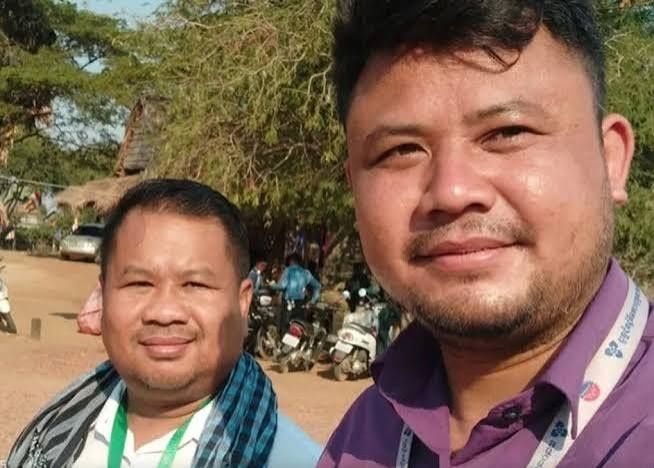
Cambodia's Supreme Court is preparing to deliver its verdict on Thursday on an appeal filed by two journalists who were convicted of treason and sentenced to lengthy prison terms for sharing photographs they captured along the contested Thai-Cambodian border. The case has emerged as a defining test of judicial independence in a country where the judiciary has faced persistent criticism for serving governmental interests rather than the rule of law.
Phorn Sopheap of Battambang Post TV Online and Pheap Pheara of TSP 68 TV Online were apprehended in July of last year following reporting assignments near the border region. Authorities charged them with illegally posting images taken within a military-restricted zone to Facebook. Both journalists have consistently maintained their innocence, asserting they possessed authorisation to be present in the location where they documented their photographs. Their appeal seeks reversal of their convictions and the 14-year sentences imposed by the Siem Reap Provincial Court in December, which found them guilty of supplying information damaging to national defence to a foreign state.
One particular photograph depicting land mines circulated widely among Thai news organisations and reinforced Bangkok's assertion that Phnom Penh had emplaced fresh anti-personnel mines throughout the border area, resulting in injuries to Thai military personnel conducting routine patrols. Cambodia's government categorically rejected such allegations, publicly maintaining adherence to international treaties prohibiting mine deployment. Officials instead suggested that any ordnance discovered along the frontier likely represented remnants from the country's prolonged internal conflicts, which officially concluded during the late 1990s. The disputed photograph thus became emblematic of a broader information and credibility struggle between the two nations.
The cross-border military engagement during July and December displaced several hundred thousand civilians from both countries and caused fatalities numbering approximately one hundred soldiers and non-combatants. Following a December ceasefire agreement, active hostilities have not resumed, though the fundamental tensions underpinning the territorial dispute persist. The regional volatility makes the journalists' case particularly sensitive, as it intersects matters of national security, press freedom, and government control over the narrative surrounding the conflict.
A lower appellate court confirmed the journalists' convictions in March, prompting swift international reaction. More than a dozen professional journalism bodies and press freedom organisations co-signed correspondence urging Cambodia's authorities to abandon prosecution. The Committee to Protect Journalists specifically characterised the government's legal strategy as weaponising broadly worded national security legislation to criminalise routine journalistic activity. Meanwhile, Reporters Without Borders ranked Cambodia 161st among 180 countries in its 2025 World Press Freedom Index, placing it within the category of nations where press conditions are deemed critically problematic.
The Supreme Court's forthcoming decision arrives during a period of heightened scrutiny regarding Cambodia's judicial framework and its operational independence from political authority. Just days prior, the same court upheld conviction and sentencing of Rong Chhun, a 56-year-old opposition politician, who was found guilty of inciting public disorder following conversations with communities displaced by state-sponsored development initiatives. That verdict generated renewed concern among observers regarding the government's systematic approach to eliminating dissenting voices through the legal system. Human Rights Watch denounced the Chhun ruling as evidence of Cambodia's courts lacking genuine autonomy from the governing party, though government spokespersons maintained that the Supreme Court operates with complete independence.
The succession of Prime Minister Hun Manet, who assumed office in August 2023 following nearly four decades under his father Hun Sen, initially raised expectations among international observers and domestic constituencies hopeful for democratic reform. Hun Manet's education in the United States created anticipation that his administration might introduce political liberalisation and strengthen institutional protections for fundamental freedoms. Nevertheless, the ensuing months have demonstrated minimal substantive movement toward broadening democratic space or curtailing governmental mechanisms for suppressing criticism and controlling public discourse.
For Southeast Asian observers and press freedom advocates across the region, Cambodia's handling of these cases carries broader significance beyond its borders. The journalists' case exemplifies how governments throughout the region increasingly employ ostensibly legitimate national security concerns as justification for constraining media activity and punishing reporting that contradicts official positions. The vagueness of laws criminalising threats to national defence provides authorities with expansive discretion to prosecute journalists whose only transgression was documenting events of clear public importance.
The case also highlights the vulnerability of local news organisations with limited resources to mount sustained legal defences against government prosecution. Battambang Post TV Online and TSP 68 TV Online operate at the margins of Cambodia's media landscape, lacking the international visibility and organisational support available to larger international news agencies. This disparity in institutional capacity and international attention creates a chilling effect on smaller news operations' willingness to pursue investigative reporting on sensitive topics such as military activities or government conduct.

