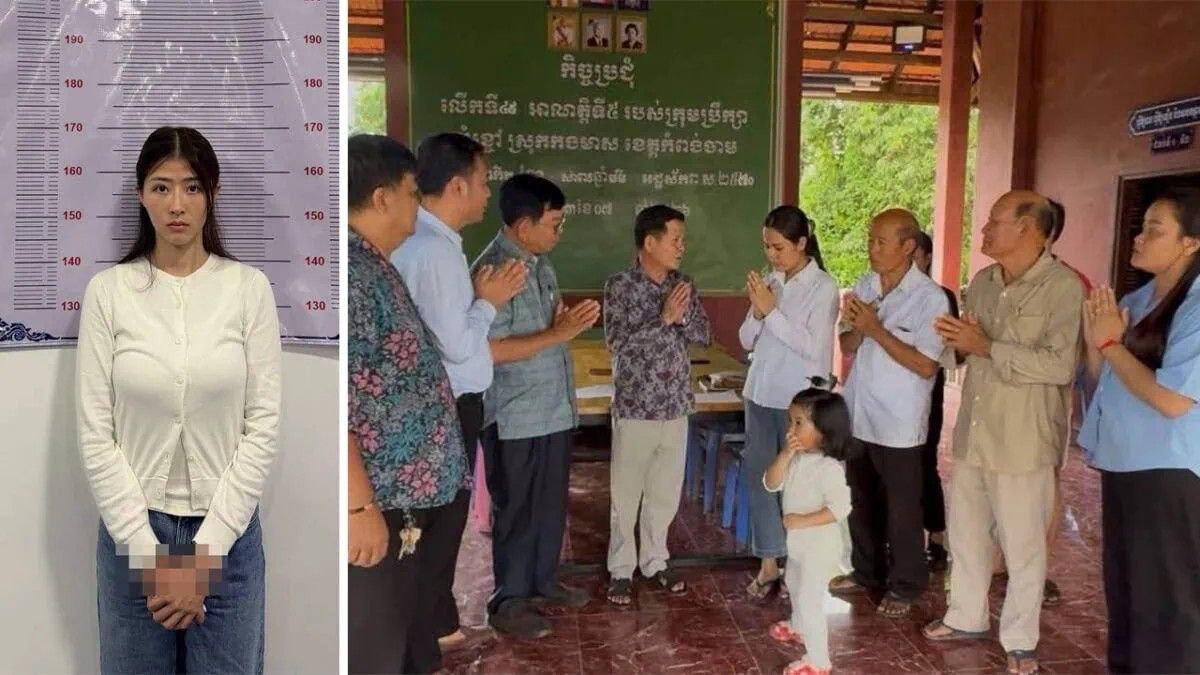
In a significant development in a fatal traffic incident that has drawn regional attention, the bereaved family of Kuoch Limhan has reached an out-of-court settlement with the family of the accused driver, Sam Meychou, resolving the civil dimensions of the case while allowing criminal proceedings to advance separately. The agreement, finalised on August 6 through formal documentation witnessed by local officials and a lawyer, represents a structured attempt to address compensatory claims outside the court system—a approach increasingly common in Southeast Asian jurisdictions where civil and criminal matters can proceed along parallel tracks.
Under the settlement terms brokered between the parties, Oknha Tong Hok Seng, father of the accused driver, provided S$60,000 in civil compensation to Limhan's widow. Seung Kimhor, acting as representative of the victim's family in filing the original civil claim, signed the agreement alongside the other party. The arrangement was formally witnessed by Kong Sekleng, the commune chief of the locality, and lawyer Phon Thearin, lending administrative and legal weight to the transaction. Such witnessed agreements carry particular significance in Cambodian legal practice, where documented consensus between disputants can substantially streamline resolution processes.
The agreement explicitly frames the resolution as an "amicable" settlement, language that underscores the mutual acceptance by both parties to set aside civil antagonism. In exchange for the compensation payment, Limhan's family formally withdrew its complaint in criminal case No. 4396, originally filed with the Phnom Penh Municipal Court on July 31, 2026. The settlement document further stipulates that neither party will pursue additional claims or demands, establishing a complete cessation of the civil dispute through mutual understanding and goodwill. Such comprehensive settlement language is designed to prevent subsequent litigation between the parties regarding the same incident.
Crucially, the civil settlement does not diminish or halt the separate criminal investigation and prosecution. Meychou remains charged with causing a fatal traffic accident and fleeing the scene—offences that carry state interest beyond compensatory concerns. She was arrested on July 30 after voluntarily presenting herself to authorities, one day after the fatal collision occurred in Phnom Penh's Sen Sok district. The Phnom Penh Municipal Court formally charged her on July 31 and ordered her placed in pre-trial detention following questioning and evidence review by the investigating judge. This structural separation means that even though the victim's family has resolved its economic and civil grievances, the state's interest in prosecuting the traffic violations and hit-and-run conduct continues unabated.
The tragic incident itself occurred on the evening of July 28 when Limhan, a construction laboratory official with Cambodia's Ministry of Public Works and Transport, was struck by Meychou's vehicle in Sen Sok district. According to witness accounts and scene documentation, Meychou illegally crossed the centre line while attempting to overtake another vehicle and collided with Limhan's motorcycle. The victim, who was reportedly transporting milk for his young daughter at the time, was killed instantly by the impact. Subsequent video footage from the scene captured Meychou and an associate departing the collision location in a tuk tuk while Limhan's body remained on the rain-soaked pavement—imagery that would prove significant in establishing the circumstances of both the collision and the subsequent flight from the scene.
For Malaysian observers and legal professionals, this settlement illustrates important distinctions in how Southeast Asian countries calibrate the relationship between criminal liability and civil compensation in fatal traffic cases. While many jurisdictions allow families to pursue both avenues simultaneously, the ability to resolve civil claims independently creates space for financial remediation even while criminal proceedings advance. The S$60,000 compensation, while significant in absolute terms, reflects negotiated assessment of the victim's loss—balancing the family's need for immediate financial support with the accused's family's capacity to pay. Such figures often become reference points in regional jurisprudence, influencing future settlement negotiations and judicial guidance on appropriate compensation levels.
The case also underscores persistent traffic safety challenges across the region. Hit-and-run incidents, particularly those involving reckless overtaking manoeuvres in urban settings, continue to claim lives despite ongoing enforcement efforts. The allegation that Meychou crossed the centre line to overtake suggests a pattern of dangerous driving behaviour—aggressive lane changes executed without adequate checking of oncoming traffic. This incident, culminating in the death of a government ministry official in Cambodia's capital, provides sobering evidence that traffic discipline remains an urgent concern requiring sustained attention from authorities, transport agencies, and public education campaigns throughout Southeast Asia.
The role of witnessed agreements in Cambodian legal resolution also warrants attention from Malaysian practitioners and policymakers. By involving the commune chief and a lawyer in formalising the settlement, the process lent credibility and institutional recognition to what might otherwise be a purely private arrangement. This hybrid approach—combining private negotiation with public witnessing—creates a documentary record that reduces future disputes about settlement terms and demonstrates good faith on both sides. For a region where informal dispute resolution frequently precedes or coexists with formal judicial processes, such structured settlements offer practical pathways to resolution while maintaining documentary accountability.
Moving forward, the criminal case will determine whether additional penalties, imprisonment, or other sanctions will be imposed on Meychou beyond the civil compensation already provided. The investigating judge's decision to place her in pre-trial detention reflects the seriousness with which Cambodian authorities view the combination of fatal negligence and abandonment of an accident scene. The separation of civil and criminal proceedings means that even successful prosecution need not diminish the victim's family's already-secured compensation, though questions may persist regarding whether S$60,000 adequately reflects the value of Limhan's life and the ongoing support his family required. This settlement, while offering immediate financial relief, represents a compromise on the family's part—accepting settlement rather than pursuing full civil liability claims through courts, where potential awards might have been higher though far less certain and prolonged.

