Cambodia is making a determined push to reshape its industrial economy, seeking investment from South Korean firms in electric vehicle components, healthcare technology, and automotive systems as part of a broader strategy to move beyond garment manufacturing. The initiative gained momentum during Deputy Prime Minister Sun Chanthol's recent investment promotion tour to South Korea, where he led a high-level delegation through company visits and an investment roadshow in Incheon on June 16. The mission underscores a recognition within the Cambodian government that sustained economic development requires diversification into sectors offering higher productivity, better wages, and deeper integration into regional and global supply chains.
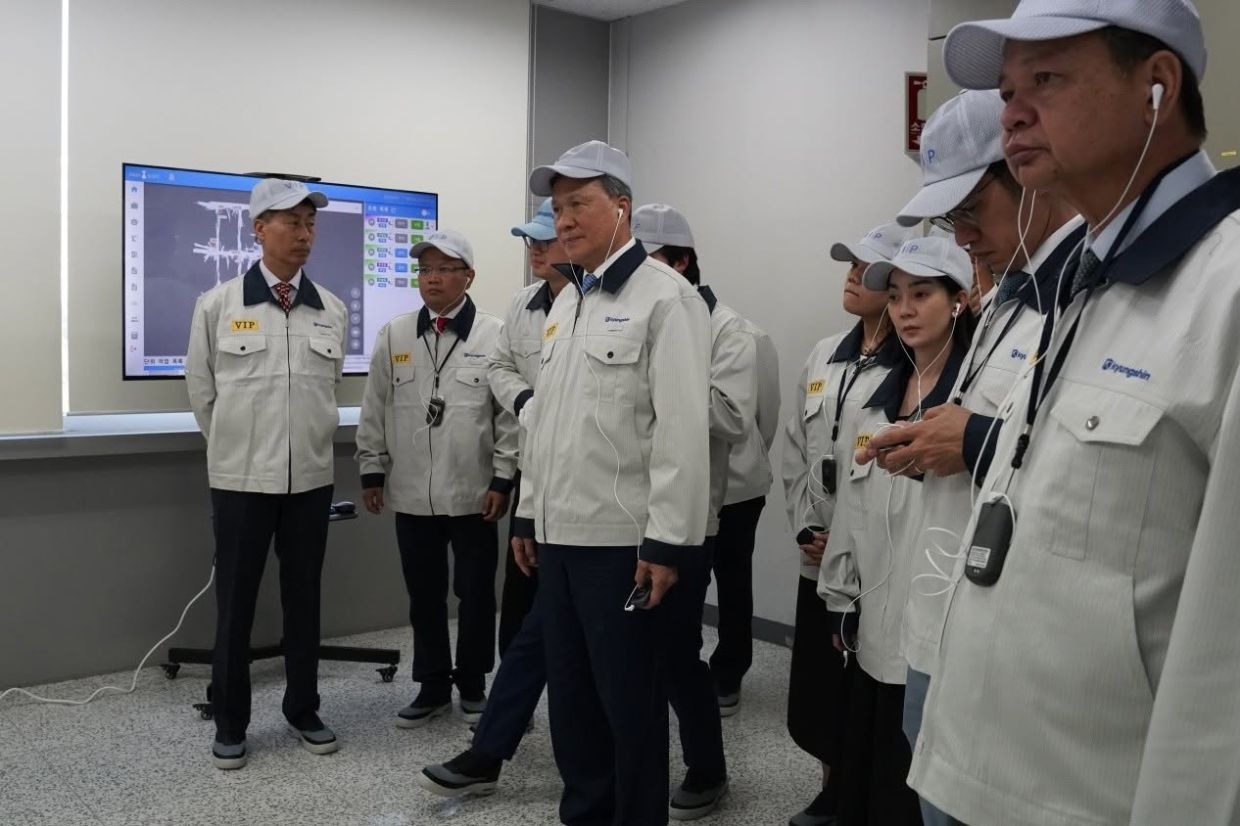
Chanthol, serving as first vice-chairman of the Council for the Development of Cambodia, met with established manufacturers and potential investors, emphasising the government's commitment to facilitating Korean business expansion. His delegation toured operations already embedded in Cambodia's economy, demonstrating that the Kingdom has functioning capacity in the sectors it hopes to grow. This approach—showcasing existing success while inviting expansion—reflects a pragmatic strategy recognising that investors respond more readily to proven ecosystems than to abstract promises of reform.
Among the companies visited was Daejoo KC Group, a large South Korean conglomerate operating across metallurgy, chemicals, logistics, construction, automotive components, and energy. The company's Cambodian operations include Camko Motor, which assembles Hyundai vehicles for domestic consumption and manufactures automotive wire harnesses for export, supporting nearly 500 jobs. Its companion subsidiary, Camko Infracore, imports and distributes Hyundai vehicles while providing maintenance and spare parts services. The presence of such integrated operations illustrates how a single foreign investor can occupy multiple tiers of a manufacturing ecosystem, creating both direct employment and indirect economic activity through supply networks and service provision.
For Cambodia, the deeper significance lies in potential integration into regional automotive supply chains precisely as the industry undergoes rapid transformation toward electric vehicles and digital mobility systems. Kyungshin Co., Ltd., another major target during the mission, specialises in automotive electronic components and wire harness manufacturing for electric vehicles. Founded in 1974, the company produces wiring harnesses, connectors, junction blocks, cables, and electrical systems for EVs and is developing advanced technologies for future mobility solutions. Kyungshin has maintained a factory in Kandal province since 2012, with approximately US$20 million in invested capital and a workforce of 1,467 people, providing concrete evidence that Cambodia can support complex manufacturing operations requiring technical precision and quality control.
The mission's inclusion of Incheon Baek Hospital revealed that Cambodia's ambitions extend beyond production facilities into high-end service sectors and technology transfer. Deputy Prime Minister Chanthol identified healthcare and international-standard medical institutions as key government priorities, requesting the hospital's assistance with technical training, knowledge transfer, and specialist exchanges. This healthcare dimension signals that Cambodia recognises modern economies require not only factories but also professional services, digital systems, and skilled workforces capable of delivering advanced care. By targeting these sectors, Cambodia positions itself as a destination for Korean investors seeking to establish regional hubs, not merely low-cost assembly plants.
The broader Incheon-Cambodia Investment Roadshow, organised by the CDC in cooperation with the Incheon Chamber of Commerce and Industry, addressed the full Korean business community. Chanthol highlighted Cambodia's revised investment law and associated incentive packages, including fiscal benefits, macroeconomic stability assurances, and investment protection mechanisms. The event, attended by major Korean companies and investors, aimed to convince South Korea's business establishment that Cambodia offers conditions worth serious capital deployment, particularly for ventures seeking to integrate with existing Korean operations in the region.
Cambodia's strategic pivot reflects years of policy discussion about economic diversification. The garment sector, which has driven manufacturing employment for decades, remains crucial for exports and employment figures, but government officials increasingly acknowledge that relying on labour-intensive industries leaves the economy vulnerable to wage competition from larger neighbours and susceptible to supply chain shocks. By contrast, automotive components, electric vehicle systems, digital healthcare, and smart manufacturing offer higher value-added production, better-compensated employment, and stronger linkages to advanced supply networks that can sustain long-term competitiveness.
The mission's composition—including the Cambodian ambassador to South Korea, CDC officials, the Ministry of Commerce, the Korean Chamber of Commerce in Cambodia, and the Cambodian Oknha Association—reflected deliberate alignment of diplomatic, public policy, and private investment channels. This coordinated approach attempts to reduce friction between government and business, signal consistent policy direction, and demonstrate that Cambodia's commitment to Korean investment transcends individual personalities or political cycles. Such orchestration matters significantly for investor confidence, particularly among Korean manufacturers evaluating commitments to Southeast Asia.
South Korea's own experience with industrial development provides a relevant model for Cambodia's planners. Korean companies have succeeded globally by combining manufacturing efficiency with technology sophistication, constantly upgrading production toward higher-value sectors as labour costs rise. Cambodian policymakers appear to be studying this template, seeking to capture Korean manufacturers at the point when they recognise they need lower-cost but capable production bases in Southeast Asia. Existing Korean operations in Cambodia—Camko Motor, Kyungshin, and others—provide anchors demonstrating that the Kingdom can deliver on such commitments.
However, Cambodia faces real constraints in executing this transition. Wage competitiveness with Vietnam and Bangladesh remains an advantage, but the Kingdom must simultaneously develop technical education systems, infrastructure reliability, and digital connectivity to support advanced manufacturing. The success of companies like Kyungshin, employing 1,467 workers in precision automotive electronics, shows capacity exists but also highlights that scaling such operations requires consistent workforce development and supplier ecosystem maturation. Healthcare and technology sectors demand educated professionals in short supply across the region.
The Korea mission also reflects Cambodia's broader regional positioning. As China shifts toward higher-value manufacturing and Western companies seek to diversify supply chains beyond China, Southeast Asian nations compete fiercely for investment displacement. Vietnam has captured significant flows through manufacturing prowess and trade agreements; Thailand maintains automotive clusters; Indonesia offers scale. Cambodia's strategy targets a narrower niche—cost-conscious manufacturers seeking quality-capable environments—and seeks to lock in Korean firms already operating in the region, persuading them to expand rather than relocate.
For Malaysian and Southeast Asian observers, Cambodia's investment push carries relevance as a case study in economic diversification strategy. The deliberate targeting of specific sectors rather than generic factory recruitment, the emphasis on technology transfer and workforce development, and the coordination of diplomatic and commercial messaging all offer lessons. Cambodia's challenge—converting policy intention into sustained manufacturing ecosystem development—mirrors difficulties across the region, where stated development goals often exceed implementation capacity.
The coming months will indicate whether the Incheon mission generates substantive investment commitments or remains largely symbolic. Korean companies evaluating Cambodian expansion will weigh infrastructure reliability, workforce stability, regulatory predictability, and regional supply chain networks. Cambodia's government appears determined to remove policy obstacles, but success ultimately depends on consistent execution of promised facilitations, workforce development, and maintenance of macroeconomic stability. The mission demonstrates strategic intent; translating that intent into industrial transformation remains Cambodia's continuing challenge.