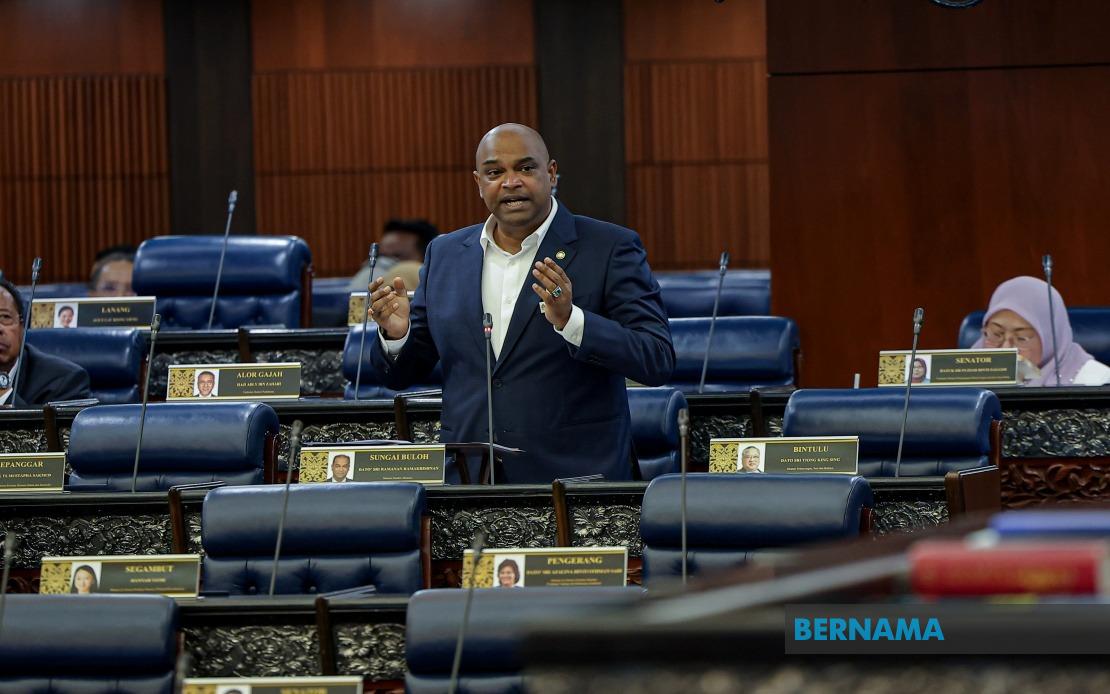
Malaysia's labour market contracted significantly in the first half of 2024, with 42,807 workers nationwide losing employment between January and June 12, Human Resources Minister Datuk Seri R. Ramanan disclosed during parliamentary Question Time. The figures, drawn from Social Security Organisation (SOCSO) data, paint a sobering picture of workforce displacement across the nation's key economic zones, though the government maintains that technological disruption remains a peripheral rather than primary concern.
Business closures and company downsizing emerged as the dominant drivers of retrenchment, accounting for 17,485 cases representing 40.85 percent of total job losses. This finding directly challenges assertions from certain quarters that automation and artificial intelligence have become the principal threats to employment stability. Instead, the data suggests more conventional economic pressures—weak business viability, operational challenges, and structural adjustment—are compelling employers to shed headcount. The concentration of these drivers raises critical questions about sectoral resilience and business sustainability across Malaysia's economy, particularly given the nation's stated ambitions toward digital transformation and technological advancement.
Geographical disparity in employment disruption proved stark. Kuala Lumpur experienced the most severe impact, accounting for 12,844 job losses or 30 percent of the national total, underscoring vulnerability within Malaysia's premier commercial and financial hub. Selangor followed with 12,360 displaced workers, whilst Johor recorded 3,468 cases representing 8.1 percent of retrenchments. This concentration in the Klang Valley corridor reflects the economic interconnectedness of these states and suggests that regional economic shocks propagate rapidly through integrated industrial and service networks.
Ramanan's response to Datuk Azman Nasrudin's parliamentary query specifically addressed concerns about automation and artificial intelligence's role in Klang Valley closures. Rather than accepting the premise that technological adoption drives retrenchment, the minister reframed the discussion entirely. He contended that artificial intelligence does not presently constitute an employment threat, but instead represents an opportunity for workforce adaptation. This position reflects a government narrative emphasising skilling over job preservation—a perspective that may underestimate the transitional unemployment risks faced by displaced workers unable to rapidly acquire technical competencies.
Further parliamentary exchanges with Datuk Rosol Wahid provided additional nuance. Ramanan explicitly rejected what he termed the inaccurate perception that artificial intelligence constitutes the primary retrenchment driver, instead attributing job losses to business closures, voluntary separation schemes, and conventional downsizing. This distinction matters considerably for policy design. If technological displacement were the primary factor, interventions would necessarily emphasise accelerated reskilling and industry transition support. Since conventional business failures dominate, policy might instead focus on business sustainability, sectoral support, and broader economic stabilisation measures.
Counterbalancing pessimism about job losses, the minister highlighted apparent labour market tightness. Malaysia's MYFutureJobs portal advertised 605,168 job vacancies since January, substantially exceeding the 188,062 registered job seekers—a ratio suggesting nominal supply-demand imbalances favouring workers. However, this aggregate figure obscures critical skill mismatches, geographical friction, and credential gaps that may prevent jobless workers from accessing available positions. The disparity between vacancies and seekers requires careful interpretation; surplus openings in technical, professional, or geographically dispersed sectors cannot absorb displaced workers in declining industries or regions, creating persistent unemployment despite apparent macro-level labour shortage.
Government upskilling initiatives assume central importance within this context. Ramanan highlighted the Scheme for Training and Upskilling for Employability (SLaPB) and the Academy in Industry (ADI) program as cornerstones of employment transition support. Additionally, the MyMAHIR.my platform and MyMahir SkillsLab program ostensibly equip workers with artificial intelligence-related capabilities. These initiatives represent Malaysia's bet that proactive capability development can absorb displaced workers into higher-value occupations and align the workforce with technological requirements. Implementation effectiveness remains critical; without adequate uptake, financing, and employer alignment, these programs risk remaining peripheral to actual retrenchment response.
A TalentCorp study cited by Ramanan projected approximately 697,000 jobs face medium-term disruption risk within three to five years as technological advancement and green economy transition accelerate. This forward-looking assessment substantially exceeds the immediate retrenchment numbers, suggesting latent vulnerability within the Malaysian workforce. The gap between jobs currently at risk and those already displaced implies accelerating turbulence ahead, particularly if upskilling pathways remain underdeveloped or poorly coordinated with employer demand. For Malaysian workers and policymakers, this projection underscores the urgency of embedding capability development into workforce strategy rather than treating it as peripheral to core economic management.
The ministerial statements reflect a deliberate government positioning that frames employment disruption as cyclical rather than structural, and economic rather than technological. This narrative serves multiple purposes: it provides reassurance to workers and investors concerned about artificial intelligence displacement, it deflects criticism of insufficient digital transition preparation, and it maintains focus on conventional economic policy levers. However, the distinction between present retrenchment drivers and future disruption risks suggests potential policy inconsistency. If artificial intelligence currently poses limited employment threat but constitutes significant future risk, the transition period between now and structural job displacement becomes critical for capability building and worker mobility enhancement.
For Malaysian employers and workforce planners, these figures and government responses signal complex conditions ahead. Near-term employment instability reflects conventional cyclical and structural challenges within the economy, whilst medium-term technological disruption demands proactive workforce repositioning. Organisations operating across the Klang Valley face particular vulnerability given concentration of retrenchments in these zones. Simultaneously, labour market tightness in aggregate masks significant sectoral and skill-level variation, creating both opportunities for workers with current technical capabilities and risks for those with outdated qualifications. Government upskilling programs require substantially expanded reach and effectiveness to bridge the growing capability-demand gap across sectors.

