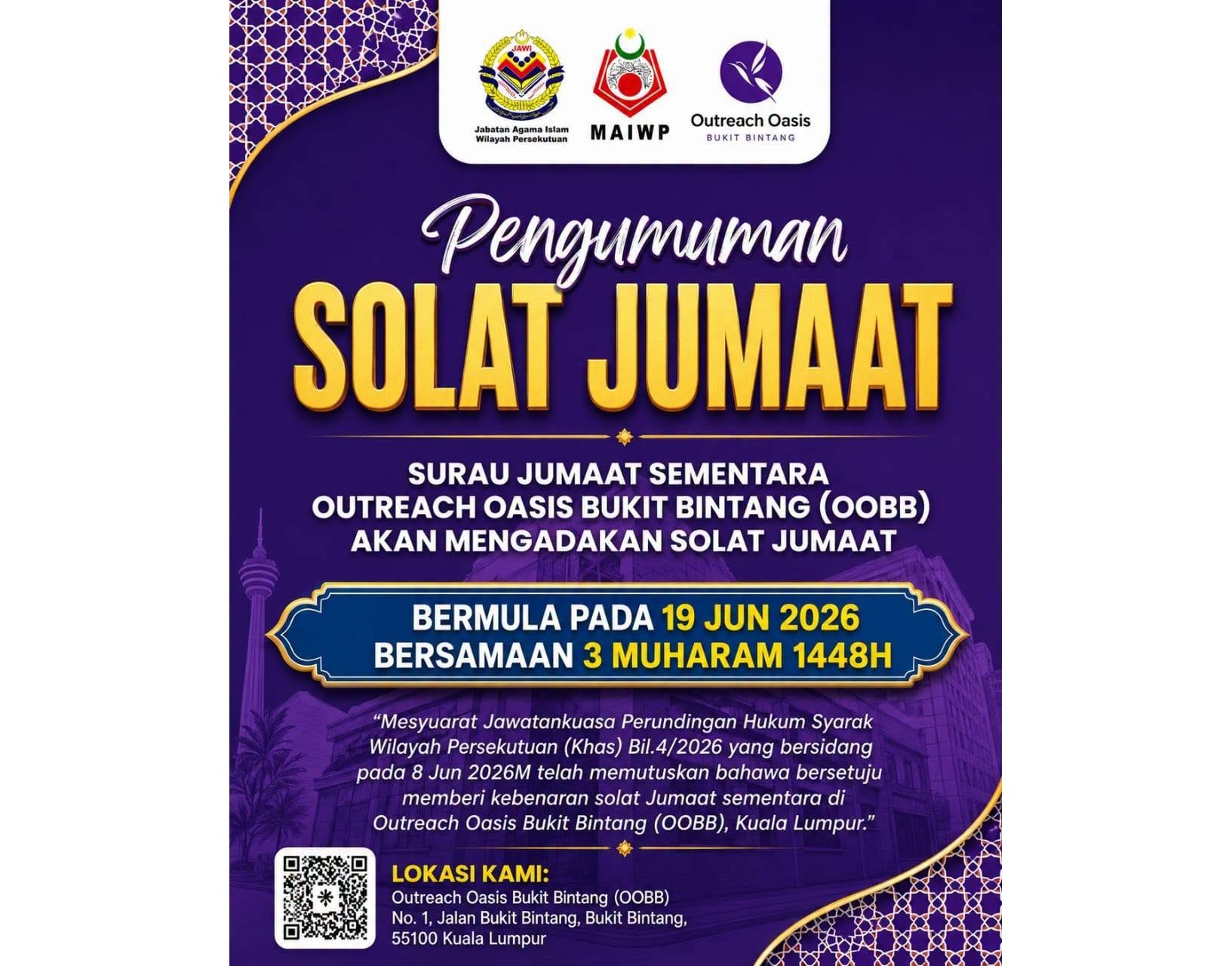
Muslims in Kuala Lumpur's Bukit Bintang district will gain access to dedicated Friday prayer facilities at the Bukit Bintang Outreach Oasis from tomorrow, marking an expansion of religious infrastructure in one of Malaysia's most vibrant commercial and tourism hubs. The initiative comes through special government approval and addresses a longstanding gap in worship amenities for the area's resident and visiting Muslim population.
Dr. Zulkifli Hassan, Minister in the Prime Minister's Department (Religious Affairs), announced the development through a Facebook post, framing it as both a practical solution and a symbolic milestone for the district. The temporary facility will serve worshippers until a purpose-built, permanent Friday surau at the location reaches completion. This phased approach reflects the government's commitment to expanding Islamic infrastructure while managing construction timelines.
The availability of dedicated prayer space addresses a real challenge for Muslims operating or residing in Bukit Bintang, a densely populated zone dominated by shopping complexes, office towers, and hospitality establishments. Previously, those seeking to fulfil their Friday prayer obligation faced the prospect of traveling considerable distances or navigating crowded transportation networks during peak business hours. The new arrangement eliminates the need for workers and visitors to rush away from the district or spend excessive time in transit, streamlining their ability to observe one of Islam's five foundational pillars.
The establishment of a dedicated Friday prayer facility in Bukit Bintang reflects broader policy momentum toward religious accommodation in Malaysia's major urban centres. Similar efforts have been implemented across Kuala Lumpur's other commercial districts, though Bukit Bintang's high foot traffic and international profile make this development particularly significant. The move demonstrates government recognition that religious observance and commercial activity are not mutually exclusive, but rather can be integrated through thoughtful urban planning.
Dr. Zulkifli Hassan extended an invitation to the Bukit Bintang community and Muslim Malaysians generally to participate in the Friday prayers as a demonstration of solidarity with Islamic values and institutional development. His language—referring to "filling the rows as a sign of solidarity"—suggests an expectation that the facility will become a gathering point reflecting community engagement with religious life in the commercial district. Strong initial attendance could set the tone for the facility's future role as a permanent installation.
The temporary arrangement at the Outreach Oasis represents a pragmatic interim measure while permanent infrastructure takes shape. Such phased delivery is increasingly common in Malaysia's urban development, allowing government and private developers to provide services while capital construction proceeds. This approach prevents extended service gaps and demonstrates responsiveness to community needs, qualities that build public confidence in institutional planning.
The Bukit Bintang district presents particular logistical challenges for religious accommodation. As a major commercial and entertainment precinct drawing thousands of workers, shoppers, and tourists daily, the area's existing infrastructure had not kept pace with demand for prayer facilities. The concentration of office workers alone creates significant Friday prayer demand that previous arrangements could not comfortably absorb. The new facility acknowledges this demographic reality and transforms it into an opportunity for structured community engagement.
From a broader urban development perspective, the initiative signals government commitment to ensuring that Malaysia's rapidly growing commercial precincts remain accommodating to Muslim citizens and visitors. This accommodation extends beyond physical space to include messaging that reinforces the compatibility of modern commercial development with Islamic practice. Such messaging carries particular weight in a predominantly Muslim nation where religious identity remains central to national self-perception and policy formation.
The permanent surau under construction will eventually provide enhanced amenities beyond temporary arrangements. Purpose-built facilities typically incorporate features addressing ablution needs, modest dress requirements, and prayer space comfort—considerations often difficult to accommodate through converted commercial spaces. The investment in permanent infrastructure thus represents a substantial statement of long-term commitment to the Bukit Bintang Muslim community.
The initiative also carries implications for Malaysia's positioning as a Muslim-majority commercial hub competing for international business and tourism. Demonstrating robust accommodation of Muslim religious practice in modern urban settings reinforces Malaysia's brand as a nation successfully integrating Islamic values with contemporary commercial development. For Muslim expatriate workers and visiting professionals from other Muslim-majority nations, the availability of prayer facilities signals institutional respect for their religious obligations.
Looking forward, the success of the Bukit Bintang facility may influence similar projects elsewhere in Malaysia's expanding urban landscape. Other major business districts facing comparable demand for prayer infrastructure may reference this model when advocating for government support. The temporary-to-permanent transition framework offers a replicable approach that manages both immediate service delivery and longer-term capital investment efficiently.

