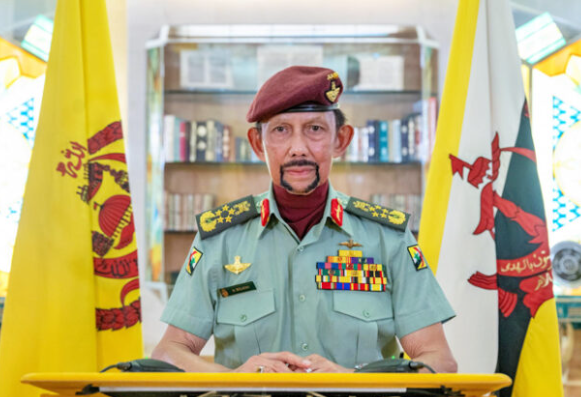
Brunei's Sultan Hassanal Bolkiah has delivered a wide-ranging address marking the Islamic New Year 1448 Hijrah, emphasising that achieving progress requires sustained dedication across both material and spiritual dimensions of society. In his remarks, the monarch positioned the annual milestone not merely as a calendar turning point but as a meaningful opportunity to reinvigorate long-term commitments and aspirations rather than simply initiating fresh plans. The framing reflects a deeper philosophical stance that meaningful development cannot rest on symbolic moments alone but demands consistent application of effort throughout the year ahead.
The Sultan articulated a comprehensive vision of national development spanning multiple domains. He identified the material sphere as encompassing economic growth and physical infrastructure development, while defining the spiritual realm to include knowledge advancement, educational excellence and dakwah—the Islamic call to faith and moral guidance. This dual-track approach underscores Brunei's aspiration to achieve modernisation without sacrificing religious values and cultural identity, a balance that resonates across Southeast Asia where Muslim-majority nations grapple with comparable development questions. The monarch's emphasis on sincere intention grounded in Islamic principles suggests that material progress divorced from ethical moorings remains hollow and unsustainable.
Global conditions have shifted dramatically in recent months, with geopolitical tensions and armed conflicts intensifying across multiple regions. The Sultan acknowledged this turbulent international landscape, noting that wherever warfare erupts, populations inevitably experience profound suffering and hardship with no demographic group entirely insulated from consequences. This candid recognition of global instability appears calibrated to contextualise Brunei's own remarkable stability as something requiring active stewardship rather than taking for granted. The comparison implicitly reminds citizens that peace is neither automatic nor inevitable but rather a condition requiring ongoing commitment to preserve.
Brunei's relative tranquility stands in stark contrast to regional and international conditions. The Sultan expressed profound gratitude that his nation continues to enjoy both peace and security while remaining largely protected from natural disasters that periodically devastate neighbouring territories. This fortune, he attributed explicitly to spiritual foundations—characterising Brunei's stability as a blessing flowing from a nation nurtured through prayer, remembrance of God and Quranic recitation. The theological framing suggests that institutional stability and material prosperity cannot be divorced from collective spiritual practice, positioning religious devotion as foundational infrastructure rather than peripheral concern.
Yet beneath this largely positive assessment lurked recognition of genuine internal challenges demanding urgent attention. The Sultan identified crime as a pressing issue commanding collective responsibility and decisive response. He specifically highlighted drug-related offences, theft and associated criminal activity as particularly corrosive problems that damage national reputation and violate religious principles. Rather than positioning crime as merely a law enforcement matter, the monarch broadened the analytical frame to encompass religious and social dimensions. This expansive approach acknowledges that criminal activity represents both institutional failure and spiritual deficit, requiring multifaceted intervention beyond police action alone.
The Sultan's prescription for addressing criminal threats encompassed both institutional and grassroots components. He called upon security and religious authorities to intensify and accelerate their response mechanisms, signalling dissatisfaction with existing momentum. Simultaneously, he emphasised that religious institutions bear particular responsibility for strengthening educational initiatives and faith-based outreach efforts designed to foster societal rejection of narcotics and criminality. This delegation to religious sectors reflects recognition that deep behavioural change requires transformation of consciousness and values, objectives that formal law enforcement alone cannot accomplish. Religious leaders occupy a unique position to reshape social norms and foster moral reasoning that motivates law-abiding conduct.
The role of collective prayer and spiritual vigilance formed a significant thread throughout the Sultan's remarks. He encouraged citizens to maintain intensive supplication for national safety and divine protection, framing prayer not as passive resignation to fate but as active participation in nation-building. This theological perspective positions the faithful as partners with divine will rather than mere subjects awaiting government action. The approach resonates within Islamic tradition while simultaneously distributing responsibility across society rather than concentrating it exclusively within state apparatus. Such theological framing can generate powerful motivation for widespread behavioural change.
The Sultan explicitly characterised safeguarding the national community—the ummah—as fundamentally a shared responsibility transcending institutional boundaries. This language echoes Islamic principle while simultaneously modernising it to encompass contemporary national citizenship. No single authority figure or government agency could shoulder this burden alone; rather, maintaining societal integrity requires active participation from every level of society. The monarchical appeal for collective consciousness-raising carries implicit recognition that national cohesion ultimately depends on millions of individual choices and commitments rather than top-down direction alone.
The emphasis on remaining vigilant while simultaneously avoiding complacency or negligence indicates sophisticated understanding of psychological dynamics. The Sultan warned against both passivity and hypervigilance, counselling instead a balanced middle path combining alertness with spiritual equanimity. This measured tone acknowledges human tendencies toward either resignation or anxiety while prescribing a steadier approach anchored in faith and remembrance. As Brunei navigates the year ahead, this call for sustained attentiveness without panic may prove as significant as the specific policy directives embedded within the address.
The Sultan's message carries implications extending beyond Brunei's borders to neighbouring Southeast Asian states wrestling with comparable challenges. Across the region, governments struggle to balance rapid economic modernisation with preservation of social stability and religious values. Similarly, drug trafficking and organised crime plague multiple nations within ASEAN despite security improvements and international cooperation. The Bruneian approach—integrating spiritual mobilisation with institutional action and citizen participation—offers one model for addressing these interconnected challenges. While circumstances vary across jurisdictions, the principle that sustainable development requires alignment of material advancement with spiritual and ethical foundations appears increasingly relevant as societies confront complex problems resisting purely technical solutions.

