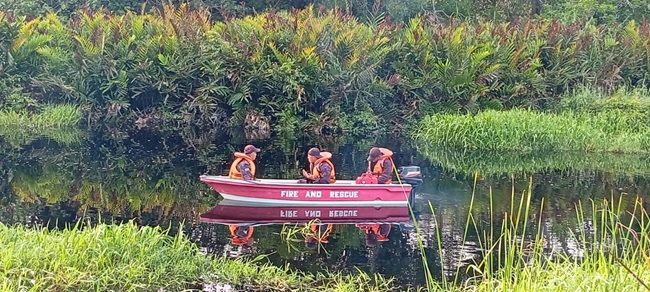
Rescue operations in Brunei Darussalam have entered their third day in the hunt for a man feared to have been attacked by a crocodile while fishing in Kampong Baru Sungai Bera. Despite exhaustive efforts across multiple fronts, no sign of the victim has been located, prompting authorities to maintain intensive search procedures across the waterway and surrounding areas.
The Fire and Rescue Department (FRD) has deployed substantial resources in response to the incident, which began when a distress call was received on Wednesday, June 24. A team comprising two fire engines and nine personnel, led by Acting Station Officer Mohd Zulkifli Md Tahir, was immediately dispatched to the location. Upon reaching the scene, initial conversations with the victim's family established that the man had been fishing when the alleged crocodile attack occurred.
The search methodology has been comprehensive, reflecting the seriousness with which authorities are treating the case. Continuous patrol operations utilising FRD boats have traversed the waterway, while specialist teams have conducted methodical searches along both riverbanks. To extend the scope of operations beyond what ground teams can achieve, the FRD has deployed aerial surveillance capabilities, including unmanned drones that allow rescuers to scan areas that would otherwise be inaccessible or difficult to monitor from the ground.
Management of the operation reflects a coordinated inter-agency approach. The Royal Brunei Police Force (RBPF) has contributed personnel to the effort, with officers from Seria Police Station participating alongside specialists from the Royal Brunei Police Force Marine Police (POLMAR). The Wildlife Division has also been engaged, bringing expertise in crocodile behaviour and river conditions that may prove crucial to locating the victim or understanding what occurred. Senior Superintendent Amirul Hadi Junaidi, the Commanding Officer of the Operations Branch, has assumed overall command of the search operation, ensuring unified direction and resource allocation.
The establishment of a Tactical Command Post at the scene underscores the systematic nature of the response. Such infrastructure allows for real-time coordination between different teams, rapid information sharing, and swift adjustments to search strategy based on emerging evidence or changing conditions. This organisational structure is typical of major rescue operations and suggests that Brunei's emergency services are treating this incident with considerable urgency and resource commitment.
Crocodile attacks, whilst not common in Brunei, represent a genuine hazard in regions where human activity intersects with wildlife habitat. The country's rivers and waterways support populations of saltwater crocodiles, particularly in areas with mangrove vegetation and deeper water channels. Fishing activities, which often occur during dawn or dusk hours when visibility is reduced, create vulnerable situations for individuals working alone or in small groups along riverbanks. This incident serves as a stark reminder of the risks associated with water-based livelihoods in Southeast Asia, where wildlife encounters remain an occupational reality for many communities.
For Malaysian readers familiar with similar incidents in Peninsular Malaysia and Borneo, the Brunei operation illustrates how different jurisdictions approach wildlife-related emergencies. The integration of police marine units, fire and rescue services, and dedicated wildlife personnel reflects best practices in emergency response, though the absence of results after three days underscores the inherent challenges in conducting rescue operations in complex river environments where visibility underwater is severely limited and currents can disperse evidence.
The implications of this incident extend beyond the immediate search effort. Such events typically prompt discussions about water safety protocols, warning systems along popular fishing areas, and public education regarding crocodile behaviour and avoidance strategies. Brunei, like other Southeast Asian nations with wild crocodile populations, must balance conservation objectives with community safety and livelihood protection. The visibility of this case may catalyse renewed attention to such concerns among local authorities and affected communities.
The search operation's continuation into a third day, despite the lack of positive developments, reflects the commitment of Brunei's emergency services to thoroughness and persistence. However, as rescue operations in similar circumstances have shown across the region, the recovery of remains in deep, complex waterways—particularly when crocodile involvement is suspected—presents formidable practical and environmental obstacles. Authorities will likely maintain search efforts for several more days before reassessing the operation's scope and feasibility.
The incident also highlights the importance of inter-agency cooperation and resource sharing during emergencies. The FRD's access to drone technology, the RBPF's maritime capabilities, and the Wildlife Division's specialist knowledge all contribute essential elements to the overall effort. In regional contexts where resources can be limited, this collaborative model demonstrates how pooling expertise and equipment can extend the reach and effectiveness of emergency response, even when ultimate outcomes remain uncertain. The family of the missing man, meanwhile, awaits developments that may determine whether this operation transitions from rescue to recovery.

