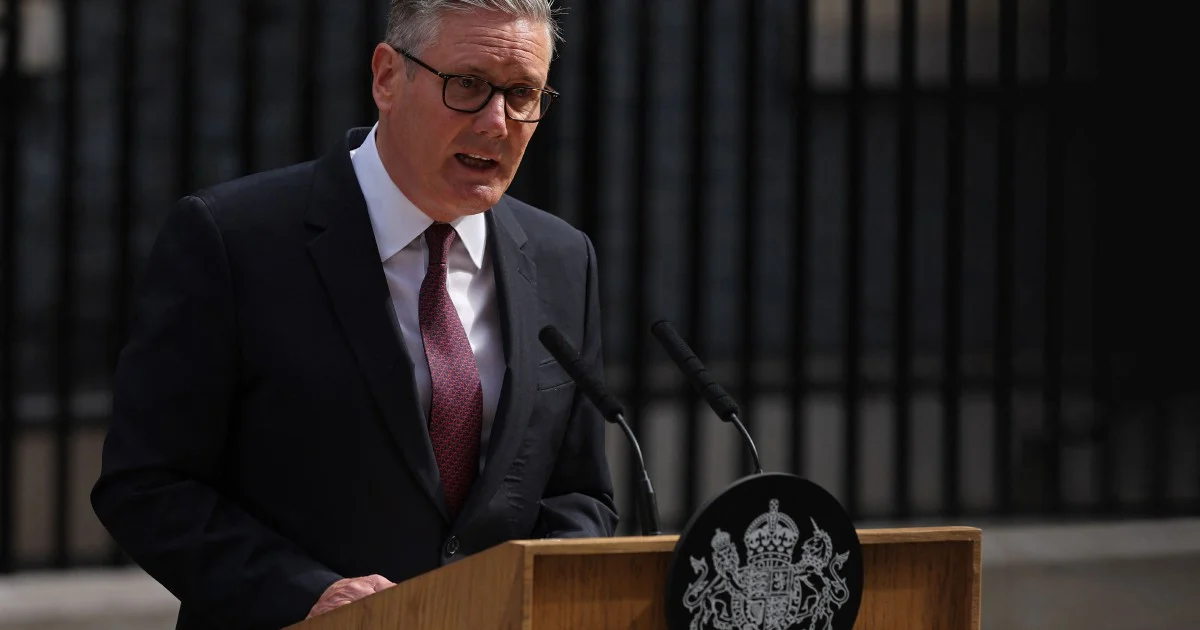
Prime Minister Keir Starmer announced on Monday that he intends to step down from his position, setting in motion a leadership succession process that will determine Britain's seventh prime minister in just one decade. The transition is scheduled to be completed before parliament returns in September, signalling that the United Kingdom faces a defined period of political transition rather than prolonged uncertainty.
The rapid turnover in British prime ministerial leadership reflects deep structural challenges within Westminster politics. Since 2014, the country has cycled through seven leaders—a pattern unthinkable in earlier eras and indicative of rising instability within both major political parties and the broader electorate. This instability has become a defining characteristic of contemporary British politics, creating governance challenges and international perception issues about the coherence of UK leadership.
Under Labour Party rules, the selection of a new leader follows a formal but accessible democratic process designed to give party members substantial influence. When a vacancy occurs, the party's National Executive Committee establishes the timeline and rules for the contest. Candidates seeking the leadership position must gather nominations from a specified percentage of Labour Members of Parliament, effectively creating a filtering mechanism that prevents frivolous candidacies while ensuring serious contenders can proceed.
Once nominated candidates are confirmed, Labour members across the country participate in a ballot to select their preferred leader. This membership vote carries substantial weight in determining the outcome, though the party has periodically adjusted its weighting system between MP endorsements and grassroots member votes. The system reflects Labour's attempt to balance parliamentary pragmatism with democratic legitimacy rooted in its broader membership base.
The September timeline provides approximately two months for the leadership contest to unfold. This compressed schedule differs markedly from some international practices where transitional leadership contests span longer periods. The urgency reflects the political reality that extended leadership vacuums can damage party unity and public confidence, while also allowing ministers and party officials to plan their parliamentary strategies in advance of the new session.
Potential candidates for the Labour leadership represent different ideological and generational wings within the party. The contest will likely surface tensions between those advocating continuity with recent policy direction and those proposing significant reorientations. Such internal debates are not unusual following electoral setbacks or leadership crises, as parties seek to understand what adjustments might improve their standing with voters.
Labour's leadership election process generates substantial media attention and internal party discussion. Candidates typically engage in hustings—public debates where they present their vision and respond to questions from party members. These events provide opportunities for rank-and-file members to assess candidates directly, though media coverage inevitably shapes the broader narrative about candidates' viability and appeal.
The international dimension of British leadership transitions deserves consideration in the Malaysian and Southeast Asian context. Frequent prime ministerial changes can complicate bilateral relationships and diplomatic initiatives that depend on continuity and personal rapport between leaders. However, they also create opportunities for recalibrated foreign policy positions and renewed engagement with regional partners under new leadership.
Labour's succession process represents a fundamentally different model from some political systems, particularly those with more centralized party structures or executive presidential systems. The party-member participation element reflects Labour's roots as a democratic socialist movement where grassroots engagement remains theoretically important, even if practical limitations sometimes constrain genuine membership influence.
The broader context of this resignation involves Labour's performance since winning the general election. The party's initial honeymoon period appears to have ended relatively quickly, with opinion polling suggesting public dissatisfaction with various government policies and approaches. Leadership changes often reflect such disconnects between electoral expectations and subsequent governance challenges.
For international observers and Malaysian readers, the British experience highlights the volatility characteristic of Westminster-style parliamentary democracy under contemporary conditions. Majority governments can remain remarkably durable in terms of holding office, yet their leaders face intense pressures that can precipitate sudden departures. This contrasts sharply with systems that provide greater procedural insulation for executive leaders or that feature different mechanisms for managing internal party conflicts.
The selection of Starmer's successor will shape Labour's strategic direction heading toward the next general election. The new leader will inherit an existing parliamentary majority but must navigate public expectations, internal party divisions, and the complex dynamics of British politics in a period of economic uncertainty and social change. The September timeline ensures that this leadership transition, while significant, will not completely disrupt the parliamentary calendar or force emergency procedures that might further destabilize public confidence in institutions.
Britain's revolving-door prime ministerial pattern remains without precedent in the modern era, raising questions about the sustainability of such instability and its implications for effective governance. The Labour selection process will proceed according to established rules, but the broader question of political leadership durability in Britain continues to preoccupy observers across the Commonwealth and beyond.

