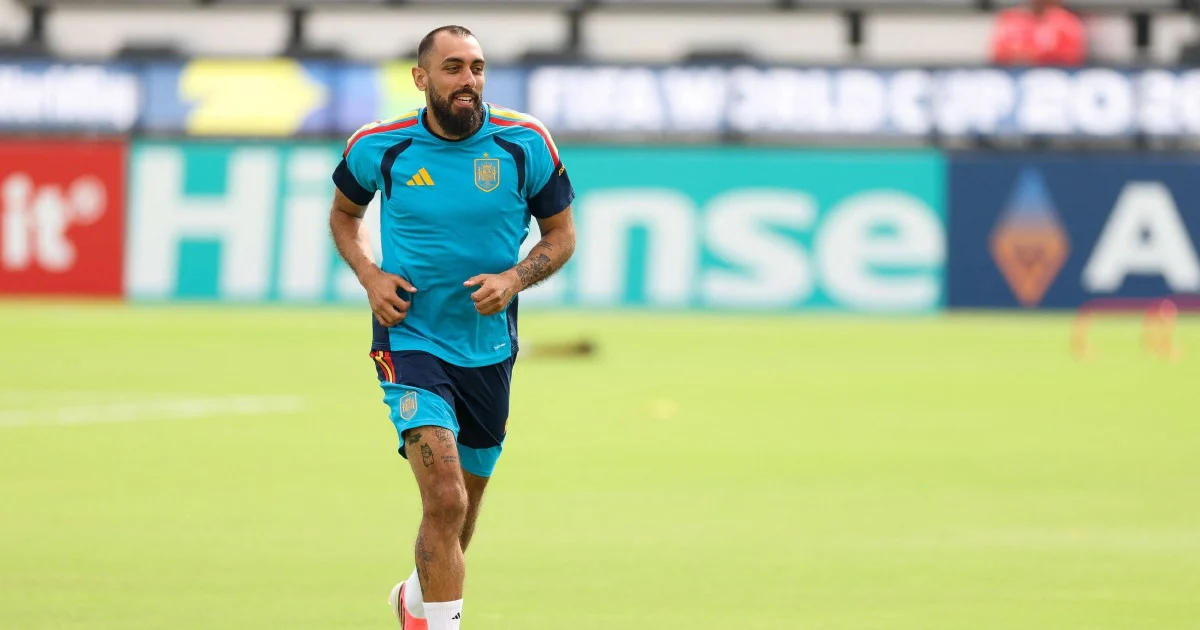
Borja Iglesias has become accustomed to standing apart within professional football, a Spanish striker whose willingness to engage with contentious social and political questions sets him apart from the cautious orthodoxy that typically defines athlete discourse. Based in Chattanooga, the former Real Betis forward continues to challenge conventional expectations through his public statements and personal choices, most visibly through his practice of painting his nails—a deliberate gesture that carries symbolic weight in conversations around masculinity and conformity in elite sports.
The nickname attached to him by observers—"the alien of football"—reflects a broader discomfort within the sport when confronted by athletes who refuse to compartmentalise their lives, separating their sporting identities from their social consciences. Iglesias represents a different breed of professional footballer, one who views his platform and visibility as carrying responsibility beyond match performance and tactical execution. This approach has generated both admiration from those who value authentic public voices and criticism from traditionalists who believe athletes should remain apolitical.
His willingness to address the Gaza conflict demonstrates a particular courage within contemporary sports culture, where geopolitical commentary by high-profile figures often invites intense backlash from multiple constituencies. For Southeast Asian readers, this resonates with familiar tensions around athlete activism in the region, where sporting figures frequently face pressure to remain silent on controversial international questions. The contrast between how athletes navigate these expectations in Europe versus Asia underscores different cultural approaches to fame and public responsibility.
The homophobia conversation represents another area where Iglesias has chosen visibility over silence. Football globally has struggled with deeply embedded homophobic cultures, from fan chants to institutional resistance toward LGBTQ+ inclusion. By speaking candidly about these issues, Iglesias contributes to gradual shifts in how elite athletes discuss sexuality and gender identity within competitive environments. His willingness to be vocal comes at personal cost within a sport that remains substantially more conservative on these matters than many other professional sectors.
The nail painting practice itself functions as both personal expression and subtle activism. It challenges unstated dress codes and masculine norms that govern professional sports, particularly in football where visual presentation remains tightly controlled. The practice invites unnecessary scrutiny and commentary precisely because it transgresses unwritten rules about how male athletes should present themselves. For many observers, particularly younger fans, such choices model the possibility of individuality within systems that ordinarily demand conformity.
Spain's football culture, while progressive in many respects, maintains pockets of conservatism regarding how players are expected to conduct themselves publicly. Iglesias's approach diverges notably from the typical Spanish footballer archetype, creating friction with sections of the media and fan base accustomed to more conventional comportment. Yet his presence on World Cup squads indicates that his talent and commitment to football remain undeniable, suggesting that his social consciousness has not compromised his athletic credibility.
The phenomenon of athletes like Iglesias raises important questions about the relationship between sporting achievement and public citizenship. Professional football generates enormous visibility and cultural influence, particularly in regions where the sport dominates popular attention. When high-profile players leverage this influence to address injustice, they expand the scope of what public discourse within sports can encompass. Conversely, the pushback they receive reveals persistent discomfort within certain segments regarding athletes as autonomous thinkers rather than merely entertainers.
For Malaysian and Southeast Asian sports audiences, Iglesias's approach offers a useful counterpoint to dominant narratives around athlete activism. Across the region, notable sporting figures have faced significant criticism for taking positions on social issues, from labour rights to political questions. The intensity of backlash often exceeds what comparable statements generate in European contexts, suggesting different cultural baseline expectations around athlete speech. Iglesias's continued prominence despite his outspokenness demonstrates that commercial viability and social consciousness need not be mutually exclusive.
The broader significance of figures like Iglesias extends beyond individual sporting achievement into questions about cultural change and generational attitudes. As younger athletes observe established players like him speaking openly without career destruction, it potentially emboldens the next cohort to view their own platforms similarly. This gradual normalisation of athlete activism might eventually reshape industry expectations around acceptable public discourse.
Ultimately, Iglesias represents an emerging category of athlete who refuses compartmentalisation, insisting on integrating their complete identity into their public presence. Whether through nail polish or statements addressing geopolitical tragedy, he demonstrates that footballers are capable of intellectual and moral engagement beyond tactical instruction. The designation of "alien" itself reveals more about football's narrow conventions than about Iglesias himself—in broader society, his behaviour would be unremarkable. Within sports, however, it remains sufficiently unconventional to warrant the label, suggesting football's culture remains significantly behind other professional sectors in accepting diverse forms of athlete expression.

