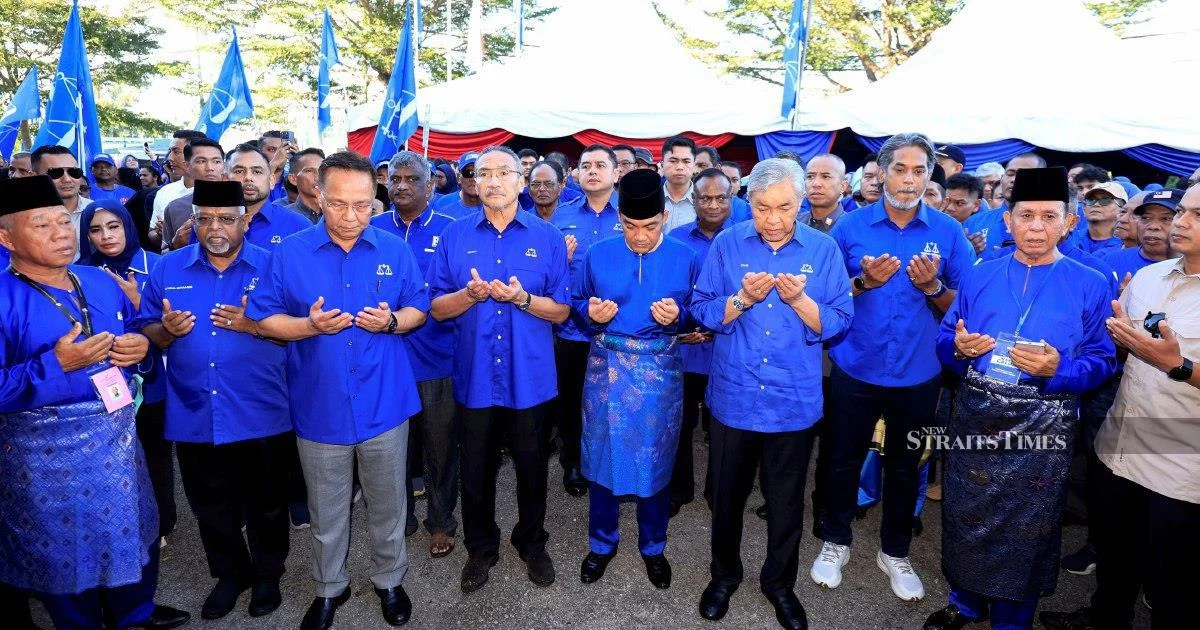
Datuk Onn Hafiz Ghazi received a show of force from Barisan Nasional's upper echelon when multiple senior party figures materialised at the Simpang Renggam District Council headquarters, underscoring the coalition's commitment to his candidacy in the ongoing Johor electoral campaign. The coordinated appearance at the grassroots venue served as a tangible expression of institutional backing during a contest where momentum and visible party unity carry considerable political weight.
The gathering at Simpang Renggam, located in one of Johor's significant electoral constituencies, represented the kind of orchestrated display that Malaysian political observers recognise as a calculated move to amplify a candidate's legitimacy and demonstrate organisational reach. When BN's heavyweight contingent congregates at the district level rather than confining their appearances to state capitals, it typically signals recognition that local contests require concentrated effort and that party leadership takes the particular race seriously.
Onn Hafiz's position within Johor's political landscape makes such demonstrations strategically important. As a prominent figure in the state's governance structure, his electoral performance carries implications beyond his individual seat, functioning as a barometer of BN's broader appeal in a state that remains economically and politically significant to the federation. The arrival of multiple senior party leaders at his district council gathering communicated that the coalition views this contest as a meaningful test of its standing.
The Simpang Renggam venue choice itself merits attention. District councils represent the administrative layer where voters encounter governance most directly, where potholes, planning decisions, and service delivery influence electoral sentiment. By staging their endorsement at this level rather than in auditoriums or convention centres, BN's senior figures were attempting to anchor their message to constituent concerns and ground their support in the machinery of local administration.
Johor's electoral dynamics have shifted considerably over recent political cycles, with the state experiencing fluctuating fortunes for the BN machine that once dominated it comprehensively. The coalition's renewed visibility in supporting candidates like Onn Hafiz suggests a determination to recalibrate its position in a state where its traditional supremacy has faced persistent challenge. The concentration of senior leadership at Simpang Renggam therefore carries symbolic weight beyond the immediate occasion.
For Malaysian voters attempting to gauge electoral momentum, such gatherings function as readable signals. The presence of multiple BN heavyweights indicates internal confidence in a particular campaign's trajectory and communicates to wavering voters and local party structures that the party intends to deploy its resources substantively. Conversely, when senior figures absent themselves from a candidate's campaign, political analysts typically interpret this as a dimming of institutional enthusiasm.
The timing of this public endorsement within the broader election calendar also merits consideration. Electoral campaigns follow rhythms of intensity, with strategic moments when parties choose to concentrate their messaging. By mobilising senior figures to appear alongside Onn Hafiz, BN was making a deliberate choice about where to invest its high-profile political capital during what is presumably a critical phase of his campaign.
Onn Hafiz's personal standing within BN circles appears sufficiently elevated to warrant such commitment from the party's establishment. This suggests he holds significance either as a vote-getter in his own right or as someone whose success carries implications for the coalition's broader electoral strategy in Johor. The resources expended in his behalf reflect calculations about his utility to the party's overall position.
The show of support also carries implications for party discipline and internal messaging. When senior BN figures appear together in support of a candidate, they are collectively signalling alignment and unified direction to party members and grassroots activists. This kind of coordination becomes particularly important in electoral contexts where enthusiasm among mid-level party operatives can substantially influence ground-level campaign effectiveness.
For Southeast Asian observers watching Malaysian electoral patterns, such deployments of political heavyweight support reflect the continued importance of personality-driven politics and the enduring significance of public demonstrations of institutional backing. While electoral systems emphasise policy platforms, the reality of Malaysian politics involves substantial influence from these highly visible expressions of internal party support.
The Johor electoral contest itself matters within Malaysia's broader political framework. As one of the federation's economically significant states with a large population, its electoral outcomes influence perceptions of whether particular coalitions retain sufficient appeal to govern effectively. BN's investment in visibly supporting candidates like Onn Hafiz thus extends beyond local constituency concerns to encompass larger questions about the coalition's resilience and renewed appeal in major Malaysian states.

