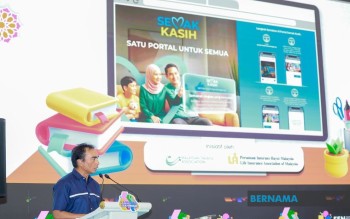
Bank Negara Malaysia (BNM) has introduced a new digital platform aimed at reuniting Malaysian families with insurance and takaful benefits that remain unclaimed following the death of policyholders. The Semak Kasih portal, launched in Kuala Terengganu on June 26, represents a coordinated effort by Malaysia's central bank and the insurance industry to streamline the process of identifying and claiming these dormant benefits, addressing what has emerged as a persistent gap in financial protection reaching those who need it most.
BNM Deputy Governor Adnan Zaylani Mohamad Zahid unveiled the portal during the Terengganu Financial Literacy Carnival, emphasising that insurance and takaful protection serve critical functions in family financial security during periods of hardship. He highlighted that beneficiaries often remain unaware that their relatives had established coverage through these instruments, leaving families without access to funds that could address medical expenses, property damage, or other emergency needs. The portal essentially functions as a centralised verification tool, enabling users to search for existing policies or certificates and establish contact with the appropriate financial provider to initiate benefit claims.
According to estimates provided jointly by the Life Insurance Association of Malaysia (LIAM) and the Malaysian Takaful Association (MTA), approximately 50,000 insurance policies and takaful certificates linked to death benefits currently remain unclaimed across the country. This substantial figure underscores a systemic problem within Malaysia's insurance ecosystem: despite industry efforts to contact beneficiaries through direct mail campaigns and agent outreach, many families continue to miss out on financial protection intended for their welfare. The existence of such a large pool of unclaimed benefits suggests that gaps in communication and awareness persist, even among households that have taken the prudent step of securing insurance coverage.
The launch of the Semak Kasih platform directly addresses this disconnect by providing a user-friendly digital mechanism for beneficiaries to verify coverage independently. Rather than relying solely on insurers or takaful operators to locate and contact families, the portal shifts the search responsibility to beneficiaries themselves, who can now proactively check whether deceased relatives held active policies. This approach recognises that not all beneficiaries maintain regular contact with insurers or remain aware of policies purchased years earlier, and it acknowledges the limitations of traditional notification methods in reaching diverse populations across Malaysia's urban and rural areas.
For Malaysian consumers, the implications of unclaimed benefits extend beyond individual financial losses. The concentration of so many dormant claims suggests that significant portions of the population lack awareness regarding insurance mechanics and the importance of maintaining records of family coverage. This knowledge gap becomes particularly acute in multigenerational households where financial documents may be misplaced or where information about insurance purchases remains unshared among potential beneficiaries. The Semak Kasih portal attempts to bridge this divide by removing barriers to information access and enabling beneficiaries to take independent action without requiring specialised financial knowledge.
Beyond the insurance initiative, Adnan Zaylani outlined broader support mechanisms for Malaysia's business community and broader population. BNM continues to expand microfinancing schemes offering up to RM100,000 without requiring guarantors or collateral, specifically targeting micro, small, and medium enterprises seeking to strengthen their operational capacity. The central bank has additionally committed RM5 billion through the SME Stabilisation Relief Facility to support companies impacted by geopolitical tensions in West Asia, with working capital financing available up to RM750,000. These measures reflect BNM's recognition that Malaysia's business ecosystem requires sustained support amid economic volatility and external market pressures.
The iTekad initiative has emerged as a notable success story within BNM's broader financial inclusion strategy, having reached more than 14,000 participants nationwide, including approximately 600 in Terengganu. The programme focuses on raising incomes and living standards through financial capacity building and entrepreneurial support, demonstrating that targeted interventions can yield measurable improvements in household financial circumstances. This success provides a template for scaling similar initiatives across other states and demographic segments, particularly in rural and underdeveloped areas where informal economic activity remains significant.
Adnan Zaylani emphasised the necessity of embedding financial education throughout Malaysia's population, particularly among young people who will shape the nation's economic behaviour for decades to come. Research cited during the announcement revealed concerning consumption patterns: approximately 37 percent of Malaysians report making impulsive online purchases, while 26 percent acknowledge carrying unsustainable debt burdens. These statistics point to a broader challenge of financial discipline in an era of increasingly accessible digital payments and consumer credit, where the friction preventing purchases has substantially diminished compared to traditional retail environments.
BNM's response to these behavioural challenges includes the MyDuitStory competition and the rollout of the FEN Proaktif 2.0 Programme, developed in partnership with Universiti Malaysia Terengganu. These initiatives aim to equip students with foundational financial management skills before they enter the workforce and assume independent financial responsibilities. By establishing healthy financial habits during secondary and tertiary education, BNM hopes to create cohorts of adults capable of navigating complex financial decisions with greater deliberation and awareness of long-term consequences.
The emphasis on early financial education reflects a preventive philosophy: rather than attempting to remediate poor financial choices after they have accumulated into substantial debt or inadequate savings, BNM recognises the value of instilling sound financial principles when individuals possess maximum flexibility to adjust their trajectories. Adnan Zaylani specifically noted that consistent saving from early ages produces substantial compounded returns over decades, providing a compelling rationale for youth to prioritise savings despite competing consumption desires in contemporary consumer cultures.
The Semak Kasih portal also addresses concerns regarding financial inclusivity by ensuring that the website infrastructure and the Financial Education Forum (FEN) remain accessible to persons with disabilities (OKU), recognising that digital financial services must accommodate Malaysia's diverse population. This inclusive approach extends BNM's financial literacy mission beyond conventional demographic segments and ensures that marginalised groups possess equal capacity to benefit from centralised financial resources and educational content.
For Malaysian stakeholders ranging from individual families to policymakers, the Semak Kasih launch represents a practical advancement in financial protection accessibility. However, the sustained success of this initiative depends upon sustained awareness campaigns, user experience refinement based on adoption patterns, and continued collaboration between BNM, insurance providers, and community organisations. The 50,000 unclaimed policies serve as a baseline estimate; the actual number may fluctuate as awareness increases and historical claims are processed, providing metrics against which to assess the platform's effectiveness.

