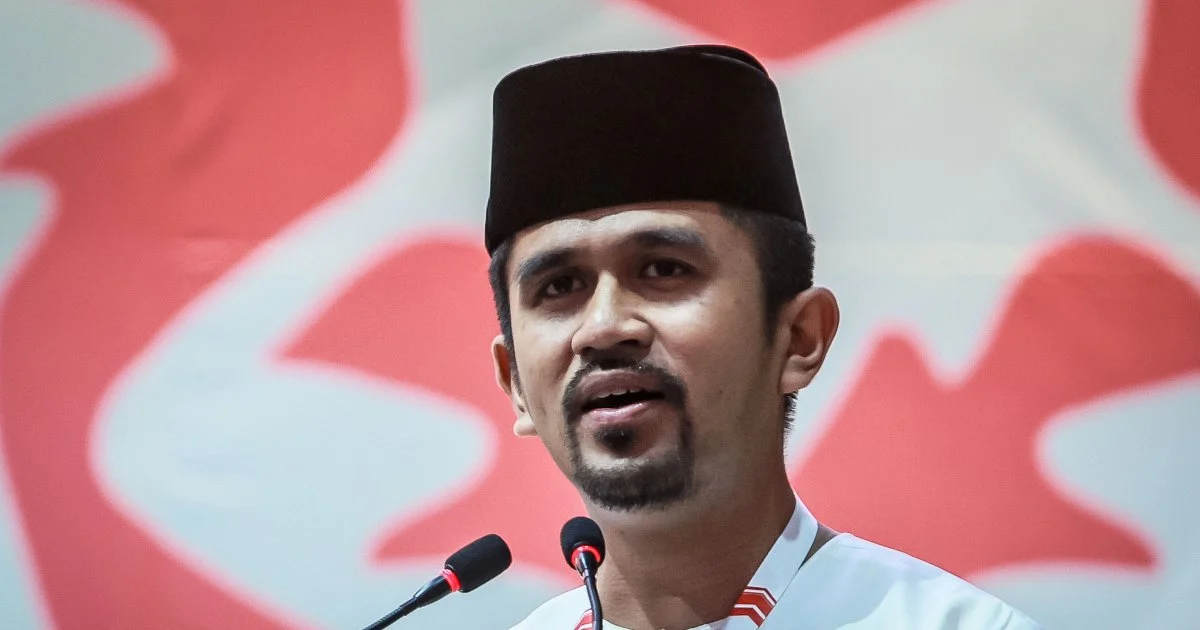
Umno Youth secretary-general Hafiz Ariffin has publicly questioned why several heavyweight Johor Pakatan Harapan leaders have been left out of the opposition coalition's candidate line-up for the July 11 state election, signalling fresh tensions within the political landscape of Malaysia's southernmost state just weeks before voting begins.
The Barisan Nasional Youth leader's remarks reflect a broader tactical shift in the run-up to the Johor poll, with the ruling coalition apparently seeking to exploit what it characterises as internal divisions or strategic vulnerabilities within the PH ranks. By spotlighting the absence of recognisable PH figures from the candidate slate, BN appears to be attempting to undermine confidence in the opposition's preparedness and organisational cohesion ahead of the contest.
Johor has traditionally been a BN stronghold, though PH made significant inroads in the state during the 2022 general election and subsequent local contests. The inclusion or exclusion of particular leaders in any election campaign carries symbolic weight in Malaysian politics, as voters often interpret candidate selection as a reflection of factional dynamics and party confidence in individual politicians. Hafiz Ariffin's challenge therefore touches on a sensitive issue within PH's internal workings.
The July 11 election represents a critical test for both coalitions in one of the country's most economically significant states. Control of Johor's state government influences not only local policy on matters ranging from education to economic development but also carries implications for national political momentum. For BN, retaining Johor remains strategically essential to demonstrating continued viability as Malaysia's dominant political force. For PH, the state offers an opportunity to consolidate support and build toward future national contests.
The tactics deployed by Hafiz Ariffin illustrate how Malaysian electoral politics increasingly relies on indirect criticism and inference rather than straightforward debate on policy platforms. By questioning the absence of specific leaders rather than directly attacking PH's proposals or record, BN Youth attempts to sow doubt about the coalition's internal unity and strategic judgment. This approach resonates particularly in Malaysian political culture, where factional alignments and leadership succession questions often dominate discussion.
Pakatan Harapan's candidate selection process for Johor likely reflects complex negotiations among its constituent parties, including PKR, DAP, and Amanah, each of which has its own territorial interests and leadership ambitions within the state. The absence of certain figures from the candidate list may result from internal party calculations rather than a deliberate demotion, though such nuances rarely survive public scrutiny in the lead-up to an election. Voters and party members may question why particular leaders are not putting themselves forward for direct electoral contests.
Historically, Malaysian political parties have used candidate selection as a mechanism for managing internal hierarchies and resolving disputes. Those elevated to prominent candidacies or state positions gain enhanced influence and visibility, while those sidelined may face questions about their standing within party leadership. The Johor election thus serves as a barometer of internal PH dynamics, offering clues about which leaders are ascending and which may be in relative decline.
For Malaysian voters beyond Johor, the state election provides valuable information about broader political trends. The outcome will likely influence calculations about future national elections and factional balance within both major coalitions. Analysts and political observers across Southeast Asia also monitor Malaysian state contests closely, as they offer early indicators of electoral sentiment and coalition stability in the region's most experienced democracy.
The campaign rhetoric emerging from BN's youth wing suggests that the ruling coalition intends to emphasise themes of experience, stability, and proven governance over the coming weeks. By casting doubt on PH's candidate selection and leadership depth, BN positions itself as the safer choice for state administration. This contrast-based approach has proven effective in previous Malaysian campaigns, particularly in states where voters value predictability over transformational promises.
Pakatan Harapan will likely respond by emphasising its track record in those areas where its candidates do come forward and highlighting the grassroots credentials of its contenders. The opposition coalition may also frame its candidate selection as a deliberate effort to identify fresh talent and broaden its appeal beyond established figures. Such positioning allows PH to present itself as forward-looking while deflecting criticism about missing senior figures.
The dispute over candidate selection underscores a fundamental challenge facing Malaysian opposition coalitions: the need to balance continuity with renewal, and national coordination with state-level interests. PH's composition across multiple parties means that achieving consensus on candidacies involves satisfying various stakeholder groups, a process that inevitably produces winners and losers. The visibility of that process, as evidenced by Hafiz Ariffin's intervention, may ultimately complicate PH's messaging in the campaign ahead.
As the July 11 election draws nearer, such verbal sparring will likely intensify, with both coalitions attempting to frame the contest according to their preferred narratives. The actual electoral outcome will depend not only on such tactical positioning but also on the substantive record of governance, economic conditions affecting Johor voters, and the effectiveness of individual candidates in their constituencies. Nevertheless, the early focus on candidate selection demonstrates how Malaysian politicians continue to view electoral contests as opportunities for internal positioning and factional advancement alongside genuine ideological and policy competition.

