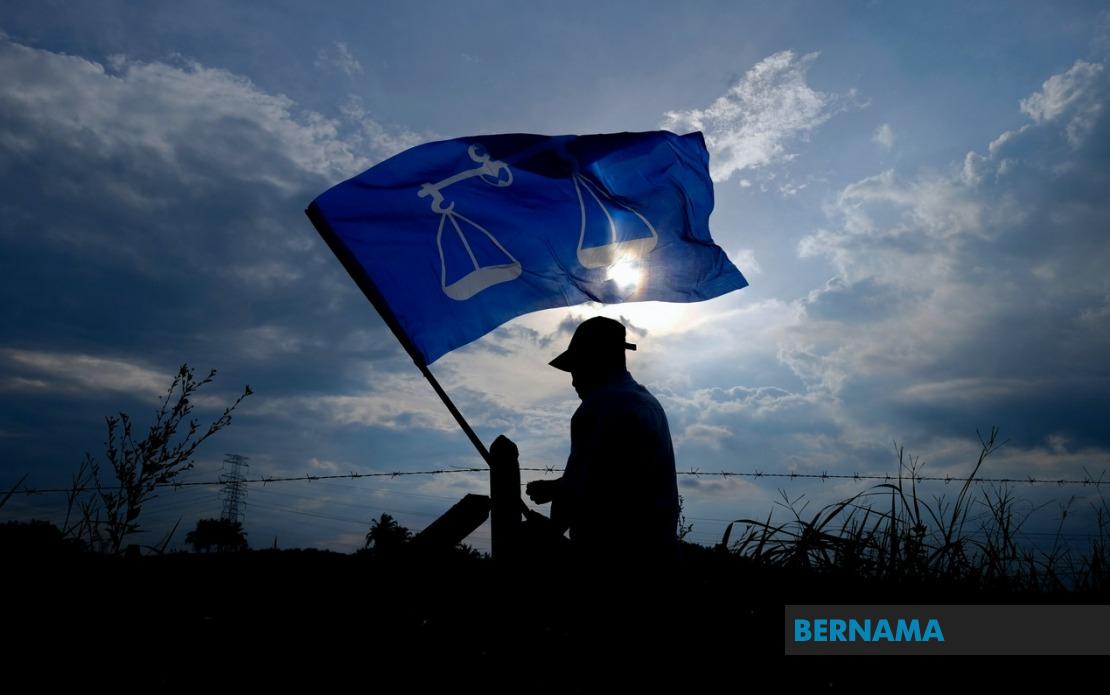
Barisan Nasional's approach to the impending Negeri Sembilan state election will be carefully calibrated to reflect the state's unique demographic composition and electoral behaviour, according to coalition chairman Datuk Seri Dr Ahmad Zahid Hamidi. Speaking to reporters in Kuala Lumpur, the Deputy Prime Minister emphasised that a one-size-fits-all strategy would be inappropriate for a state that differs significantly from others in terms of assembly seat configuration, population makeup, and voting trends. This nuanced approach signals BN's recognition that electoral success increasingly depends on locally-tailored campaigns rather than centralised directives from the federal level.
The BN leader explained that the coalition recognises Negeri Sembilan presents a distinct political landscape compared to other Malaysian states. The state's particular characteristics—encompassing not just the raw number of constituencies but also the composition of its electorate and established voting behaviours—necessitate a recalibration of BN's traditional operational model. Ahmad Zahid indicated that candidate announcements would materialise during the week of his statement, suggesting that BN's internal deliberations on this matter had reached an advanced stage. This timeline implies the coalition had already undertaken detailed analysis of which candidates could best resonate with Negeri Sembilan's voters based on demographic data and historical polling patterns.
The timing of these remarks came shortly after BN achieved a decisive victory in Johor's state election, where the coalition secured an outright majority. Ahmad Zahid attributed that success to what he characterised as mental resilience and creative emotional management during the campaign period. The Johor result has provided BN with momentum heading into Negeri Sembilan, though the coalition recognises that replicating that victory requires understanding each state's specific electoral dynamics rather than simply importing winning formulas from one jurisdiction to another. This represents a more sophisticated approach to state-level politics than BN employed historically, when federal-level directives often overrode local considerations.
On the question of potential cooperation with PAS regarding government formation in Negeri Sembilan, Ahmad Zahid adopted a cautious stance. He explicitly denied that any formal agreement exists between the two parties, characterising ongoing discussions as reflecting an incomplete understanding rather than settled terms. His statement suggests that while BN and PAS share sufficient common ground to discuss possibilities—particularly regarding the Menteri Besar position—neither party has committed to binding arrangements. This hedged language indicates ongoing negotiations remain fluid, with multiple scenarios still possible depending on how seat negotiations and coalition arithmetic evolve.
The BN chairman's comments reflect broader complexities within Malaysia's current political configuration. The Unity Government framework that exists at the federal level, bringing together BN, PAS, and other partners, creates both opportunities and tensions for state-level politics. While federal coalition partners ostensibly work toward shared objectives, state elections sometimes create competitive dynamics that can strain these working relationships. Ahmad Zahid's willingness to discuss PAS cooperation for Negeri Sembilan demonstrates how pragmatism often trumps ideology at the state level, where seat allocation and local electoral mathematics become paramount considerations.
When questioned about calls for Housing and Local Government Minister Nga Kor Ming to resign—with those calls emerging from within sections of the federal government—Ahmad Zahid took a conciliatory stance. The DAP deputy chairman has attracted criticism from some quarters for his ministry's actions, yet Ahmad Zahid emphasised that making such demands publicly proves counterproductive when parties remain bound together in government. He characterised such statements as inappropriate for coalition partners working as a unified team, suggesting that if the Unity Government were to function effectively, internal disagreements required private resolution rather than public pronouncements. This diplomatic language underscores the delicate balancing act required to maintain multi-party coalitions in Malaysia's contemporary political environment.
Ahmad Zahid stressed that relations among federal-level Unity Government leaders remain stable and professionally managed. His reassurance that all parties function as cohesive team members committed to serving the administration's full term seeks to counter perceptions that coalition tensions might destabilise the government. By characterising Nga Kor Ming as a personal friend and expressing intent to meet with him, Ahmad Zahid attempted to project an image of collegial governance despite occasional public friction. These signals matter considerably, as investor confidence, institutional stability, and public perception of government functionality all depend partly on whether coalition partners appear genuinely united or merely maintaining an uneasy truce.
The broader context for these statements involves Malaysia's post-2022 political realignment, in which electoral outcomes at both federal and state levels have become increasingly volatile and unpredictable. The Johor victory provided BN with confidence and momentum, yet the coalition recognises that complacency invites defeat. By explicitly acknowledging that different states require different strategies, Ahmad Zahid and BN signal maturation in their approach to electoral competition. This represents a departure from earlier decades when BN's dominance permitted less granular strategic thinking. Contemporary Malaysian electoral politics demands precisely the kind of demographic analysis and local customisation that the BN chairman now advocates.
For opposition parties and independent observers, Ahmad Zahid's comments reveal BN's determination to consolidate power following Johor's success while simultaneously managing intra-coalition dynamics with PAS and DAP. The Negeri Sembilan election becomes a test case for whether the Unity Government framework can deliver electoral victories in states where BN traditionally performed strongly, or whether that coalition produces less satisfying results than single-party dominance previously achieved. The answers to these questions will substantially influence Malaysian politics in coming years, determining whether voters embrace multi-party coalition governance or revert to preferring single-dominant-party models.

