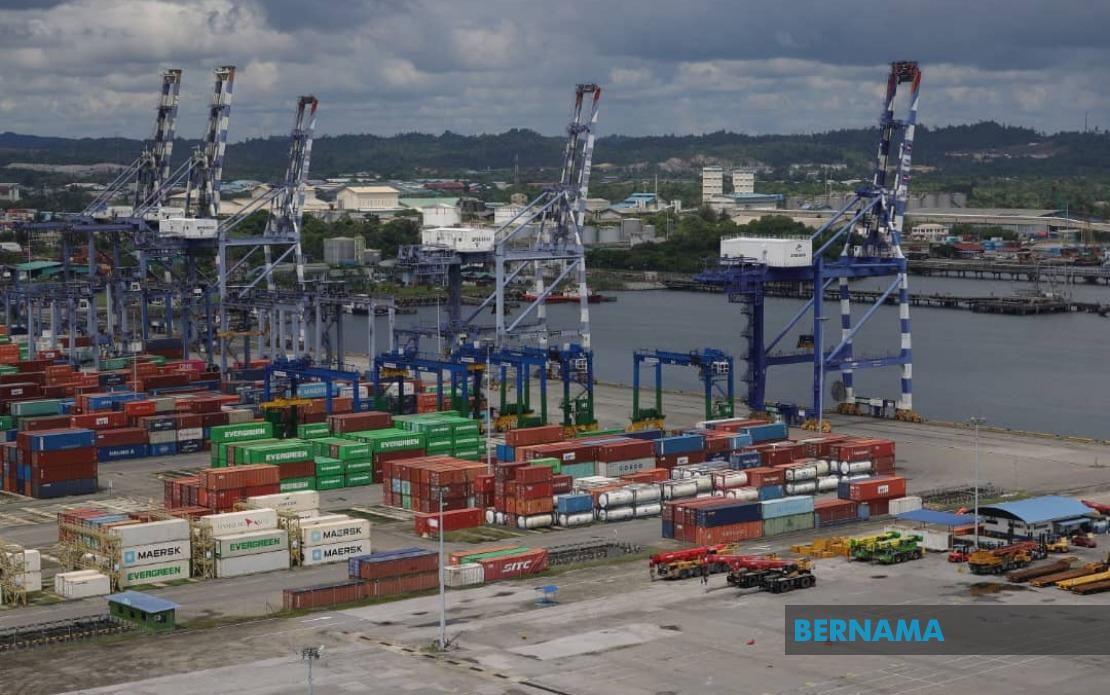
A major milestone in fulfilling the Malaysia Agreement 1963 (MA63) has been reached with the formal transfer of regulatory control over Bintulu Port to the Sarawak state government. The handover ceremony, held in Bintulu and attended by Prime Minister Datuk Seri Anwar Ibrahim and Sarawak Premier Tan Sri Abang Johari Tun Openg, represents tangible progress in devolving authority to one of Malaysia's two founding East Malaysian states. According to Minister in the Prime Minister's Department (Sabah and Sarawak) Datuk Mustapha Sakmud, this transfer exemplifies the cooperative spirit that should underpin MA63's broader implementation, delivering mutual benefits to both Sarawak and the federal administration.
The symbolic and practical importance of transferring port authority cannot be understated. Bintulu Port has long served as Malaysia's principal gateway for liquefied natural gas exports, a role that has underscored its economic significance across decades. However, the port's evolution extends well beyond its traditional function as an LNG shipping terminal. Officials now envision the facility as a catalyst for diversified industrial development, positioning it as a comprehensive logistics hub and emerging centre for clean energy manufacturing. This transformation aligns with broader global economic trends favouring decarbonisation and sustainability, particularly in resource-rich regions like Sarawak.
Sarawak's geographical and resource advantages position it strategically for the next phase of the port's development. The state possesses substantial hydroelectric power capacity, renewable energy assets that increasingly attract multinational corporations transitioning towards low-carbon supply chains. When coupled with Bintulu's established maritime infrastructure and deepwater terminal capabilities, these advantages create compelling conditions for investors seeking operational bases in the Asia-Pacific region. The combination of existing port facilities, abundant clean energy, and now enhanced state-level regulatory autonomy could catalyse a shift towards higher-value manufacturing and green industrial clusters in the region.
From a constitutional and political perspective, Mustapha's framing emphasises that MA63 implementation should not be perceived as federal power diminishment. Rather, he characterised the arrangement as a federation-strengthening exercise that recognises Sabah and Sarawak's original constitutional standing as founding partners. This rhetorical positioning matters significantly in Malaysian politics, where perceptions of centralisation versus decentralisation carry historical weight. By emphasising reciprocal gain rather than federal loss, government messaging attempts to reframe devolution as mutual benefit rather than concession, potentially smoothing implementation of further MA63 commitments.
The context surrounding this development involves broader momentum within Malaysia towards honouring MA63 commitments that have accumulated over six decades. Since the agreement's 1963 inception, various provisions have remained unfulfilled or inadequately implemented. Recent years, particularly following the 2020 Perikatan Nasional government formation and subsequent Anwar Ibrahim administration, have witnessed renewed focus on addressing these outstanding MA63 matters. The Bintulu Port handover therefore signals political commitment to more systematic implementation, not merely symbolic gesture-making.
For Malaysian and Southeast Asian business observers, the implications extend beyond formal governance changes. Control over port operations enables Sarawak to optimise tariff structures, expedite infrastructure improvements, and coordinate port development with state-level industrial policies without federal bureaucratic layers. These efficiencies could enhance competitiveness against regional competitors such as Singapore's port authority or Indonesia's expanding maritime infrastructure. The port's strategic position on major Asia-Pacific shipping lanes means that operational efficiency improvements benefit not merely local economies but regional supply chain networks increasingly vital to global commerce.
The green energy dimension particularly resonates with contemporary global investment patterns. Multinational corporations, particularly in petrochemicals, specialty chemicals, and advanced manufacturing, face escalating pressure from investors and consumers to demonstrate carbon reduction credentials. Sarawak's renewable energy abundance, combined with now-enhanced state regulatory authority over a major port facility, creates an integrated proposition for such enterprises. They could access clean energy, process and export from an efficient port, and leverage state government partnerships without navigating complex federal-state coordination mechanisms.
International precedents suggest that port devolution arrangements can succeed when accompanied by transparent regulatory frameworks and adequate infrastructure investment. Sarawak must now establish credible governance standards that maintain international shipping confidence while pursuing development objectives. The premier's presence at the ceremony signals state government readiness to assume these responsibilities, though implementing consistent, professional port administration will require sustained institutional commitment.
For other Malaysian states without MA63 standing, this development carries implications regarding federalism and resource autonomy. While MA63 uniquely applies to Sarawak and Sabah, the port handover may prompt broader conversations about appropriate divisions of developmental authority across Malaysia's diverse regions. Federal-state cooperation in infrastructure management increasingly appears inevitable across numerous policy domains.
The handover also reflects shifting economic geography within Malaysia. With Kuala Lumpur-centric development patterns facing questioning and increased emphasis on utilising regional comparative advantages, Sarawak's position as a hydrocarbon and potentially clean energy powerhouse gains enhanced recognition. The port becomes not merely a state asset but a node in reimagined regional economic networks extending across Brunei, southern Sabah, and Indonesian Kalimantan.
Moving forward, implementation success will depend on Sarawak demonstrating operational competence, maintaining transparent regulatory practices, and balancing development acceleration with environmental stewardship. The state government faces heightened scrutiny both domestically and internationally regarding port management. Early performance will establish precedents for evaluating further MA63 implementation feasibility and potentially influence federal-state relations across Malaysia's broader governance architecture.

