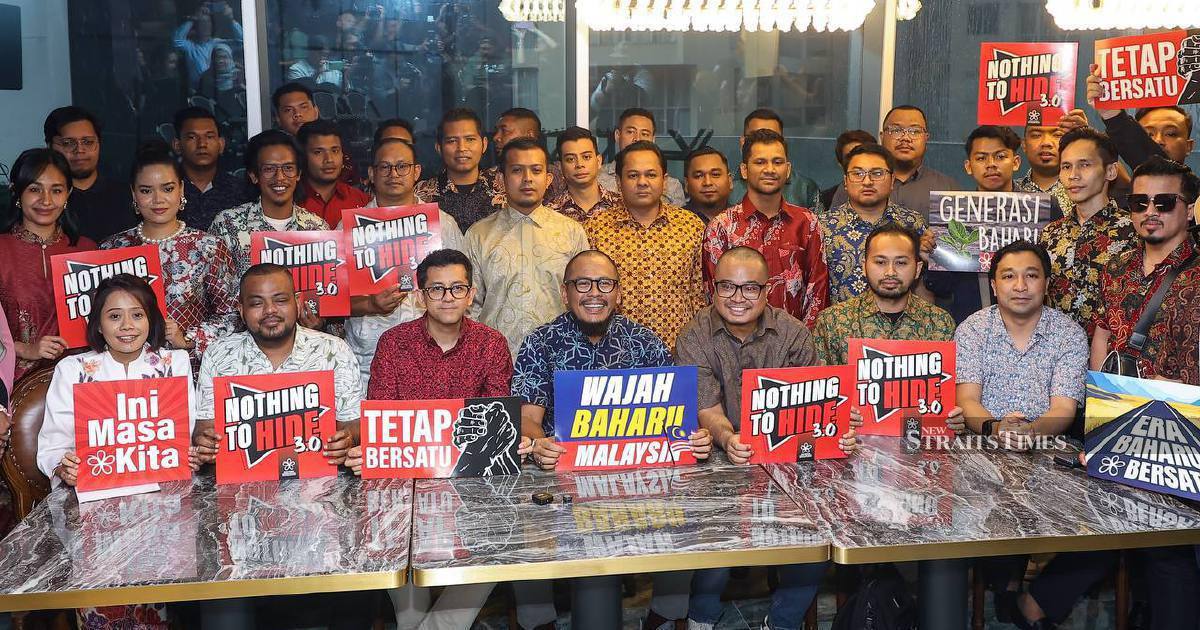
Kota Siputeh assemblyman Mohd Ashraf Mustaqim Abdul Munir has signalled renewed confidence that Bersatu and PAS can mend their fractured relationship, suggesting that recent disagreements between the two Perikatan Nasional partners need not prove terminal to their political alliance. Speaking publicly on the state of intra-coalition dynamics, the assemblyman drew a domestic analogy to characterize the current standoff, framing the dispute as comparable to a married couple whose persistent arguments mask an underlying commitment to preserving their shared household.
The tensions between Bersatu and PAS have reverberated across the PN coalition since mid-2023, when the two parties began positioning themselves differently on key policy issues and representation matters. Their rivalry has created palpable friction within what was ostensibly designed as a unified bloc capable of challenging Malaysia's other major political groupings. The discord has been particularly evident in state-level politics, where both parties compete for influence and control of state governments, most notably in Perak and Terengganu where their competing interests have occasionally clashed.
Mohd Ashraf's optimism, while perhaps contrasting with the more combative rhetoric occasionally deployed by higher-ranking party figures, reflects a broader pragmatism increasingly evident among rank-and-file PN members. The coalition's ability to function effectively depends substantially on maintaining workable relationships between its constituent parties, each of which brings distinct voter bases and regional strongholds to the partnership. Any sustained rupture would weaken PN's capacity to present itself as a coherent alternative to other political groupings, particularly as Malaysia approaches future electoral cycles.
The analogy to a married couple living under the same roof carries particular significance in the Malaysian political context. The PN coalition, formed in 2020 following a major political upheaval, was always intended to be a long-term arrangement designed to consolidate conservative and Islamist-leaning voters. Unlike temporary electoral arrangements or looser alliances, PN was structured as a permanent coalition with shared governance responsibilities and coordinated policy direction. This structural permanence means that disputes, however heated, occur within a framework where both parties recognize they must ultimately find accommodation.
Bersatu, as the party helmed by former Prime Minister Mahathir Mohamad and later led by Muhyiddin Yassin, has positioned itself as a moderate conservative force within PN. The party has sought to distinguish itself from PAS by emphasizing constitutional governance, secular state authority, and inclusive Islamism. These positioning differences have occasionally brought Bersatu into tension with PAS, particularly on matters relating to Islamic law implementation, hudud proposals, and the extent to which Islamic principles should inform secular governance structures. Yet both parties have consistently reaffirmed their commitment to PN's overall framework.
The path toward reconciliation likely hinges on several practical factors that political actors on both sides recognize must be addressed. State-level representation remains a critical point of negotiation, with questions about seat allocations, ministerial portfolios, and control of state machinery requiring careful calibration. Additionally, both parties must navigate the challenge of maintaining distinct identities and voter appeal while demonstrating sufficient unity for PN to function as a coherent political force. This balancing act has proven difficult but not impossible in other multi-party coalitions worldwide.
The broader Southeast Asian context also informs the significance of PN's internal cohesion. Throughout the region, conservative and Islamist parties have struggled to build durable coalitions, often fragmenting along personality, ideological, or organizational lines. Malaysia's experience with the PN coalition offers a potential model for how such groupings might stabilize themselves through institutionalized cooperation despite underlying tensions. Successful repair of Bersatu-PAS relations would therefore carry implications beyond Malaysian borders, demonstrating that ideologically aligned parties can transcend personality-driven conflicts.
Mohd Ashraf's metaphor also implicitly acknowledges that genuine disagreements exist between the parties but need not be existential threats to their partnership. Political actors within PN appear increasingly to be recognizing that their disagreements, while real and sometimes substantive, differ fundamentally from the kind of zero-sum competition that characterized earlier Malaysian coalition breakdowns. The difference lies partly in institutional framework and partly in pragmatic recognition that electoral mathematics favor coalition stability over dissolution.
Governance challenges at the federal and state levels continue to provide pressure for maintaining PN coherence. Both Bersatu and PAS benefit from coalition participation in terms of access to state resources, government contracts, and administrative authority. These material incentives create ongoing motivation to resolve disputes through negotiation rather than confrontation. Additionally, both parties possess sufficient organizational capacity that neither can easily dominate the other, creating incentive for power-sharing arrangements rather than winner-take-all outcomes.
The reconstruction process that Mohd Ashraf envisions would likely require engagement at multiple organizational levels, from grass-roots coordination to senior leadership negotiations. State assemblies and state governments controlled by either party will need to coordinate more effectively on administration and resource allocation. Furthermore, both parties must manage the expectations of their respective voter bases, explaining why continued coalition participation serves their supporters' interests despite visible disagreements between party leaderships.
Moving forward, the credibility of optimistic assessments like Mohd Ashraf's will depend on whether concrete steps toward reintegration materialize. Joint party committees, coordinated policy pronouncements, and visible cooperation on legislative initiatives would signal genuine movement toward reconciliation. Conversely, continued public disputes and institutional rivalry would suggest that the married couple metaphor masks a relationship in terminal decline. The coming months will likely prove pivotal in determining whether PN's architects can genuinely rebuild what recent tensions have strained.

