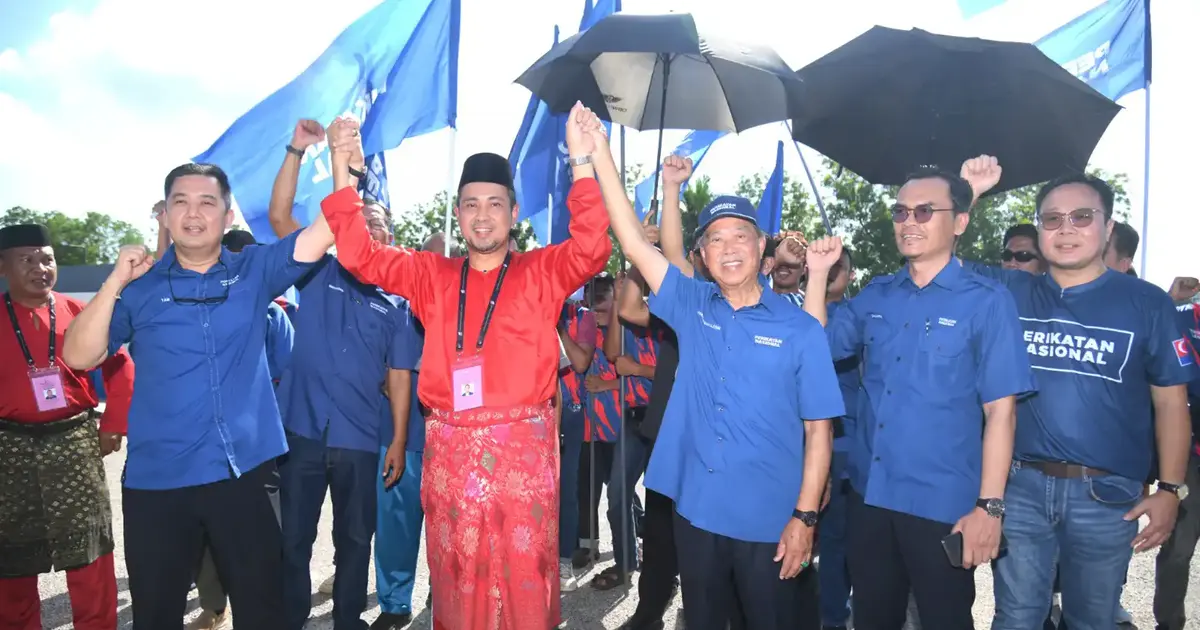
Bersatu's leadership is adopting a measured response to what appears to be a deliberate withholding of party resources by its long-time ally PAS, with party president Muhyiddin Yassin signalling that such disappointments are part of the political landscape within multi-party coalitions. The statement reflects an apparent effort to downplay tensions within the Perikatan Nasional (PN) bloc ahead of what are widely expected to be challenging electoral contests in the coming months, though the underlying friction between the two partners suggests deeper strategic differences on how the coalition should function.
Muhyiddin's position centres on a principled argument about the voluntary nature of inter-party cooperation, framing Bersatu's acceptance as consistent with the values that supposedly bind PN together. In his telling, the coalition operates best when parties choose to support one another out of genuine alignment rather than obligation, a framing that allows Bersatu to accept PAS's rebuff without appearing weakened or sidelined within the alliance. This rhetorical strategy serves multiple purposes: it protects Bersatu's dignity internally and before supporters, while also signalling to other coalition partners that the party will not make unreasonable demands or create pressure points that could destabilize the broader PN arrangement.
Yet the practical implications of PAS declining to deploy its organisational machinery on Bersatu's behalf are substantial and cannot be entirely obscured by diplomatic language. Party machinery—the network of grassroots volunteers, local coordinators, and campaign workers—represents one of the most valuable resources a political organisation possesses, particularly in Malaysian electoral contests where ground-level operations remain decisive in many constituencies. PAS's refusal to lend such support suggests either a calculated reassessment of priorities or a deliberate assertion of independence within the coalition, either of which carries implications for PN's cohesion heading into the next major electoral test.
The incident illuminates the inherent tensions within the PN arrangement, which has never been a seamlessly integrated coalition despite its electoral successes. Bersatu, which emerged from UMNO defectors and carries that party's organisational legacy, occupies a somewhat precarious position within PN. The party lacks the deep grassroots networks of both PAS and the Sabah and Sarawak partners, making it dependent on either securing electoral strategies or leveraging factional advantages within individual constituencies. Any signal that coalition partners are unwilling to provide supplementary support therefore strikes at a genuine vulnerability in Bersatu's electoral capacity.
PAS, by contrast, brings formidable organisational strength to any alliance it joins, built over decades of Islamic activism and religious outreach. The party's leadership has shown increasing willingness to exercise leverage within coalitions, reflecting confidence in its independent electoral prospects and its role as an indispensable partner to any numerically significant political combination in Malaysia. By declining to provide machinery assistance to Bersatu, PAS is arguably making a statement about relative standing within PN and perhaps testing the limits of what it can demand as the price of continued cooperation.
The timing of this development warrants attention, as it arrives during a period of shifting Malaysian electoral calculations and speculation about possible realignments. Recent by-elections and state-level contests have demonstrated that voter preferences remain volatile and that traditional coalition loyalties cannot be assumed. PAS may be conserving resources for its own priority constituencies or signalling that it intends to pursue an increasingly independent electoral strategy rather than subordinating its interests to PN cohesion. For Bersatu, accepting this situation gracefully is preferable to the alternative of public conflict, but it also highlights the party's continuing difficulty in establishing itself as an autonomous political force rather than an opportunistic coalition member.
Muhyiddin's public composure also reflects awareness that displaying resentment toward PAS would be strategically counterproductive. Any public criticism of PAS could be portrayed as divisive and could provide ammunition to both Perikatan's competitors and to internal rivals within Bersatu itself. Maintaining the appearance of PN unity, even while acknowledging specific disappointments, is therefore a necessity for the Bersatu president, who has already navigated considerable internal party turbulence and factional challenges during his tenure as leader.
For Malaysian observers of coalition politics, this incident is instructive about the underlying fragility of PN's arrangement. While the coalition achieved substantial electoral success in 2020 and has maintained parliamentary relevance since then, the willingness of senior partners like PAS to act unilaterally on resource allocation suggests that the bloc remains a collection of distinct entities with separate interests rather than an integrated political force. Such arrangements can function adequately when electoral mathematics require cooperation, but they provide little buffer against the frictions that arise during between-election periods or when partners pursue divergent strategic calculations.
The broader regional context matters as well, particularly given the increasing sophistication of political operations across Southeast Asia and Malaysia's role as one of the region's more electorally competitive democracies. Coalition management has become increasingly critical to electoral success in the post-2018 environment, where no single party commands dominant support and where alliance-making involves complex calculations about resource allocation, candidate selection, and power-sharing arrangements. Bersatu's experience illustrates both the opportunities and constraints that arise for mid-tier parties operating within such frameworks.
Moving forward, Bersatu will likely need to develop alternative capacity to compensate for any structural disadvantages within PN, whether through enhanced digital campaigning strategies, targeted constituency-level partnerships, or cultivation of independent volunteer networks. The party's ability to overcome this setback without further damaging its coalition standing will provide an important test of its leadership and organisational resilience in Malaysia's increasingly complex political environment.

