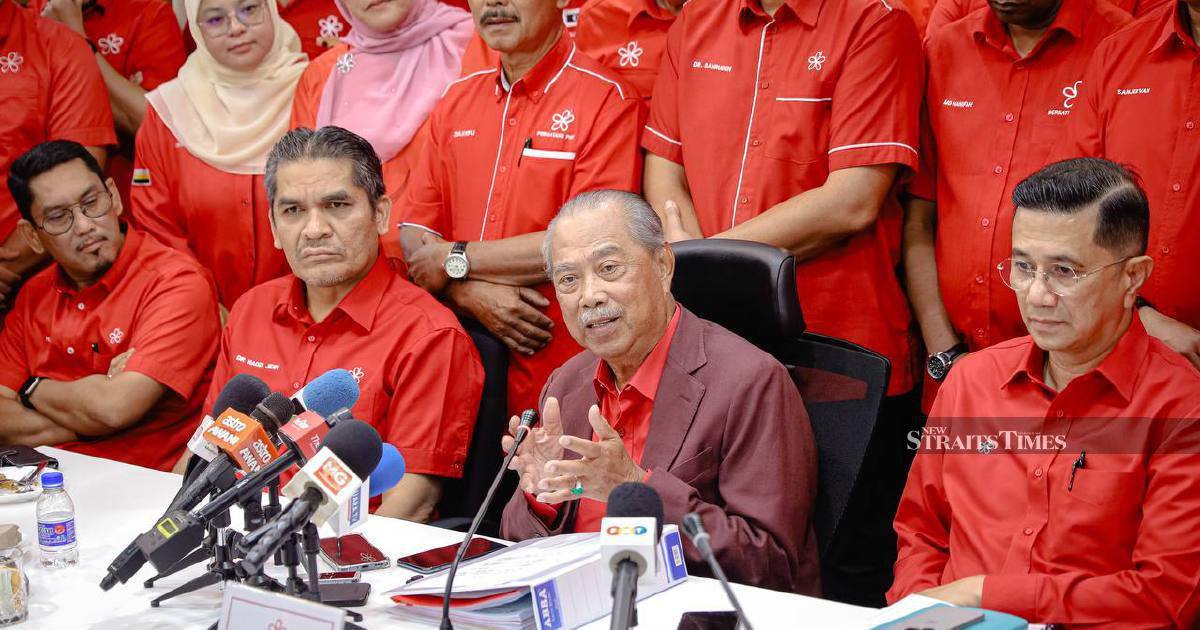
Bersatu's leadership has indicated a willingness to engage in direct electoral competition with Pas in Johor, should negotiations over seat allocations fail to prevent mutual candidatures. The assertion came from party president Tan Sri Muhyiddin Yassin, who appeared to acknowledge the possibility that seat-sharing arrangements between the two Malay-Muslim parties may not materialise smoothly ahead of the state election.
The statement carries significance for understanding the political landscape in Johor, a state that has undergone considerable realignment in recent years. The relationship between Bersatu and Pas has been characterised by periods of cooperation and tension, particularly following the 2022 general election when both parties competed for dominance within the Perikatan Nasional coalition and among Malay-Muslim constituencies. Muhyiddin's readiness to countenance a direct clash suggests that Bersatu is not prepared to make substantial concessions to Pas in the upcoming Johor contest.
The possibility of seat clashes between coalition partners reflects broader anxieties within Perikatan Nasional about internal discipline and electoral strategy. While both parties ostensibly share similar political platforms and voter bases, their competition for legislative seats has created friction. In Johor particularly, where Umno maintains significant influence and Pakatan Rakyat retains pockets of support, the division of parliamentary and state seats between Perikatan's components becomes a delicate calculus.
Bersatu's confidence in facing Pas directly indicates the party's assessment of its organisational capacity and grassroots strength. Since its formation in 2016, and particularly after splitting from Umno, Bersatu has worked to establish electoral machinery independent of its coalition partners. The party's performance in recent electoral contests has provided some foundation for this confidence, though results have been mixed across different states and parliamentary constituencies.
For Malaysian observers, the significance of this statement extends beyond internal party dynamics. Johor remains electorally crucial—the state is Malaysia's second-largest by population and has consistently returned diverse representative bodies reflecting both federal government alignments and local preferences. An acrimonious competition between Bersatu and Pas could fragment the Malay-Muslim vote, potentially benefiting opposition coalitions or creating unpredictable electoral outcomes. Conversely, successful seat-sharing arrangements might strengthen Perikatan's overall performance in the state.
The regional context is equally important for Southeast Asian politics. Malaysia's coalition dynamics influence investor confidence, policy stability, and governance narratives across the region. Domestic political divisions between ostensible allies can create perception of instability that extends beyond national borders. Clear coalition unity tends to reassure international observers about governmental continuity and predictability.
Muhyiddin's statement also reflects the realities of Malaysian electoral politics where seat allocation has historically proven contentious. Unlike some parliamentary systems where coalition partners operate with predetermined seat distributions, Malaysian state and general elections frequently see eleventh-hour negotiations over constituency divisions. These discussions often become fraught as parties leverage electoral performance data, grassroots assessment, and demographic analysis to argue for larger allocations.
Bersatu's willingness to compete independently against Pas suggests the party is prioritising territorial gains over coalition harmony in Johor. This approach carries risks—a bitter internal contest could weaken both parties relative to other political forces in the state. However, it also demonstrates Bersatu's belief that it possesses competitive advantages in certain constituencies that justify direct confrontation.
The statement warrants attention from business and governance analysts because coalition stability directly affects policy implementation. When component parties of ruling coalitions engage in intense electoral competition, the resulting tensions can spill into cabinet dynamics, policy formulation, and legislative priorities. For investors and analysts tracking Malaysia's political economy, such signals provide early warning of potential instability or policy shifts.
Looking forward, observers should monitor whether seat allocation negotiations between Bersatu and Pas progress toward compromise or deteriorate further. Public statements like Muhyiddin's often serve as negotiating positions rather than final declarations—they establish parameters for subsequent discussions while allowing leaders to retreat from extreme positions if circumstances warrant. The coming weeks will likely reveal whether this Johor electoral contest represents a genuine coalition rupture or a standard bargaining position in Malaysian coalition politics.