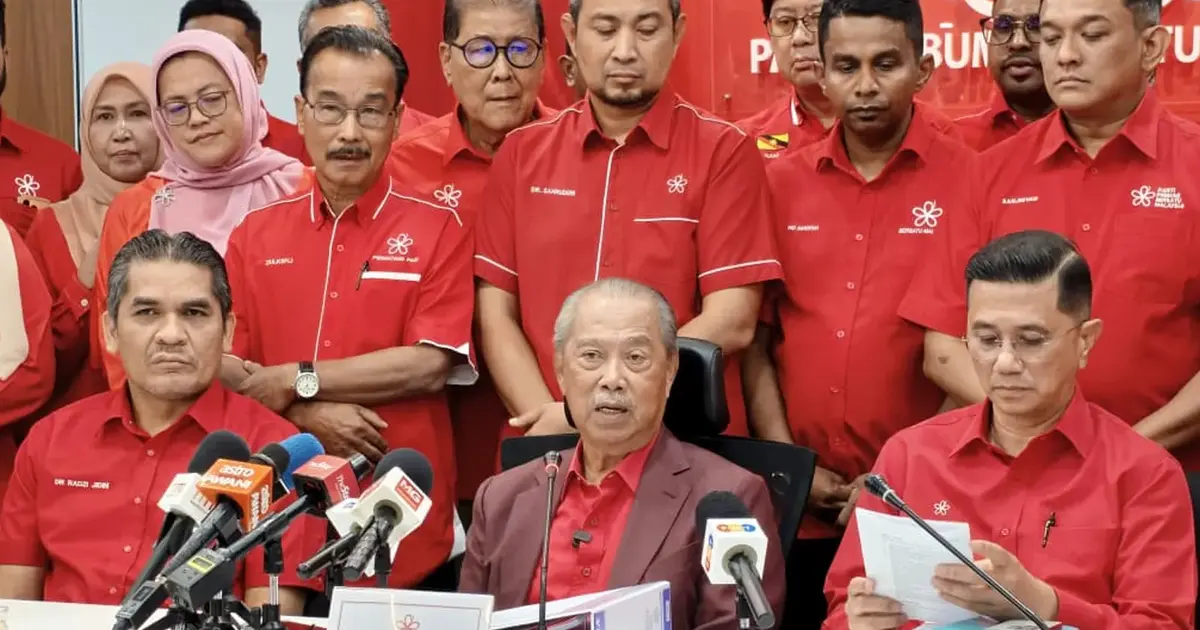
Bersatu will maintain its position as a core member of the Perikatan Nasional coalition, party president Muhyiddin Yassin announced, signalling the Bumiputera-focused party's unwavering commitment to the alliance despite ongoing political uncertainties across Malaysia's fractious parliamentary landscape. The announcement comes as Bersatu navigates a complex political terrain where coalition dynamics remain fluid and multi-faceted negotiations shape the country's governance structure.
Muhyiddin's declaration reflects a strategic calculation rooted in what party leadership characterises as broad-based public endorsement of the Perikatan Nasional formation. The former prime minister emphasised that Bersatu's decision to remain allied with the coalition is not arbitrary but rather anchored in substantive support demonstrated across the general population, suggesting internal party polling or grassroots feedback has validated the continuation of this political partnership.
The Perikatan Nasional coalition, which brings together various component parties under a shared political platform, has experienced several iterations and internal pressures since its initial formation. Bersatu's reaffirmation of its membership represents a stabilising force within this broader alliance, particularly given the party's historical significance in Malaysian politics and its influence among Bumiputera constituencies across the peninsula and Sabah and Sarawak.
This commitment carries particular weight in the Malaysian political context, where coalitions have historically proven susceptible to defections and realignments. Party leadership's public assurance about remaining within Perikatan Nasional serves multiple functions: it reassures coalition partners, consolidates internal party discipline by signalling unified direction to grassroots members, and projects stability to the electorate during a period marked by considerable political volatility.
The timing of Muhyiddin's statement appears deliberate, suggesting that Bersatu faced either internal or external pressure regarding its coalition membership status. Such declarations often emerge during periods when external observers question coalition cohesion or when internal discussions about party direction become sufficiently pronounced to warrant public clarification from senior leadership. By articulating this position publicly, Muhyiddin effectively closes off speculation about potential party repositioning.
Bersatu's trajectory within Malaysian politics since its establishment has been characterised by significant influence disproportionate to its parliamentary size. The party's bedrock support among Malay-Muslim voters and its institutional relationships with both federal and state-level governance structures give it leverage within any coalition it joins. Consequently, its continued membership in Perikatan Nasional carries implications extending beyond the party itself to the stability of Malaysia's broader political arrangements.
The public emphasis on popular acceptance as justification for the coalition commitment reveals how contemporary Malaysian politics increasingly incorporates claims of grassroots legitimacy into elite decision-making. Rather than relying solely on parliamentary mathematics, party leaders increasingly frame coalition decisions through the lens of public support, reflecting broader expectations about democratic accountability and popular validation of political partnerships.
For Malaysian voters and the broader electorate, Bersatu's reconfirmation of Perikatan Nasional membership reduces immediate uncertainty about potential coalition reconfiguration. This clarity, however provisional, provides stakeholders with firmer ground for assessing the political landscape and anticipating governmental direction across multiple policy domains, from economic management to constitutional issues affecting Malaysia's federal structure.
Regionally, Malaysia's coalition stability holds significance for Southeast Asian politics. Bersatu's commitment to Perikatan Nasional ensures continuity in Malaysia's international relationships and regional diplomatic positioning, factors that depend substantially on domestic political stability. Coalition fluidity creates unpredictability that affects bilateral relationships and regional multilateral frameworks where Malaysian participation proves essential.
The underlying dynamic of Muhyiddin's announcement also reflects calculations about electoral prospects and parliamentary survival. By maintaining Perikatan Nasional's cohesion, Bersatu positions itself advantageously for eventual electoral contests, where coalition unity and coordinated campaign strategies become crucial competitive advantages against rival groupings. The party's historical experience demonstrates that coalition positioning substantially influences electoral outcomes and resource allocation during campaigns.
Looking forward, Bersatu's continued membership in Perikatan Nasional will likely remain subject to periodic reassessment as political circumstances evolve. However, Muhyiddin's definitive statement establishes a baseline expectation against which future deviations would require substantial justification. This declaration thereby anchors Malaysian coalition politics somewhat more firmly, at least temporarily, within a specific configuration.