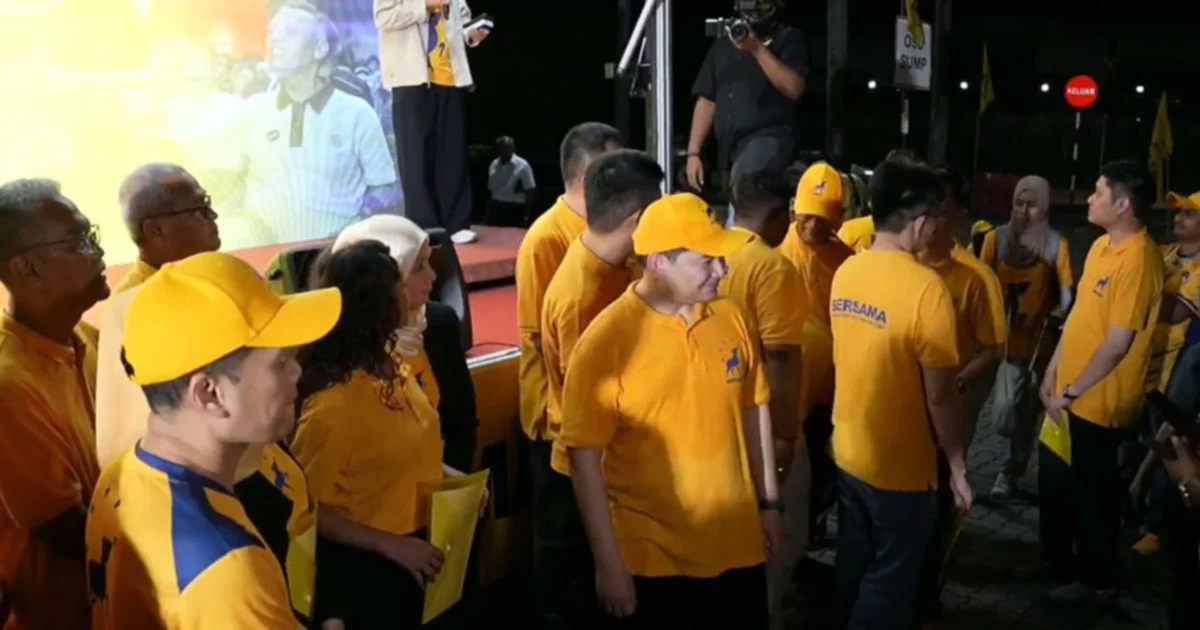
Parti Bersama Malaysia has positioned itself as a fresh political force in Johor by fielding 15 candidates across the state for the upcoming 16th state election, deliberately selecting individuals from varied occupational backgrounds to appeal to working-class and entrepreneurial voters. The party's candidate list on Friday reflects a deliberate strategy to move beyond traditional political hierarchies by incorporating an entrepreneur, a supermarket manager and a logistics worker among its contenders, signalling an attempt to connect with ordinary Malaysians grappling with cost-of-living pressures and economic aspirations.
The inclusion of logistics sector representation is particularly significant for a state like Johor, which sits at the crossroads of Malaysia's major supply chains and distribution networks. Johor's economy depends heavily on manufacturing, trade and port operations, making candidates with practical experience in these domains potentially credible to voters concerned about commerce and employment. A logistics worker candidate brings direct workplace experience that resonates differently from conventional politicians, offering voters someone who understands the day-to-day realities of supply chain disruptions, fuel costs and working conditions that affect operational efficiency throughout the state.
The presence of a supermarket manager on Bersama's roster similarly connects the party to retail sector dynamics that impact household finances across Johor. Managers working in supermarket chains encounter firsthand the pressures retailers face in sourcing goods, managing inventory costs and competing with e-commerce platforms. This experience provides potential insights into inflation, product availability and the mechanics of retail pricing—all concerns that Malaysian consumers regularly debate and worry about during their weekly shopping trips. For Johor voters, a candidate who understands retail supply chains and pricing mechanisms may offer a different perspective on inflation and consumer protection than candidates drawn exclusively from professional or political backgrounds.
The entrepreneurial representation within Bersama's slate speaks to the party's effort to attract business-minded voters and small-to-medium enterprise operators. Entrepreneurs often champion regulatory reform, tax efficiency and support for small business growth—platforms that appeal to Johor's considerable population of independent traders, shop owners and service providers. By including business founders and operators, Bersama positions itself as sympathetic to commercial dynamism rather than purely ideological governance, potentially offering a differentiation from more established parties perceived as favouring corporate conglomerates or civil service interests.
Bersama's strategy of fielding candidates from multiple economic sectors reflects broader shifts in Malaysian electoral politics, where voters increasingly scrutinise candidates' professional credentials and practical experience. The party's approach contrasts with candidate selection mechanisms that have historically privileged party loyalty, family connections or government background. By explicitly highlighting occupational diversity, Bersama signals that competence and sector-specific knowledge matter alongside political affiliation—a message that aligns with voter frustrations over perceived disconnects between political representatives and economic realities facing ordinary Malaysians.
Johor's electoral landscape remains highly competitive, with the state a crucial political battleground where various coalitions contest for dominance. The introduction of a party actively recruiting from non-traditional political pools suggests increasing fragmentation of voter preferences and growing openness to candidates outside major party structures. Bersama's positioning may appeal particularly to younger, economically anxious voters seeking alternatives to established parties, or to working-class Malaysians who view traditional politicians as disconnected from their circumstances.
The logistics and retail sectors also face distinctive challenges that Bersama candidates can legitimately claim understanding. Port congestion in Johor, labour shortages in warehousing, last-mile delivery costs and supply chain resilience are technical issues affecting competitiveness. Similarly, supermarket managers grapple with shrinkflation pressures, supplier negotiations and staff retention—operational realities that connect directly to consumer welfare. When candidates can articulate sector-specific problems from lived experience rather than policy documents, they gain credibility that abstract political rhetoric cannot provide.
Johor's economic diversity—spanning manufacturing hubs like Johor Bahru, agricultural regions, port facilities and tourism zones—requires representatives who comprehend different subsectors. An entrepreneur may understand challenges in Johor Bahru's central business districts; a logistics worker may articulate concerns from port and warehouse communities; a supermarket manager may speak to issues affecting consumers across urban and suburban areas. Collectively, such candidates can claim broader coverage of economic experiences across the state's geography.
However, Bersama's electoral prospects depend not merely on occupational diversity but on translating workplace experience into coherent policy platforms and delivering constituency services effectively. Voters must perceive candidates not as symbolic representatives of their sectors but as capable administrators capable of addressing local infrastructure, education, healthcare and safety concerns. The party's challenge lies in converting occupational credentials into demonstrated political capability and public trust.
As Johor approaches its state election, the emergence of candidates from working-class and entrepreneurial backgrounds signals evolving voter preferences and frustration with traditional political recruitment patterns. Whether Bersama's slate can translate sectoral experience into electoral success remains uncertain, but the party's approach reflects genuine shifts in how Malaysian voters evaluate candidates in an era of economic stress and declining trust in political institutions offering hollow promises disconnected from lived reality.

