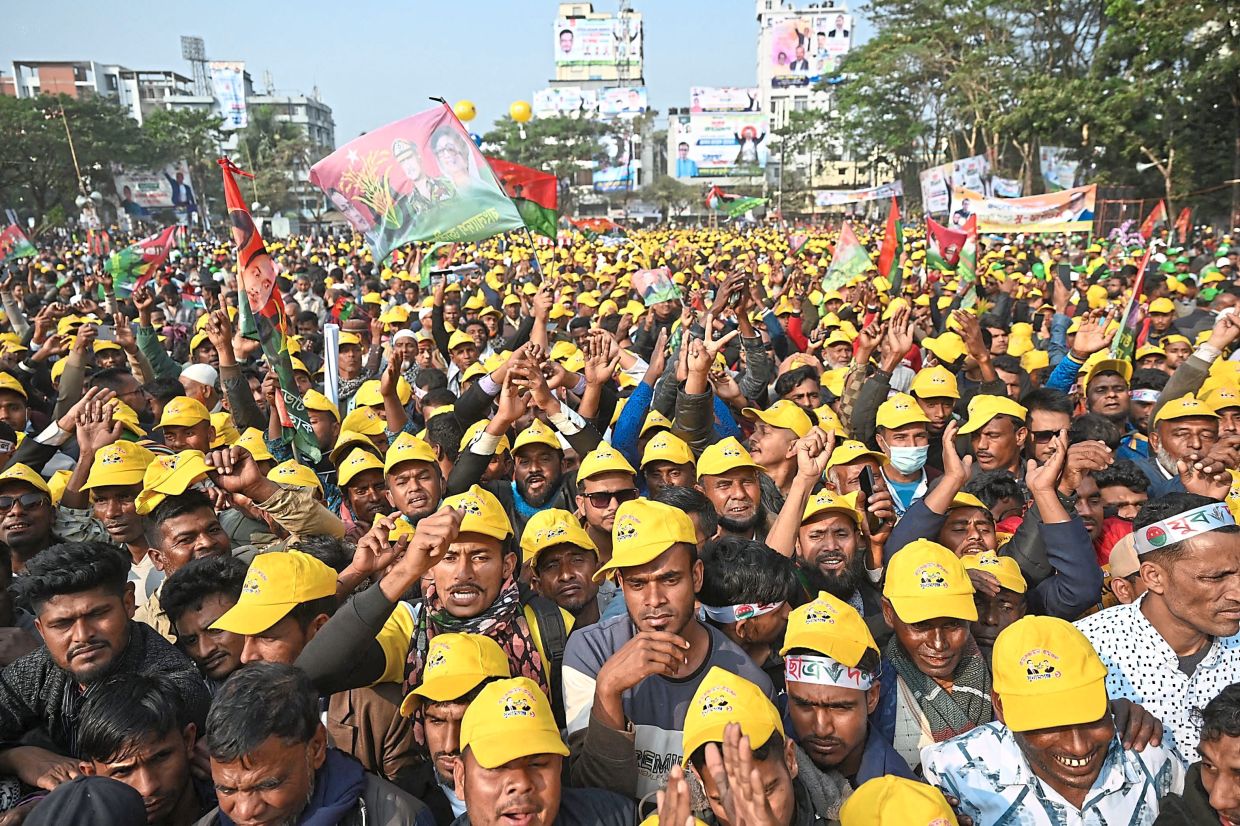
Bangladesh's parliament will formally elect the nation's new president on Thursday afternoon, with the ruling Bangladesh Nationalist Party's Mirza Fakhrul Islam Alamgir widely expected to secure the five-year position. The 78-year-old secretary general and local government minister is poised to become the 23rd president of the South Asian nation of 170 million people, replacing Mohammed Shahabuddin, who resigned in July citing health concerns.
Alamgir expressed humility about his impending elevation, telling reporters this week that he never imagined holding the presidency and credited both his political party and divine grace for the opportunity. Despite assuming the ceremonial office, he emphasised his continued commitment to grassroots engagement and public service, signalling that his appointment would not distance him from ordinary citizens. The sentiment reflects careful political messaging aimed at maintaining the ruling party's populist credentials following its February landslide electoral victory.
The path to Alamgir's nomination reflects the dramatic political upheaval that has reshaped Bangladesh's governance landscape over the past two years. Prime Minister Tarique Rahman's BNP dominated the February elections, which represented the first democratic vote held after the 2024 revolution toppled the long-ruling government of Sheikh Hasina. That popular uprising emerged from widespread public anger over alleged state repression and institutional decay during Hasina's tenure, marking a decisive break from over a decade of her administration's control.
Previous president Shahabuddin, who had served as a confidant of Hasina's regime, faced mounting political pressure to step aside. His resignation broke the symbolic link between the ousted government and the current constitutional order, enabling a fresh presidential appointment aligned with the new political leadership. The move allowed Bangladesh to complete its institutional transition and signal a genuine break with the discredited previous administration.
Although the presidency carries primarily ceremonial authority in Bangladesh's parliamentary system, the position carries significant symbolic weight in the nation's political culture. Alamgir's election will formally mark his ascension from the ranks of principled opposition that he maintained for years whilst BNP leaders including Khaleda Zia faced imprisonment and her son Rahman endured exile abroad. His presence in the office will underline the BNP's restoration to power and validate the party's narrative of perseverance through adversity.
Alamgir's political trajectory spans more than five decades of activism and governance. As a student at Dhaka University, where he read economics, he emerged as a prominent organiser during the 1969 uprising against Pakistani military rule—a movement that ultimately catalysed Bangladesh's independence struggle two years later. Following his academic work in the economics field, he transitioned into public service and later into electoral politics, accumulating ministerial experience across agriculture, aviation, and tourism portfolios during earlier BNP administrations.
His prominence as an opposition figurehead crystallised during the Hasina era, when Alamgir demonstrated strategic resilience in preserving BNP institutional cohesion amid systematic pressure from the government. While Khaleda Zia remained imprisoned and her son languished in foreign exile, Alamgir shouldered the responsibility of maintaining party discipline and organisational presence despite facing repeated arrests and what he characterised as politically fabricated legal charges. International observers credited him with sustaining the party's capacity to challenge the government and keeping alive the prospect of democratic alternation.
Hasina's government deployed courts as a political weapon against opposition figures, and Alamgir experienced this machinery directly through numerous arrests underpinned by charges he consistently disputed. The multiple prosecutions reflected the regime's determination to neutralise the opposition threat through legal machinery, a tactic that rights organisations documented extensively. His survival of this ordeal intact politically enhanced his credibility within the BNP and among opposition sympathisers who viewed him as having withstood unjust persecution.
Hasina herself remains beyond Bangladesh's reach, having sought refuge in India following the 2024 revolution that forced her from office. The deposed leader has declined to return for proceedings in Dhaka, where courts convicted her in absentia of crimes against humanity in November and imposed capital punishment. International human rights bodies had documented systematic abuses throughout her administration, including documented killings of political opponents, systematic suppression of rival parties, manipulation of courts, and electoral irregularities that undermined democratic authenticity.
Alamgir faces nominal electoral competition from Oli Ahmed, a candidate fielded by the 11-party opposition alliance coordinated by Jamaat-e-Islami, a major Islamist faction. Nevertheless, parliamentary arithmetic overwhelmingly favours the ruling coalition, rendering Alamgir's victory a procedural formality rather than a genuinely contested outcome. The voting process commencing around 2 pm on Thursday will provide formal legitimacy to a predetermined result, completing the BNP's institutional consolidation following its February electoral triumph.
Personally, Alamgir is married to Rahat Ara Begum, a retired financial sector professional, and together they have two daughters. His family background reflects the educated, professional milieu that characterises Bangladesh's political elite, a detail that resonates with urban constituencies and international observers evaluating institutional stability.
For Malaysia and broader Southeast Asia, Bangladesh's presidential transition illustrates the region's recurring patterns of democratic contestation and institutional renewal following periods of concentrated executive authority. The development signals that anti-incumbency pressures can generate sufficient momentum to remove even entrenched governments, provided opposition movements maintain organisational coherence and political opposition figures preserve their credibility through demonstrated resilience. Alamgir's elevation thus represents not merely a personnel change but validation of democratic principles reasserting themselves after apparent erosion under Hasina's stewardship.

