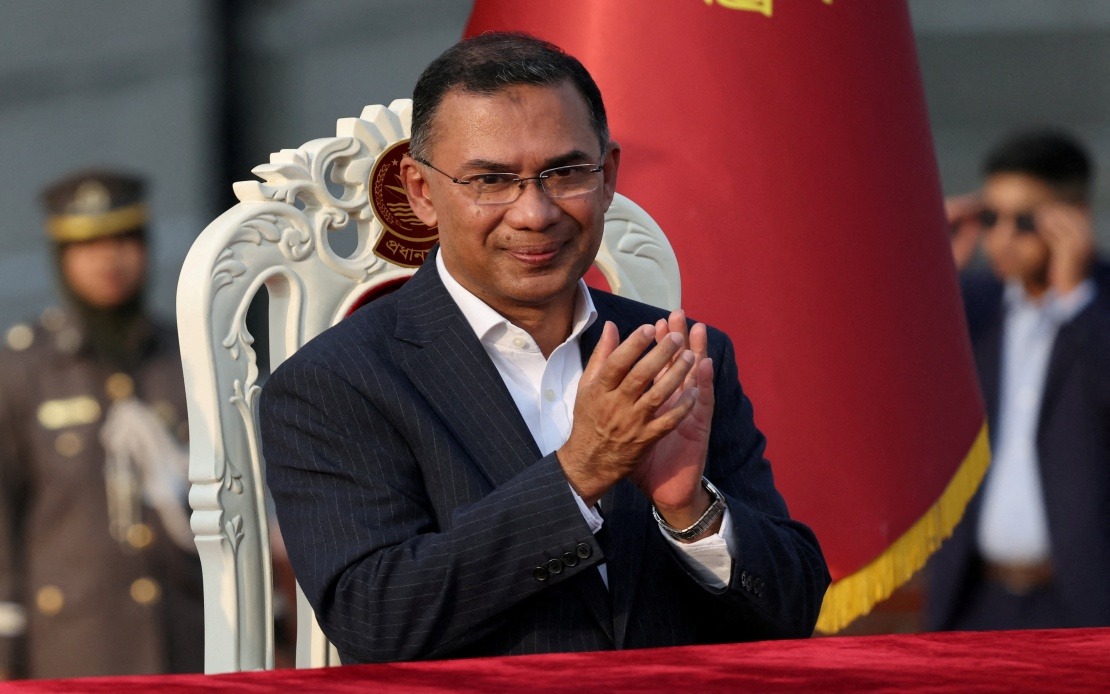
Prime Minister Tarique Rahman of Bangladesh will arrive in Malaysia on June 22 for what represents his first official bilateral visit abroad since assuming leadership in February 2026. The high-level engagement, extending from an invitation by Malaysian Prime Minister Datuk Seri Anwar Ibrahim, underscores the strategic importance both nations place on deepening their partnership across economic, security, and cultural dimensions.
The visit carries symbolic weight beyond routine diplomatic protocol. For Rahman, selecting Malaysia as the destination for his inaugural foreign visit signals the priority Dhaka attaches to Southeast Asian ties, particularly with Kuala Lumpur. The timing reflects a deliberate choice to engage with one of the region's most economically developed and politically influential nations immediately upon consolidating his administration, suggesting confidence in bilateral relationships and a desire to establish momentum for broader engagement with the Association of Southeast Asian Nations.
According to Malaysia's Foreign Ministry, Rahman will be received with a formal welcoming ceremony before proceeding to bilateral discussions with Anwar at the Perdana Putra Complex. This protocol-laden approach reflects the ceremonial significance attached to the engagement. During their meeting, both leaders will undertake a comprehensive review of Malaysia-Bangladesh relations, examining existing collaborative frameworks while identifying fresh avenues for partnership. The scope encompasses trade and investment opportunities, human resource development initiatives, semiconductor manufacturing, energy cooperation, agricultural collaboration, and educational partnerships—sectors where both economies possess complementary strengths and development objectives.
The bilateral agenda extends beyond economic matters into strategic cooperation. Officials will witness the signing of a memorandum of understanding focused on cultural cooperation, establishing a formal framework for enhanced people-to-people exchanges, artistic and academic partnerships, and preservation of shared heritage. Additionally, two exchanges of notes will be formalised: one addressing counter-terrorism research cooperation and another concerning investment promotion and facilitation mechanisms. These instruments represent substantive commitments to security collaboration and commercial development, moving beyond aspirational statements into binding operational frameworks.
Official luncheon arrangements organised by Anwar will provide an informal setting for further dialogue, allowing both delegations to engage beyond formal meeting protocols. Rahman's delegation composition reflects Bangladesh's commitment to substantive engagement, including his spouse Dr Zubaida Rahman, Foreign Minister Dr Khalilur Rahman, and senior government officials. This multi-sectoral representation ensures continuity across diplomatic, economic, and administrative channels, facilitating comprehensive discussions spanning numerous policy areas.
The economic relationship between Malaysia and Bangladesh demonstrates considerable depth and trajectory. In 2025, bilateral trade reached RM12.18 billion, equivalent to US$2.84 billion, positioning Bangladesh as Malaysia's 28th largest trading partner globally. More significantly, within the South Asian context, Bangladesh ranks as Malaysia's second-largest trading partner, export destination, and import source, yielding only to India. This regional significance reflects Bangladesh's economic weight and the integration of both nations within broader South Asian-Southeast Asian commercial networks.
Malaysia's export performance to Bangladesh reached RM10.08 billion during 2025, with petroleum products dominating the export portfolio. This petroleum-centric relationship reflects both Malaysia's hydrocarbon endowments and Bangladesh's substantial energy requirements supporting its rapidly industrialising economy and growing population demands. As Bangladesh pursues energy diversification strategies to support manufacturing expansion and development objectives, Malaysia's position as a reliable energy supplier provides mutual benefit—generating revenue while facilitating Bangladesh's growth trajectory.
Imports from Bangladesh totalled RM2.10 billion in 2025, predominantly comprising textiles, apparel, and footwear. This asymmetry in trade composition reflects Bangladesh's specialisation in labour-intensive manufacturing sectors where the nation maintains significant competitive advantages through lower production costs and established supply chain networks. For Malaysian consumers and businesses, Bangladeshi textiles and clothing represent cost-effective sourcing alternatives, while for Bangladeshi producers, Malaysia constitutes an important export market within the broader Southeast Asian region, supplementing their traditional markets in Europe and North America.
The structural trade imbalance, with Malaysian exports substantially exceeding imports, presents opportunities for rebalancing. Rahman's visit may catalyse discussions regarding expanding Bangladesh's export categories into higher-value sectors, potentially including processed agricultural products, light manufacturing, and technology-enabled services. For Malaysia, diversifying sourcing beyond energy-intensive products could strengthen supply chain resilience while creating manufacturing opportunities in Bangladesh's growing industrial zones.
Regional and international dimensions will also feature prominently in leadership discussions. Both nations share interests in maintaining maritime security in the Bay of Bengal and Indian Ocean, managing transnational challenges including human trafficking and cybercrime, and navigating great power competition affecting South and Southeast Asia. Bangladesh's geographic position at the intersection of South Asia, Southeast Asia, and the Indian Ocean makes its perspectives particularly valuable for Malaysian strategic planning, particularly regarding regional stability and multilateral cooperation frameworks.
The visit carries implications for ASEAN engagement patterns, as Bangladesh pursues deeper integration with Southeast Asian mechanisms. While not yet a full ASEAN member, Bangladesh's strategic location and economic trajectory make it increasingly relevant to regional calculations. Malaysia's willingness to accord Rahman a formal state visit strengthens Bangladesh's position within regional diplomatic structures and potentially facilitates its participation in ASEAN-related initiatives, ultimately expanding the geographical scope of regional cooperation frameworks.
Both nations possess complementary development profiles that suggest expanding cooperation scope beyond current frameworks. Malaysia's position as a middle-income nation with advanced financial services, technology capabilities, and regional investment expertise could support Bangladesh's development ambitions, while Bangladesh offers Malaysian investors access to a large consumer market and cost-effective manufacturing platforms. The combination of security cooperation instruments and economic engagement mechanisms outlined in the visit framework suggests a comprehensive bilateral relationship extending across multiple dimensions rather than narrowly sectoral partnership.
As Rahman returns to Dhaka following this inaugural overseas visit, the concrete outcomes—comprising signed agreements and elaborated partnership frameworks—will establish benchmarks for subsequent engagement. The visit's success in addressing mutual interests and identifying new collaboration avenues will likely influence Bangladesh's broader regional engagement strategy and potentially strengthen Malaysia's position as a preferred partner for South Asian nations seeking Southeast Asian integration and economic diversification opportunities.

