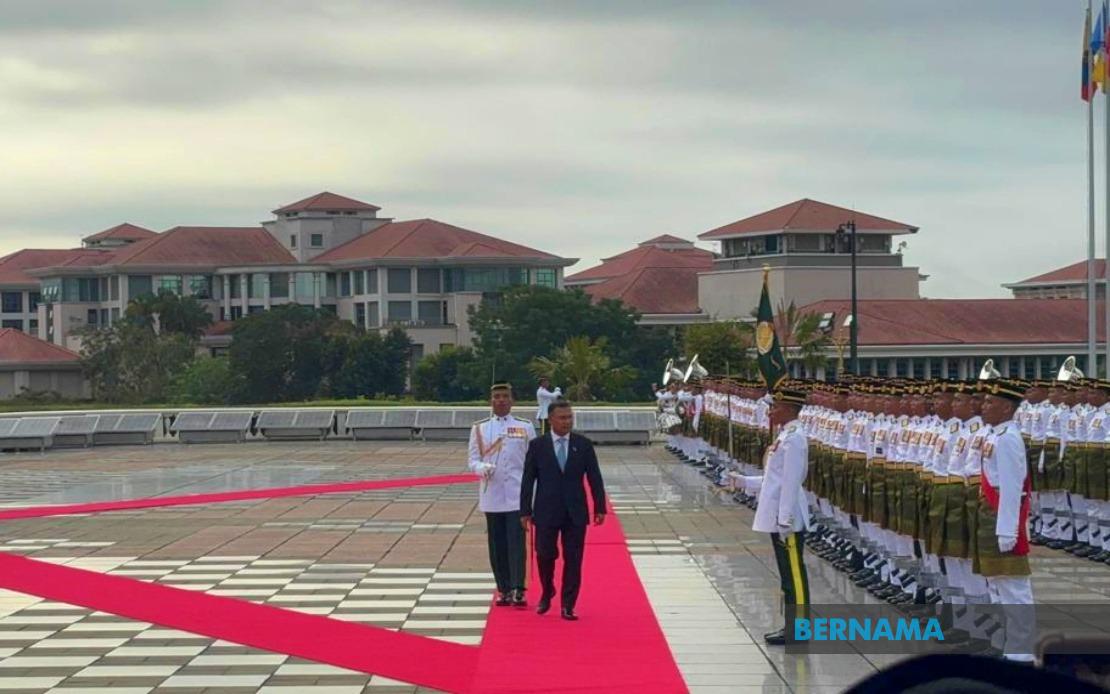
Bangladesh Prime Minister Tarique Rahman touched down in Malaysia on June 22 for a two-day official state visit, marking a significant diplomatic engagement between the two Southeast Asian neighbours. The visiting leader arrived at the Perdana Putra Complex in Putrajaya at 9 am, where he was formally received by Malaysian Prime Minister Datuk Seri Anwar Ibrahim in a ceremony steeped in protocol, complete with the ceremonial playing of both nations' national anthems.
The reception reflected the importance Malaysia attaches to strengthening ties with Bangladesh, one of its key partners in South Asia. A full military honour guard comprising three officers and 103 personnel from the First Battalion of the Royal Ranger Regiment, commanded by Major Nur Ahmad Zaim Zahari, stood at attention as Tarique inspected the ranks. The scale of the ceremony underscored the elevated status of the visit, with a significant cross-section of Malaysia's leadership in attendance, including Deputy Prime Minister Datuk Seri Dr Ahmad Zahid Hamidi, Foreign Minister Datuk Seri Mohamad Hasan, Home Minister Datuk Seri Saifuddin Nasution Ismail, and Communications Minister Datuk Fahmi Fadzil, alongside other Cabinet ministers, diplomatic representatives and senior government figures.
Following the formal welcome proceedings, Tarique signed the guest book before proceeding to a private one-on-one consultation with Anwar. This private engagement was followed by an expanded bilateral meeting that brought together senior ministers and officials from both countries, allowing for substantive discussions on matters of mutual concern and collaborative interest. The structure of these meetings signals Malaysia's readiness to engage with Bangladesh at multiple levels, reflecting a commitment to comprehensive dialogue rather than superficial diplomatic courtesy.
The agenda for these discussions proved extensive and strategically significant. Both nations intended to review the current state of Malaysia-Bangladesh bilateral relations and examine concrete opportunities to intensify cooperation across multiple economic and social sectors. Trade and investment featured prominently, alongside human resource management initiatives that reflect the substantial flows of Bangladeshi workers within Malaysia's economy. The semiconductor sector was flagged as an emerging area of potential collaboration, capitalising on regional supply chain developments. Energy cooperation, agricultural development, and educational exchanges rounded out the priority list, demonstrating a holistic approach to partnership building that extends beyond traditional commerce into knowledge transfer and institutional strengthening.
The diplomatic calendar for the visit included a series of formal commitments crystallising the outcome of these discussions. Both leaders were scheduled to witness the signing of a Memorandum of Understanding centred on cultural cooperation, an agreement that facilitates people-to-people engagement and cultural preservation initiatives. Additionally, two Exchanges of Notes were set to be signed, addressing counter-terrorism research collaboration and investment promotion and facilitation mechanisms. These instruments collectively create institutional frameworks for deepening cooperation while addressing contemporary security challenges facing both nations. Following the conclusion of these formal signings, Anwar hosted an official luncheon in honour of his Bangladeshi counterpart, providing an informal setting for continued dialogue and relationship building.
The economic foundation underpinning this bilateral engagement proved substantial. In 2025, bilateral trade between Malaysia and Bangladesh reached RM12.18 billion, equivalent to approximately USD2.84 billion, demonstrating robust commercial activity between the two economies. Malaysia's export profile to Bangladesh remained dominated by petroleum products, with total Malaysian exports valued at RM10.08 billion (USD2.35 billion). This reliance on energy exports reflects Bangladesh's significant demand for petroleum and petroleum derivatives as it continues to develop its industrial base and power generation infrastructure.
Import flows from Bangladesh into Malaysia totalled RM2.10 billion (USD0.50 billion), primarily comprising textiles, apparel and footwear products. These sectors represent Bangladesh's competitive strengths in global value chains, and Malaysia remains an important destination for these labour-intensive manufactures. The trade relationship exhibits a characteristic pattern seen across South Asia, where Malaysia absorbs significant volumes of garment and textile exports while exporting energy resources and higher-value commodities in return. This complementarity in trade profiles suggests mutual economic benefits from sustained commercial engagement.
Within Malaysia's broader trading relationships, Bangladesh occupies a position of considerable importance. The country ranked as Malaysia's 28th largest trading partner globally, yet held even greater significance within the South Asian context, serving as Malaysia's second-largest trading partner in the region after India. This positioning underscores the economic heft of Bangladesh, which, despite being situated geographically in South Asia, conducts a meaningful share of its external trade with Malaysia and Southeast Asia. The significance of Bangladesh to Malaysia's regional trade strategy should not be underestimated, particularly as Malaysia seeks to diversify its commercial partnerships and deepen engagement with neighbouring economies.
Tarique's delegation included his spouse, Dr Zubaida Rahman, along with his Foreign Minister Dr Khalilur Rahman and other senior government officials, reflecting the importance accorded to the visit by Bangladesh's political establishment. This composition of the travelling party suggests serious intent to negotiate substantive agreements and establish higher-level relationships that can persist beyond the immediate visit. The inclusion of the Foreign Minister in particular indicates that the bilateral agenda encompassed significant diplomatic and political dimensions alongside economic matters.
The timing of this official visit carried relevance within the broader context of regional diplomacy. Both Malaysia and Bangladesh face overlapping challenges in counterterrorism, maritime security, economic development, and management of transnational issues such as migrant labour flows and trafficking. By elevating bilateral engagement through an official state visit and committing to formal instruments of cooperation, both nations demonstrated a commitment to collaborative problem-solving and deepening institutional linkages. For Malaysia, engagement with Bangladesh represents an opportunity to strengthen its position as a hub for regional cooperation, while for Bangladesh, enhanced ties with Malaysia signal openness to Southeast Asian partnerships and integration.
The agreements negotiated during this visit, particularly in the areas of counter-terrorism research and investment facilitation, address contemporary concerns that extend beyond conventional bilateral commerce. Terrorism and security threats transcend national borders, and collaborative research initiatives enable both nations to share intelligence, methodologies and best practices in combating extremism. Similarly, mechanisms to promote and facilitate investment signal mutual commitment to reducing barriers to capital flows and expanding the economic footprint of each nation within the other's territory. These frameworks typically include dispute resolution procedures, investor protection guarantees, and streamlined approval processes that can significantly influence investment decisions by both Malaysian firms considering operations in Bangladesh and Bangladeshi enterprises seeking Malaysian markets or partnerships.

