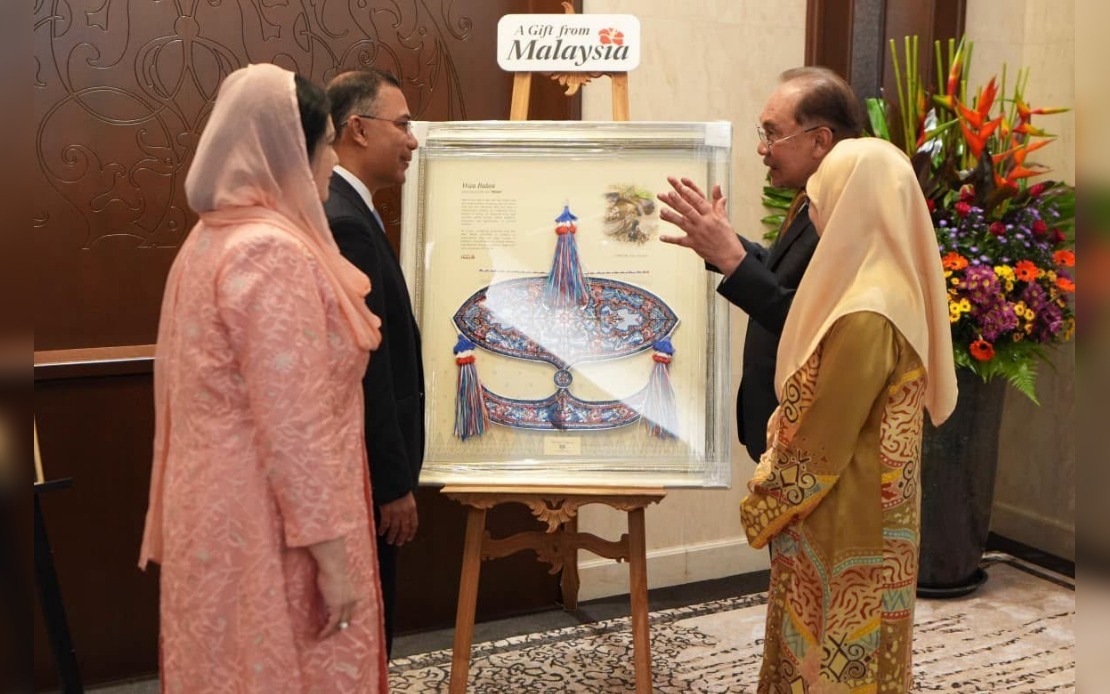
Bangladesh Prime Minister Tarique Rahman wrapped up his first official state visit to Malaysia on Monday, emphasizing his administration's dedication to cultivating a stronger and more comprehensive partnership with Kuala Lumpur. In statements released through Bangladesh's Ministry of Foreign Affairs, Rahman expressed his determination to work alongside Malaysian Prime Minister Datuk Seri Anwar Ibrahim in advancing the relationship between the two countries across diverse areas of mutual interest and benefit.
The premier highlighted the significance of the bonds connecting Bangladesh and Malaysia, which transcend conventional diplomatic arrangements. He underscored how the two nations maintain robust people-to-people engagement that spans numerous sectors and encompasses all segments of society, creating a foundation for sustained cooperation. This grassroots connectivity, according to Rahman, forms an essential pillar of the bilateral relationship that extends beyond government-to-government interactions and reaches into communities, businesses, and cultural institutions across both countries.
Rahman and his wife, Dr Zubaida Rahman, expressed profound appreciation for the reception they received during their time in Malaysia. He specifically acknowledged the hospitality extended by Prime Minister Anwar Ibrahim and his wife, Datuk Seri Dr Wan Azizah Wan Ismail, describing their welcome as remarkably warm and generous. The gesture of warmth from Malaysia's leadership, he conveyed, demonstrated the genuine friendship and goodwill that characterizes relations between Dhaka and Kuala Lumpur at the highest levels of government.
The Bangladesh premier also paid tribute to His Majesty Sultan Ibrahim, King of Malaysia, for granting him an audience and for the cordiality displayed during their encounter. This high-level engagement involving Malaysia's constitutional monarchy reflects the depth and formality with which Malaysia has received the visiting dignitary, signalling the importance both nations place on their relationship.
During his discussions with Anwar Ibrahim, Rahman noted that both leaders reaffirmed the historical continuity and durability of the Bangladesh-Malaysia partnership. He referenced the deep roots of this connection, tracing the relationship back through previous decades of interaction. In particular, Rahman invoked the memory of his father, Shaheed President Ziaur Rahman, who served as Bangladesh's President, and his mother, Begum Khaleda Zia, who held the office of Prime Minister, as individuals whose contributions helped establish the foundations of contemporary Bangladesh-Malaysia relations.
This historical reference carries particular resonance in the context of regional diplomacy and family legacy in South and Southeast Asian politics. The invocation of his parents' roles in shaping Bangladesh's early foreign policy suggests that Rahman views the Malaysian partnership through the lens of continuity and national tradition. It positions the current government's engagement with Malaysia not as a novel initiative but as the continuation of a trajectory established during Bangladesh's formative years as an independent nation.
For Malaysian readers, the significance of Rahman's visit extends beyond symbolic gesture-making. Bangladesh represents a substantial neighbour in South Asia with considerable demographic weight—its population of over 160 million makes it one of the world's most populous nations. The country holds strategic importance in regional trade networks and serves as a transit point for commerce flowing through South Asian corridors. Enhanced cooperation with Bangladesh could open new avenues for Malaysian businesses seeking to expand into South Asian markets, while simultaneously benefiting Bangladeshi enterprises through access to Malaysian expertise and capital.
The emphasis on multifaceted partnership suggests both governments envision expanded collaboration across economic, cultural, educational, and potentially security domains. Bangladesh's significant manufacturing sector, particularly its garment industry, intersects with Malaysian commercial interests. Simultaneously, Bangladesh's energy sector and infrastructure development projects present opportunities for Malaysian companies to participate in regional growth. Educational exchanges and cultural programmes can deepen understanding between populations and create networks of professionals who maintain connections across borders.
From a Southeast Asian perspective, strengthened Bangladesh-Malaysia relations carry implications for regional stability and economic integration. As ASEAN works toward deeper connectivity with South Asia through initiatives such as the Bay of Bengal Initiative for Multi-Sectoral Technical and Economic Cooperation (BIMSTEC), bilateral relationships between individual Southeast Asian nations and South Asian countries become building blocks for broader regional frameworks. Rahman's commitment to working closely with Anwar Ibrahim potentially facilitates smoother integration between these two distinct geographic regions.
The timing of this state visit, coming early in Rahman's tenure as Prime Minister, signals his administration's priority on international engagement and relationship-building. For Malaysia, it demonstrates continued receptiveness to strengthening ties with South Asian partners and a willingness to receive high-level visitors who can help advance shared interests in trade, cultural exchange, and regional cooperation.
Looking forward, the pledges made during this visit will likely translate into concrete initiatives—whether through expanded trade agreements, educational scholarships, cultural festivals, or cooperative ventures in emerging sectors such as renewable energy and digital innovation. The warmth displayed in bilateral statements provides momentum for converting diplomatic rhetoric into tangible outcomes that benefit citizens of both nations and contribute to the prosperity of their respective regions.

